


Yellow Gold Curb Link
A yellow gold curb link brings interlocking symmetry and satisfying weight to the wrist or neck.
Yellow Gold Curb Link
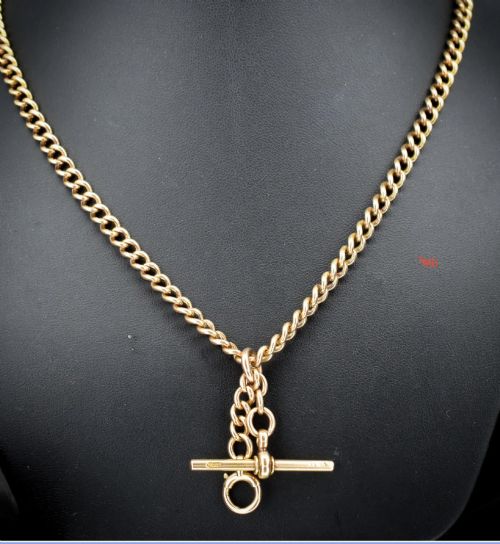
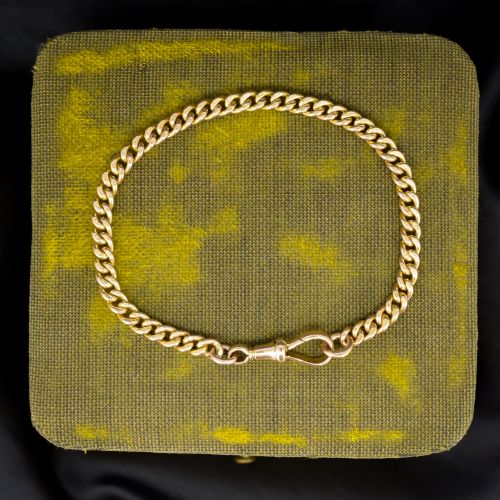
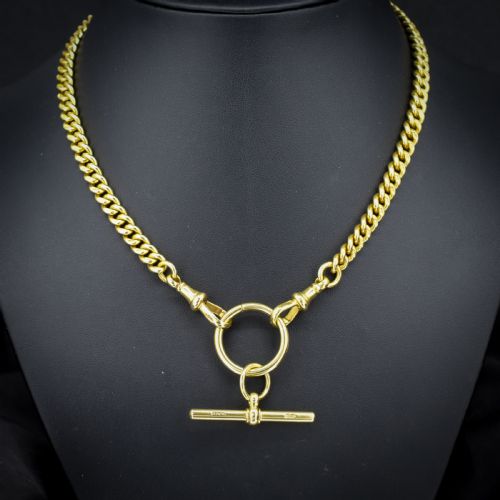
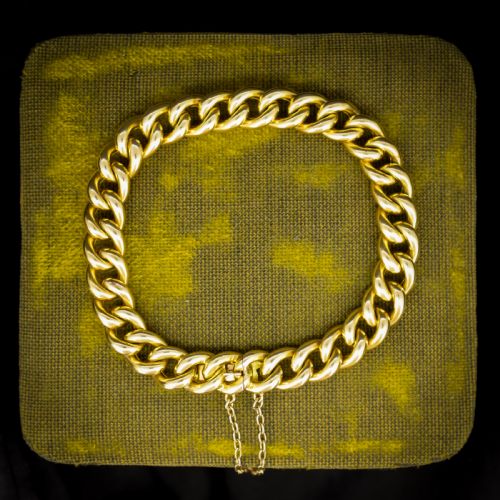
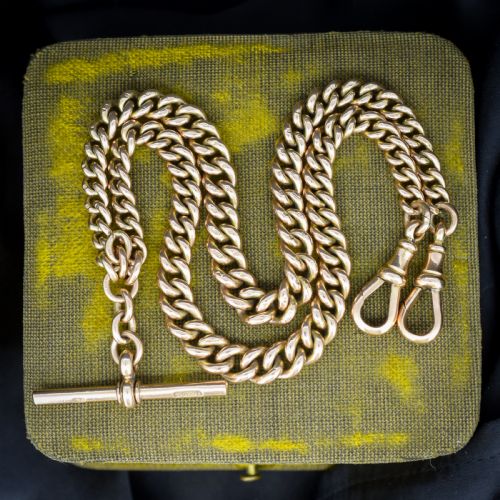
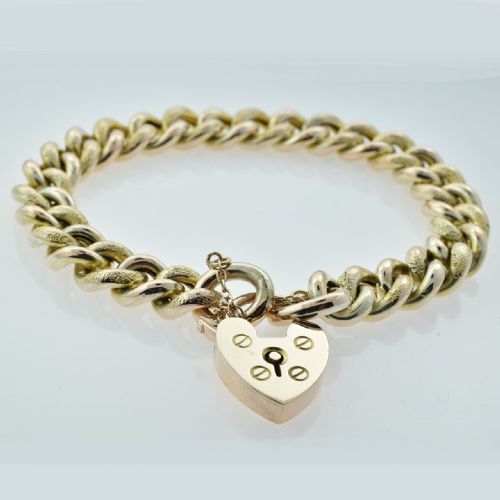
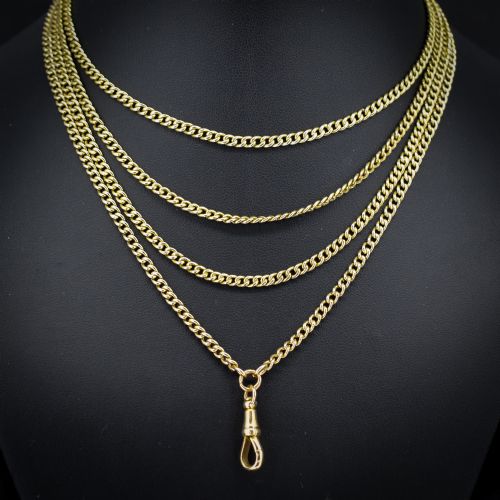
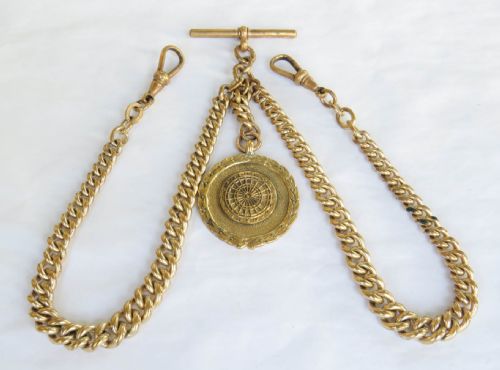
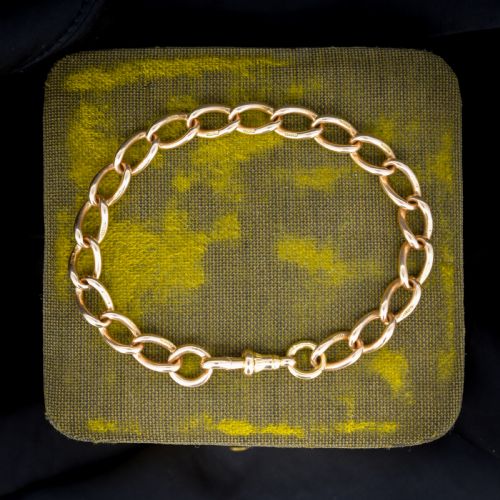
When you search for a yellow gold curb link, you encounter items shaped by interlocking uniform or graduated links designed to lie flat. The pieces appearing most frequently on this page span the Victorian, Edwardian, and Art Deco periods, taking the form of robust watch chains, guard chains, bracelets, and padlocked bangles.
Originating largely from British and French workshops, these items serve as both practical carriers for pocket watches and decorative adornments. Bracelets often secure with heart padlocks or dog clips, while longer chains function as necklaces or multi-strand wraps.
How they were made
Goldsmiths constructed these items using solid or rolled gold, utilising purities ranging from nine carat up to eighteen carat yellow gold, alongside occasional fifteen carat examples. Links were individually formed, often hallmarked on every section, and joined to create flexible chains of considerable heft.
Many examples incorporate decorative enhancements such as hand engraving, faceted cutting, or the integration of pearls, turquoise, and heart-shaped padlocks to punctuate the uniform rhythm of the metal links.
Listings feature yellow gold, rolled gold, and specific material accents including turquoise, pearls, agate, and diamonds across Victorian and Art Deco eras.
What varies in quality
The distinction between standard examples and superior items rests on the integrity of the links and the completeness of the hallmarks. Pieces stamped on every individual link demonstrate a higher level of original craftsmanship than unmarked or partially marked variants.
Weight and gauge also dictate worth, as solid gold pieces with tight link tolerances and original dog clips or padlocks retain their structural crispness better than lighter, hollow, or rolled gold alternatives.
The Yellow Gold Curb Link Glossary
- Curb link
- A type of chain design featuring twisted, oval links that have been flattened so the chain lies flush against the skin. This formation provides both strength and flexibility for daily wear.
- Albert watch chain
- A heavy chain originally designed to secure a pocket watch to a waistcoat, often fitted with a T-bar at one end and a dog clip at the other. These frequently convert into substantial necklaces.
- Dog clip
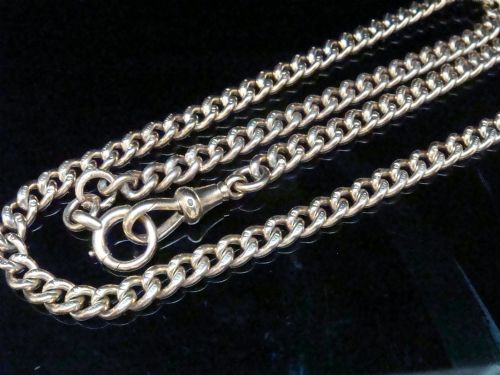
- A spring-loaded swivel clasp commonly found on watch chains and bracelets. It allows the wearer to securely attach charms, padlocks, or pocket watches.
- Guard chain
- An exceptionally long chain worn looped around the neck, originally intended to secure a lorgnette or pocket watch. They offer versatile length options for modern wearers.
- Heart padlock
- A heart-shaped clasp mechanism used primarily on Victorian and Edwardian bracelets. They often feature hand engraving and function as both a lock and a decorative pendant.
Yellow Gold Curb Link: Frequently Asked Questions
How do I wear an antique watch chain?
Long watch chains and guard chains can be doubled around the neck to create a layered necklace effect. Alternatively, shorter Albert chains easily adapt into chokers or standard necklaces by fastening the dog clip to the connecting links.
Heavier examples provide enough structural presence to be worn alone as a statement piece without additional pendants. The integrated T-bars and dog clips can be arranged to hang as decorative front elements.
Are these chains solid gold?
The listings include a mix of solid gold items, graded by purities such as 9ct, 15ct, and 18ct, alongside rolled gold pieces. Hallmarks stamped directly onto the metal help identify the specific gold standard used by the maker.
Solid variations offer enduring weight and durability, while rolled gold pieces provide the same visual appeal with a layer of gold bonded to a base metal core.
What is the difference between a graduated and uniform chain?
A uniform chain maintains links of identical size from end to end, creating a clean, architectural line. Graduated chains feature links that increase in size toward the centre, drawing the eye toward a focal point.
Graduated styles are typical of traditional pocket watch chains designed to display the largest links nearest the central drop. Uniform links suit modern preferences for stacking bracelets and minimalist necklaces.
How do I date a Victorian curb bracelet?
Dating relies on examining the hallmarks, clasp styles, and associated decorative stones. The presence of heart padlocks, turquoise clusters, and specific crown or letter assay marks points directly to the late nineteenth or early twentieth century.
Victorian pieces often display hand-engraved motifs and distinct colour tones in the yellow gold, ranging from pale greenish hues to rich rose-tinged alloys.