




Yellow Gold Aquamarine
Yellow gold aquamarine jewellery brings together pale blue beryl and warm gold in pieces spanning the Edwardian period to the mid-twentieth century.
Yellow Gold Aquamarine
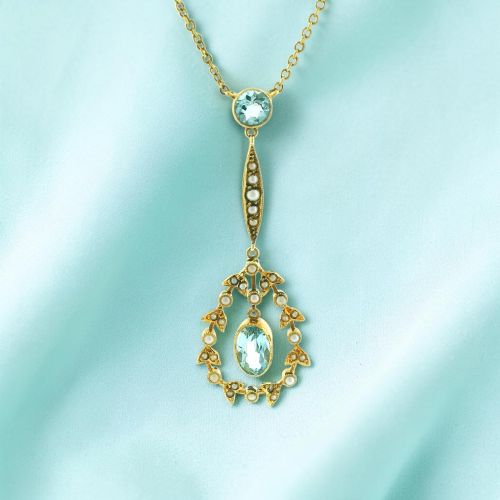
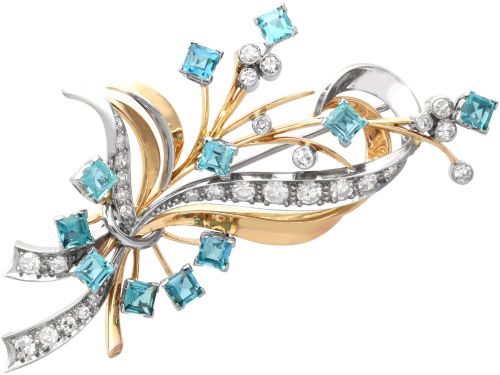
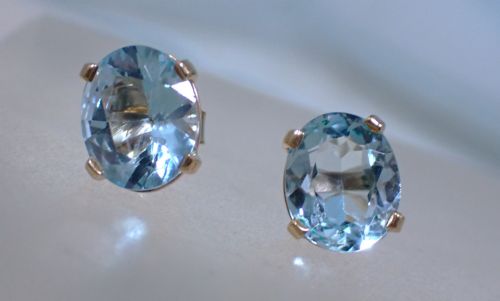
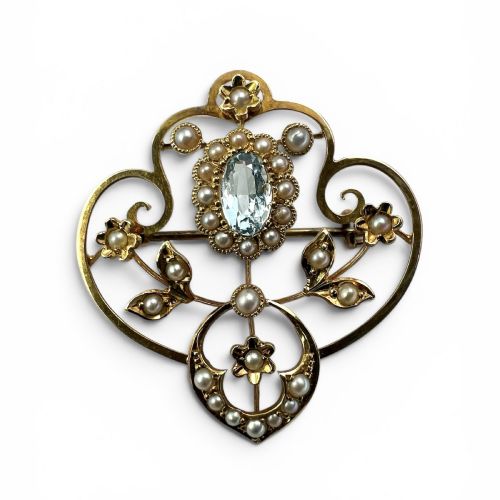
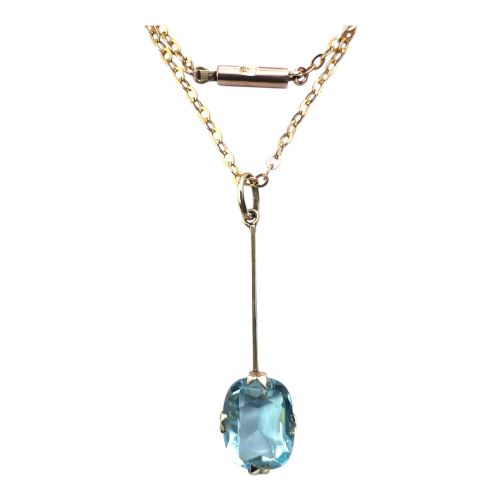
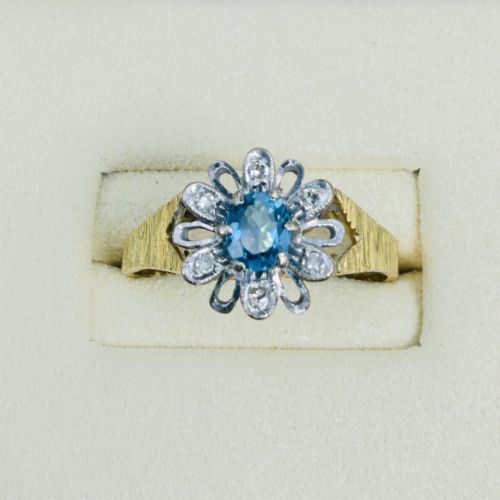
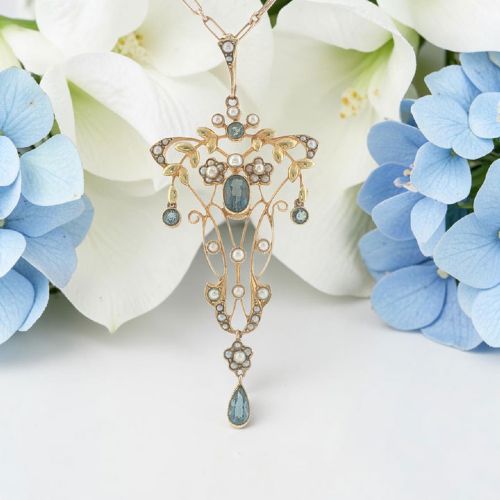
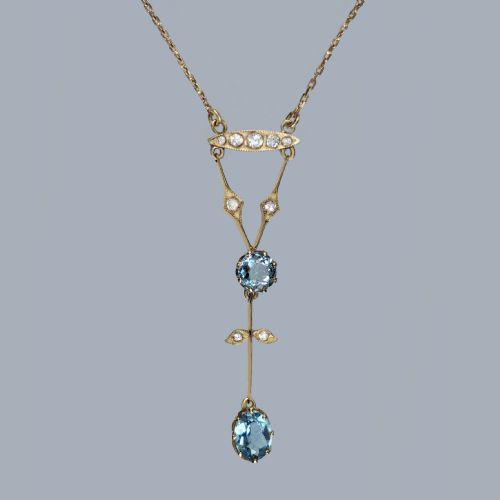
When you search for yellow gold aquamarine, you find a selection of rings, pendants, necklaces, brooches and earrings spanning several decades. The objects range from delicate Edwardian lavalier necklaces and seed pearl drop pendants to substantial mid-century cocktail rings and spray brooches.
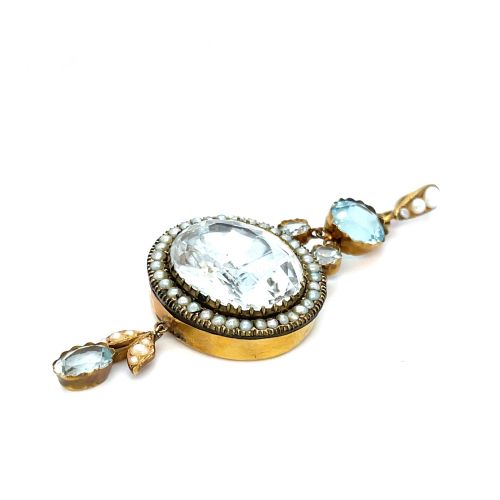
The assortment draws heavily on Edwardian craftsmanship alongside Victorian, Art Nouveau, Art Deco, Retro and mid-century modern designs. Pendant necklaces and drop earrings often pair the stones with seed pearls, whilst larger cocktail rings showcase significant carat weights of aquamarine set in yellow gold.
Materials and Techniques
The pieces combine aquamarine gemstones with various purities of yellow gold, notably nine-carat, fourteen-carat, fifteen-carat and eighteen-carat metal, alongside occasional platinum, palladium or silver-topped settings. Stones are cut in various profiles, including square cuts and large table facets, occasionally backed with foil to enhance the reflection of light.
Goldsmiths integrated supporting gems such as diamonds, seed pearls, demantoid garnets, rubies, tourmalines and paste stones into the mounts. Construction techniques encompass intricate wirework for Edwardian lavaliers, openwork framing for Art Deco brooches, and robust prong or bezel settings for heavy cocktail rings.
Yellow Gold Aquamarine Retail Price Guide 2026
Typical asking prices for yellow gold aquamarine among the pieces listed under this phrase on Sellingantiques today, from the lower quarter to the upper quarter. They describe what is for sale here now, not the wider market.
Some aquamarines here weigh over thirty-two carats, offering enough pale blue ice to cool a mid-summer garden party.
Assessing the Workmanship
Quality reveals itself in the clarity and depth of the aquamarine crystal, the saturation of the pale blue colour, and the precision of the stone cutting. Finer examples display clean crystal structures and balanced proportions that make the most of the gemstone's natural transparency.
The standard of metalwork distinguishes simpler production from finer artisan creation. Delicately pierced galleries, secure claw settings, matched pearl selections, and well-integrated diamond accents point to superior manufacturing across both Edwardian and mid-century workshops.
C'est Laudier
The Yellow Gold Aquamarine Glossary
- Aquamarine
- A pale blue to light greenish-blue variety of beryl used extensively in fine jewellery throughout the twentieth century. It takes its name from the Latin for seawater.
- Lavalier
- A pendant necklace featuring a central drop suspended from a chain, popular during the Edwardian and Art Nouveau periods. They often incorporate swinging stones and delicate seed pearl decoration.
- Seed Pearl
- Very small, naturally occurring or cultured pearls threaded or set en masse in historic jewellery. They provide a soft, creamy contrast to bright aquamarines and yellow gold.
- Demantoid Garnet
- A green variety of garnet prized for its high dispersion and brilliance. Jewellers occasionally use it as an accent stone alongside aquamarine and diamond.
- Spray Brooch
- A brooch designed to mimic a natural floral spray or ribbon cluster. Mid-century examples frequently combine large central aquamarines with diamond-set ribbons in yellow gold and palladium.
Yellow Gold Aquamarine: Frequently Asked Questions
What periods do these pieces come from?
The inventory spans the late nineteenth century and the twentieth century, with a strong representation of Edwardian and mid-century designs. You encounter Victorian, Art Nouveau, Art Deco, Retro and 1950s examples.
Each era brings distinct stylistic signatures, from the lace-like wirework of early pendants to the bold, heavy stone settings of the post-war decades.
How do I care for yellow gold aquamarine jewellery?
Clean your jewellery gently using warm soapy water and a soft brush to remove everyday oils from the gemstone and metal settings. Avoid harsh chemical dips, particularly if the piece contains pearls or foil-backed stones.
Store items individually in soft pouches to prevent the harder aquamarines from scratching softer gold mounts or neighbouring gems.
Are the aquamarines natural?
The stones used across these historical pieces are natural aquamarines, varying in tone from near-colourless ice blue to stronger sea blue hues. Many retain their original historic cuts.
Makers selected them for their transparency and size, pairing them with diamonds, rubies, and seed pearls in gold frames.
What is the difference between an Edwardian pendant and a mid-century cocktail ring?
Edwardian pendants are typically light, airy creations in lower or higher carat yellow gold featuring intricate wire scrollwork, seed pearls, and lavalier drops. They emphasise delicate symmetry and graceful movement.
Mid-century cocktail rings and brooches, by contrast, focus on large-carat feature aquamarines held in bold yellow gold mounts, often accompanied by accent diamonds or structured metalwork.