

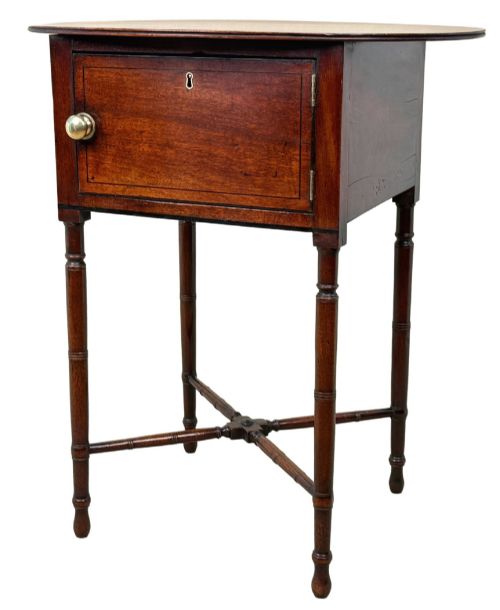
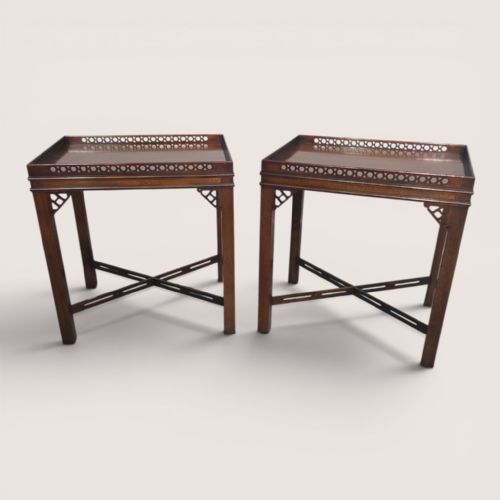


X Stretcher Bedside Table
An x stretcher bedside table brings architectural cross-bracing to a compact bedside surface, uniting eighteenth-century proportions with practical utility.
X Stretcher Bedside Table
The search phrase x stretcher bedside table leads you to functional lamp tables, side cabinets, and bedside tables built with distinctive crossed leg supports. These pieces emerge primarily from Georgian, Edwardian, and early twentieth-century periods, spanning dates from seventeen-fifty through nineteen-twenty.
You encounter forms ranging from simple oak side tables with drawers to finely proportioned mahogany and yew wood lamp tables. Some examples display specific Edwardian refinements, whilst others adhere strictly to Georgian or Chippendale design principles.
Makers such as Morant and Company represent the cabinet-making tradition behind certain Edwardian examples on this page. The forms bridge the gap between traditional bedside cabinets and open lamp tables intended for domestic sitting rooms.
How they were made
Cabinet-makers utilised solid timbers including mahogany, oak, rosewood, and yew wood to construct these frames. Finer pieces incorporate satinwood and marquetry inlay to decorate the primary surfaces.
X Stretcher Bedside Table Retail Price Guide 2026
Typical asking prices for x stretcher bedside table among the pieces listed under this phrase on Sellingantiques today, from the lower quarter to the upper quarter. They describe what is for sale here now, not the wider market.
Listings span centuries of cabinet-making, featuring Georgian, Edwardian, and nineteen-twenty periods executed in mahogany, oak, rosewood, and yew wood.
What varies in quality
Quality diverges according to the selection of timber and the precision of the inlay work. Finer examples display carefully figured mahogany or complex marquetry inlay, whilst simpler pieces rely on plain oak or pine.
The sophistication of the joinery and the presence of documented makers, such as Morant and Company, elevate the standing of a piece. Finer proportions and authentic period brasses distinguish superior tables from later revival iterations.
Morant and Company
The X Stretcher Bedside Table Glossary
- X stretcher
- An intersecting cross-brace connecting the legs of a table for structural support and visual balance. This architectural feature defines the silhouette of the piece.
- Marquetry inlay
- Decorative patterns formed by fitting contrasting pieces of veneer into a prepared wooden surface. Cabinet-makers utilise this technique to ornament table tops.
- Chippendale
- A classic eighteenth-century English furniture style known for balanced proportions and refined carved details. Pieces in this tradition reflect the design lexicon of Thomas Chippendale.
- Bedside cabinet
- A closed storage item designed to stand beside a bed, often featuring a cupboard door or drawer. These items keep personal belongings concealed within the bedroom.
X Stretcher Bedside Table: Frequently Asked Questions
How do I date an antique bedside table?
Dating relies on examining the timber species, construction methods, and hardware associated with specific historical periods. Georgian and eighteenth-century examples exhibit different joinery techniques compared to Edwardian or nineteen-twenty revival pieces.
Maker stamps and distinctive decorative details like marquetry inlay also help place a table within its correct chronological window.
Where should I place a lamp table?
These compact tables suit living rooms, studies, and bedrooms where surface space is limited. Their small footprint allows them to sit beside seating or adjacent to a bed.
Open frames and lower stretchers keep the visual weight light, making them adaptable to various interior layouts.
Are these tables used for storage?
Certain variations include a single drawer or an enclosed cabinet space for holding small items. Other versions are open lamp tables designed solely to hold a light fixture and a book.
Selecting the right form depends on whether you require concealed storage or simply a display surface.