




Woven Forest Tapestry
A woven forest tapestry brings ancient woodlands and leafy glades indoors, offering deep texture and centuries of quiet craftsmanship for your walls.
Woven Forest Tapestry
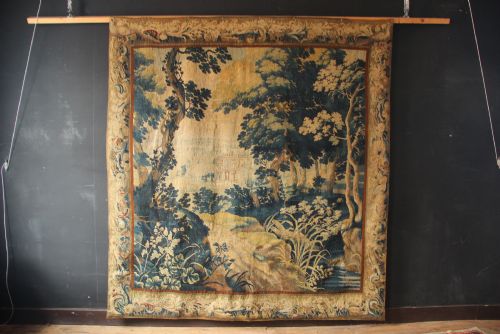
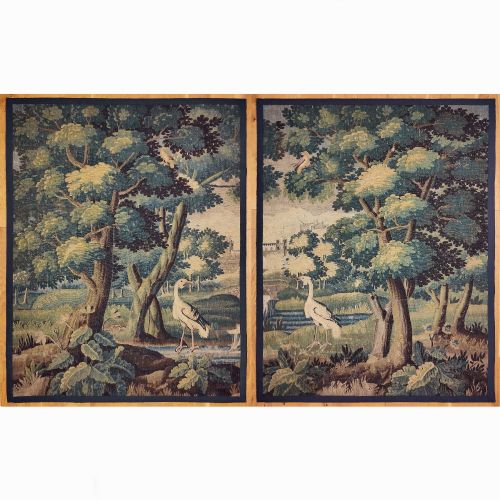
A woven forest tapestry represents verdure scenes populated by dense foliage, leafy canopies, and occasional woodland birds or distant chateaux. When you search for a woven forest tapestry, you encounter large wall hangings originating from major European weaving centres across the seventeenth, eighteenth, and nineteenth centuries.
The selections span Flemish Baroque and French traditions, frequently featuring large-scale panels designed to cover stone walls in historic interiors. These works include both monumental room-sized pieces and long horizontal panels intended for placement above furniture.
Aubusson and Flemish workshops dominate the offerings, showcasing naturalistic green palettes that have mellowed over centuries into softer olive, blue, and brown tones. Buyers most frequently meet nineteenth-century interpretations alongside genuine seventeenth and eighteenth-century examples.
What varies in quality
The visual depth of a verdure panel depends on the variety of tones utilised in the foliage and the intricacy of the botanical details. Superior examples display subtle shading that creates a convincing sense of perspective within the wooded thicket.
Survival of the original colour palette marks the distinction between standard and exceptional pieces, as fugitive dyes reacted differently to light over hundreds of years. The density of the weave and the presence of fine silk highlights further elevate the standing of a textile.
Woven Forest Tapestry Retail Price Guide 2026
Typical asking prices for woven forest tapestry among the pieces listed under this phrase on Sellingantiques today, from the lower quarter to the upper quarter. They describe what is for sale here now, not the wider market.
Many historic weavers secretly stitched tiny, whimsical woodland creatures into the dark foliage corners to amuse themselves during long winters.
The Woven Forest Tapestry Glossary
- Verdure
- A tapestry style dominated by lush plant motifs, trees, and foliage, frequently depicting stylized forests and woodland creatures.
- Aubusson
- A traditional French town renowned for its carpet and tapestry weaving industry, known for producing sophisticated floral and landscape designs.
- Flemish Baroque
- An artistic style originating in Flanders during the seventeenth century, characterised by dramatic movement, rich detail, and grand scale.
- Warp
- The stationary lengthwise threads stretched on a loom that form the structural grid upon which the coloured weft is woven.
Woven Forest Tapestry: Frequently Asked Questions
How do I hang a large tapestry?
Large textiles require even weight distribution across a sturdy wooden batten or metal rod secured to the wall studs. A fabric sleeve is traditionally stitched to the reverse top edge to slide over the hanging support.
Avoid direct sunlight and damp environments to protect the historic fibres from fading and mildew over time.
What is a verdure tapestry?
A verdure tapestry depicts a landscape focused primarily on trees, plants, and greenery rather than human figures or historical narratives. These forest scenes were designed to bring the outside world into grand stone rooms.
They often include small details like hidden birds, streams, or distant chateaux nestled behind dense canopies of leaves.
How do I tell Flemish from French panels?
Flemish pieces from the seventeenth century typically exhibit darker, earthier tones and heavier, more dramatic foliage arrangements. French Aubusson works from later periods often display lighter, airier compositions with brighter highlights.
Border designs also provide clues, as Flemish borders frequently feature heavy architectural fruit and flower garlands.