



Working Dog Oil Portrait
These working dog oil portrait pieces capture canine character across centuries on canvas.
Working Dog Oil Portrait
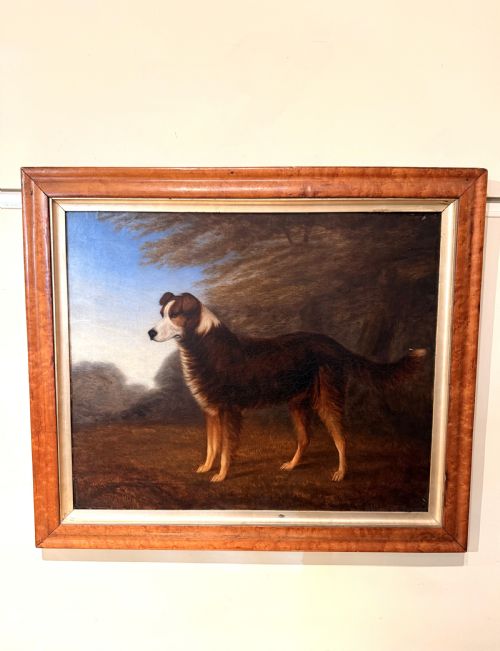
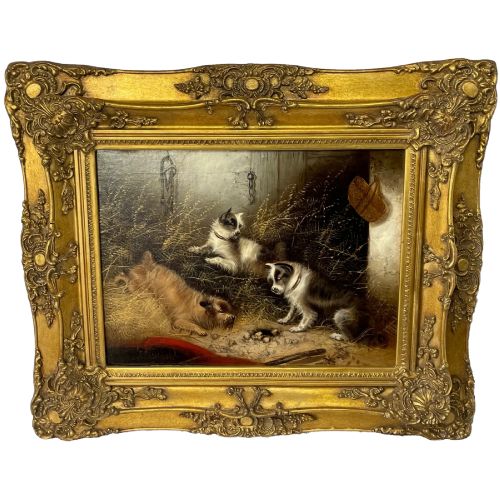
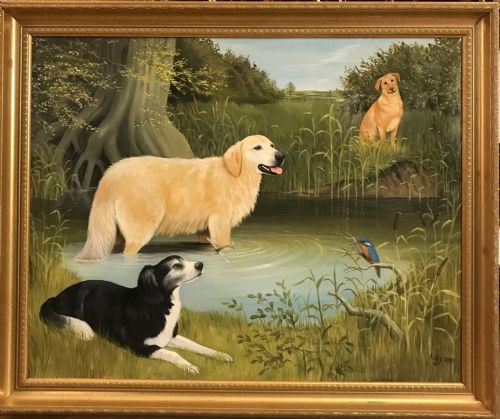
A working dog oil portrait depicts canine subjects engaged in traditional rural work or sporting pursuits, rendered by artists across distinct historical eras. When searching for a working dog oil portrait, buyers encounter diverse expressions of realism ranging from seventeenth-century European portraiture to nineteenth-century Victorian sporting art.
The selection on this page centres primarily on Victorian and twentieth-century depictions, featuring popular working breeds such as terriers, collies, and spaniels. These oil paintings often place the dogs within defined rural landscapes or enclosed settings that highlight their working duties, such as ratting or guarding.
Originating from British and Northern European traditions, these fine art paintings reflect the deep cultural ties between humans and working dogs. The forms span framed oil on canvas works executed with traditional brushwork and framed in wood or gilded wood.
How they were made
Artists built these works using oil paint applied to stretched canvas, allowing for rich colour depth and fine detail in rendering canine coats. The primary structural components rely on canvas supports housed within wooden frames, sometimes embellished with gilt or gilded wood finishes.
Traditional realism techniques governed the application of pigments, capturing the specific textures of fur, the alertness in the eyes, and the natural lighting of landscape settings. Painters layered oil mediums to achieve subtle tonal shifts that define the musculature and posture of each working breed.
Working Dog Oil Portrait Retail Price Guide 2026
Typical asking prices for working dog oil portrait among the pieces listed under this phrase on Sellingantiques today, from the lower quarter to the upper quarter. They describe what is for sale here now, not the wider market.
Listings feature canvases spanning from the seventeenth century through to the mid-twentieth century, employing oil paint on canvas.
What varies in quality
Quality in a working dog oil portrait rests upon the artist's anatomical precision and the psychological depth given to the animal subject. Superior examples capture the distinct intelligence and kinetic energy of breeds like terriers and collies rather than presenting generic canine forms.
The handling of light within the landscape and the subtlety of brushwork across the animal's coat distinguish masterworks from standard studio production. Integration between the dog and its surrounding environment further elevates the artistic achievement of the composition.
John Emms·John Trivett Nettleship·Colin Graeme Roe·George Armfield·Edward Armfield
The Working Dog Oil Portrait Glossary
- Oil on canvas
- A traditional painting medium where pigments suspended in drying oils are applied to a woven fabric support. This combination permits blending and rich colour saturation.
- Victorian Sporting Art
- A genre popular during the nineteenth century focusing on animals, hunting, and rural pursuits. These works emphasise the realism of working animals in natural environments.
- Gilt
- A thin layer of gold leaf or gold paint applied to wooden frames. This decorative finish enhances the presentation of the central canvas.
- Northern European School
- A historical classification for artists working in regions such as the Netherlands and Flanders. Paintings from this tradition often display meticulous attention to light and detail.
Working Dog Oil Portrait: Frequently Asked Questions
What is a working dog oil portrait?
A working dog oil portrait is a fine art painting executed in oil on canvas that depicts breeds bred for labour, such as terriers, collies, and spaniels.
These artworks record the specific appearance and character of dogs involved in activities like sporting pursuits, herding, and ratting across various historical periods.
How do I identify a Victorian oil painting?
Victorian oil paintings are typically identified through their stylistic adherence to traditional realism, depicting subjects popular during the nineteenth century with detailed brushwork.
Evidence such as artist signatures, framing styles, and the specific depiction of Victorian working breeds and rural scenes further helps date these works.
What subjects appear in these paintings?
The subjects include individual or multiple working dogs, frequently shown within landscapes or interior settings related to their duties. Terriers guarding or hunting, collies in pastoral settings, and spaniels in fields form the primary motifs.
Earlier examples may also place canine subjects alongside human figures or within aristocratic Northern European portrait traditions.
How should I care for an oil on canvas painting?
An oil on canvas painting requires stable indoor humidity and temperature levels to prevent the canvas from slackening and the paint layers from cracking. Direct sunlight should be avoided to protect the pigments from fading over time.
Dusting should be performed gently with a soft, dry brush, avoiding any moisture or chemical cleaning agents on the painted surface.