



Wooden Wingback Chair
A wooden wingback chair offers deep side wings and solid timber construction, combining draught-excluding comfort with enduring architectural presence in any room.
Wooden Wingback Chair
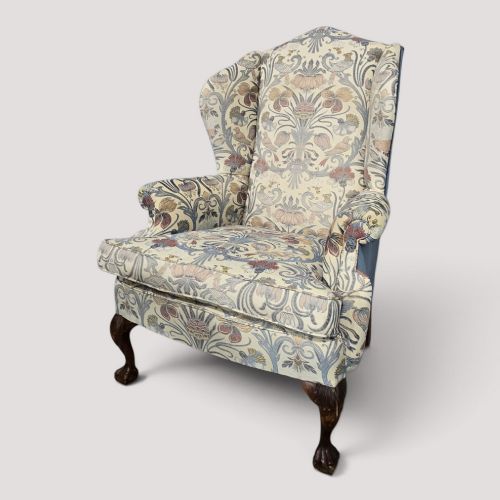
A wooden wingback chair is a traditional armchair featuring protective side wings originally designed to shield the sitter from drafts and retain fireplace heat. The selection includes substantial country house models alongside compact children's chairs and specialist forms like lambing chairs.
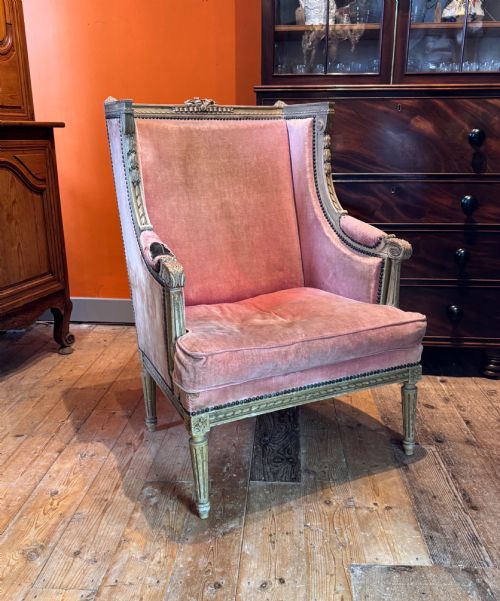
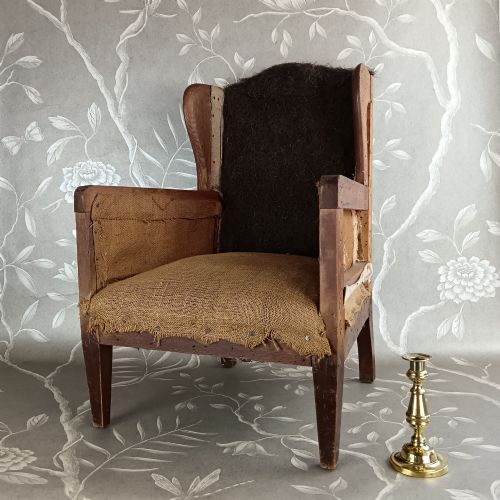
Examples span from the eighteenth century through the Edwardian period, encompassing styles such as Georgian vernacular, Louis XVI, and Victorian campaign pieces. Buyers will encounter both fully upholstered frames with exposed wooden elements and chairs requiring re-upholstery.
Origins vary between English country workshops and continental European makers, utilising woods like oak, mahogany, and walnut. The form adapts across centuries from utilitarian vernacular seating to grander upholstered drawing room furniture.
How they were made
Construction relies on solid timbers including oak, mahogany, and walnut, shaped into structural frames with carved or inlaid details. Woodworkers built these chairs to bear sustained weight using traditional joinery methods suited to each period style.
Upholstery techniques incorporate traditional materials such as hessian and fabric coverings, alongside exposed original paint or giltwood finishes on specific frames. Brass hardware appears on campaign variations designed for portability.
Wooden Wingback Chair Retail Price Guide 2026
Typical asking prices for wooden wingback chair among the pieces listed under this phrase on Sellingantiques today, from the lower quarter to the upper quarter. They describe what is for sale here now, not the wider market.
Materials recorded across the selection include solid walnut, brass hardware, hessian, velvet, and original painted wood finishes.
What varies in quality
Quality rests in the integrity of the timber frame and the sophistication of the woodworking, from plain country vernacular framing to intricate carved walnut and giltwood details. The purity of the period design and the retention of original finishes, such as early paint, distinguish finer examples.
Proportion and scale create distinction, separating smaller child's chairs and neat vernacular pieces from large, imposing country house wing armchairs. The survival of period upholstery materials or the suitability of the frame for traditional re-upholstery influences the character of each piece.
The Wooden Wingback Chair Glossary
- Wingback
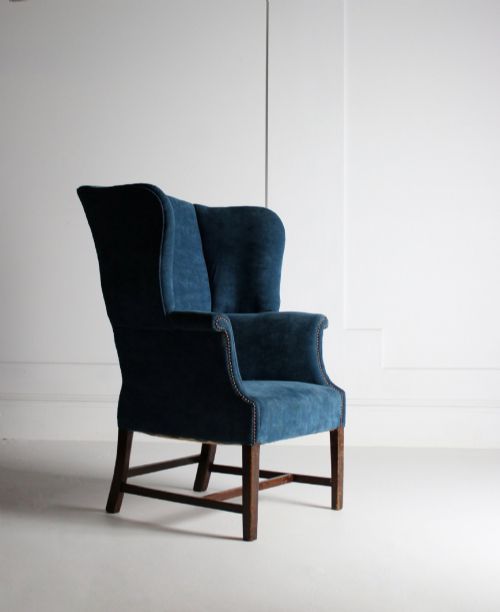
- An armchair featuring protective side panels attached to the armrests, originally designed to deflect cold draughts. This characteristic silhouette defines the primary function of the seating.
- Lambing chair
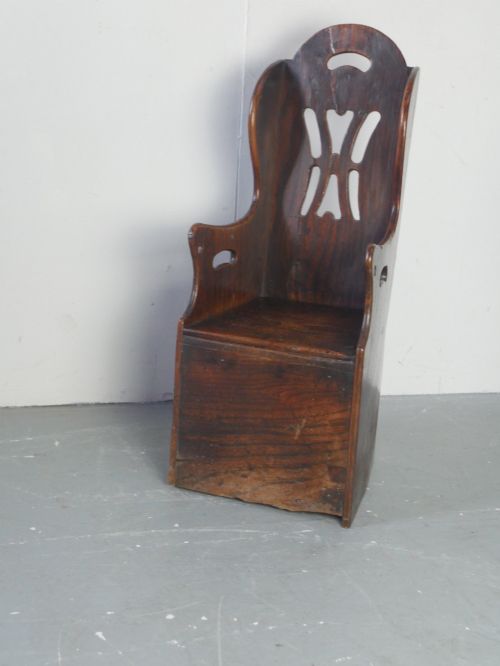
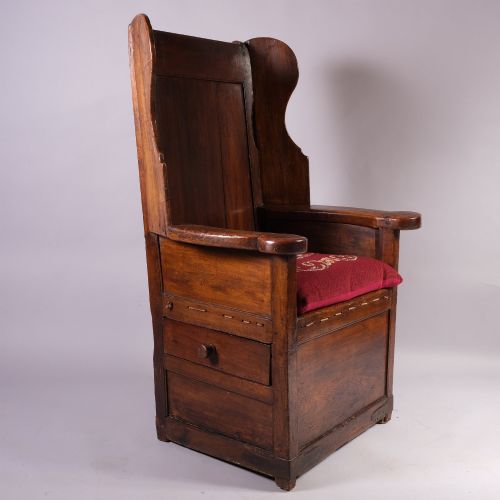
- A vernacular wooden seat featuring solid sides and an integrated high back, traditionally used by shepherds and farmers near hearths. These regional pieces often display simple, robust carpentry.
- Bergere
- An enclosed upholstered armchair with wooden framing, typically featuring exposed carved walnut or giltwood elements. The style draws on continental European design traditions.
- Campaign armchair
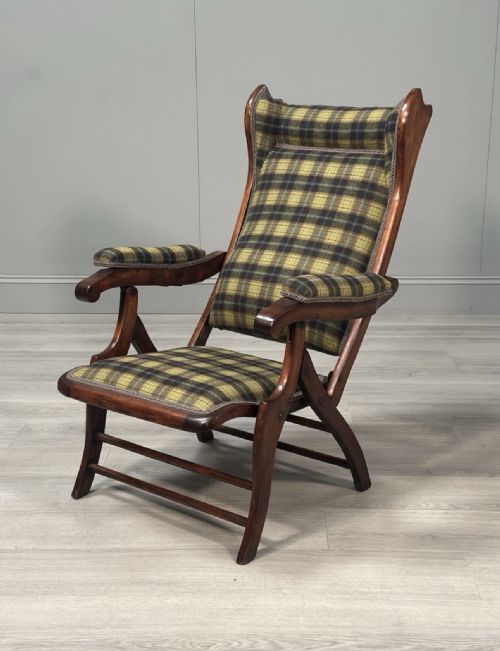
- A portable seating form featuring folding wooden elements and brass fittings, designed for military transport during the Victorian and Edwardian eras. These chairs combine mobility with structural rigidity.
- Giltwood
- Timber treated with a thin layer of gold leaf, frequently utilised on decorative eighteenth and nineteenth-century frames. This finish highlights carved architectural details.
Wooden Wingback Chair: Frequently Asked Questions
What is a lambing chair?
A lambing chair is a traditional vernacular wooden seat featuring solid sides and a hooded or high back designed to block hearth drafts. These pieces originated in rural settings for practical fireside use.
They are distinguished by robust timber construction and regional eighteenth-century forms that prioritize shelter and durability over elaborate upholstery.
How do I identify an eighteenth-century chair?
Eighteenth-century chairs are identified through traditional timber construction methods, vernacular joinery, and period-specific proportions. They often reflect regional English or continental workshop practices.
Examination of the wood grain, wear patterns, and structural framing helps separate these early pieces from later Victorian and Edwardian revivals.
What is a campaign armchair?
A campaign armchair is a collapsible wooden seat fitted with brass hardware, engineered for easy transport by travellers or military officers. The design emphasises practical folding mechanisms.
These pieces bridge domestic comfort and utilitarian portability, making them distinct additions to nineteenth-century interiors.
Can I use these chairs for everyday seating?
Most wooden wingbacks and armchairs are structurally sound for regular use, though some nineteenth-century and earlier pieces benefit from careful handling. Frames requiring re-upholstery allow buyers to update internal padding while preserving the timber structure.
Placing them away from direct heat sources helps protect the historical wood and fabric materials over time.