



Wooden Textile Tool
These wooden textile tool examples combine vernacular craftsmanship and domestic utility, offering tactile links to historic home-based fibre working traditions.
Wooden Textile Tool
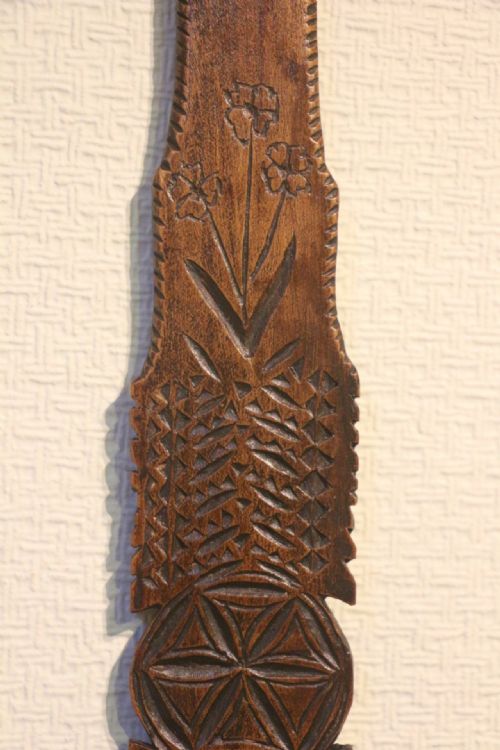
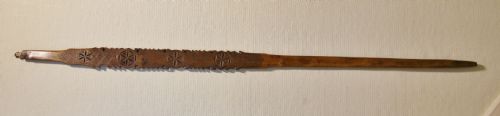
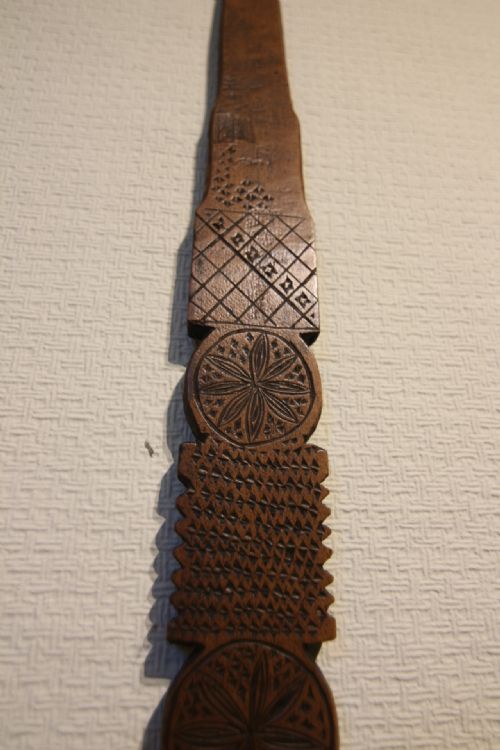
A wooden textile tool represents the functional equipment used in domestic fibre production, including knitting sheaths, lace making pillow holders, bobbin winders, distaffs, sock darners, and wool winders. Buyers searching for a wooden textile tool encounter domestic implements primarily from the eighteenth and nineteenth centuries, spanning Georgian, Victorian, and folk art traditions.
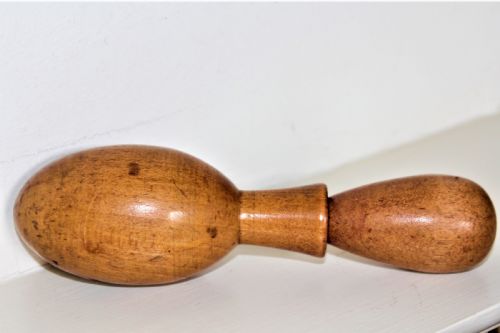
The objects on this page range from intricately carved hardwood distaffs and fruitwood lace bobbin winders to utilitarian Durham knitting sheaths and country treen sock darners. French regional pieces also appear alongside British examples, showing varied domestic workshop origins.
Most pieces date to the nineteenth century, with specific representations from the Victorian era and earlier eighteenth century Georgian periods. These items reflect the hands-on nature of historical textile crafts before mechanisation displaced home production.
How they were made
Maker construction relies heavily on turned wood and carved wood techniques, utilising dense materials such as hardwood and fruitwood alongside mahogany. Workshops employed simple lathes and hand tools to shape functional domestic items from local timber.
Makers occasionally integrated mixed materials into these wooden implements, incorporating brass fittings, glass elements, and paper components to assist their mechanical operation.
Wooden Textile Tool Retail Price Guide 2026
Typical asking prices for wooden textile tool among the pieces listed under this phrase on Sellingantiques today, from the lower quarter to the upper quarter. They describe what is for sale here now, not the wider market.
Current listings feature materials including hardwood, fruitwood, mahogany, brass, glass, and paper across eighteenth and nineteenth century periods.
What varies in quality
Quality rests upon the ambition of the carving and the dexterity shown in turning the timber, moving from basic utilitarian items to finely decorated folk art objects. The crispness of hand-carved detail on pieces like distaffs distinguishes standard workshop output from more expressive vernacular examples.
The choice of material also dictates distinction, where dense fruitwoods and figured hardwoods display superior grain and patination compared to plain utility timbers. Mechanical complexity similarly defines the tier, separating simple solid socks darners from articulated bobbin winders and wool winders.
The Wooden Textile Tool Glossary
- Distaff
- A staff that holds wool or flax for spinning. It forms a central component of traditional hand-spinning setups.
- Bobbin winder
- A mechanical device used to wind thread or yarn onto bobbins for lace making or weaving. These examples often incorporate geared wooden wheels.
- Knitting sheath
- A small carved wooden case tucked into a belt to support a single knitting needle during fast working. Durham examples display distinct regional carving patterns.
- Treen
- Small handmade wooden household objects and utensils. This category covers everyday domestic items shaped by turners and woodworkers.
- Sock darner
- A solid wooden tool inserted into the foot of a sock to maintain shape during mending. These items demonstrate simple rounded turning.
Wooden Textile Tool: Frequently Asked Questions
What is a wooden textile tool used for?
These implements served practical roles in historic home fibre preparation and construction, assisting with spinning, lace making, knitting, and yarn winding.
Craftspeople relied on them daily to tension thread, shape yarn, and support repetitive handwork before industrial textile machinery took over.
How do I date a wooden textile tool?
Dating relies on identifying period styles, tool types, and the specific turning or carving techniques characteristic of eighteenth and nineteenth century production.
Examining the wood species, surface wear, and any integrated brass or glass components helps narrow down the era of manufacture.
How do I display these in a modern home?
Their sculptural forms and rich wooden patinas make them well suited for placement on open shelves, tabletops, or within cabinet displays.
Grouping items like bobbin winders or distaffs together highlights their varied folk art carvings and domestic history.
What is country treen?
Country treen describes small, functional wooden objects made for domestic use outside of formal urban guild workshops.
These pieces were typically turned or carved from local timbers by jobbing woodworkers or makers working within rural communities.