



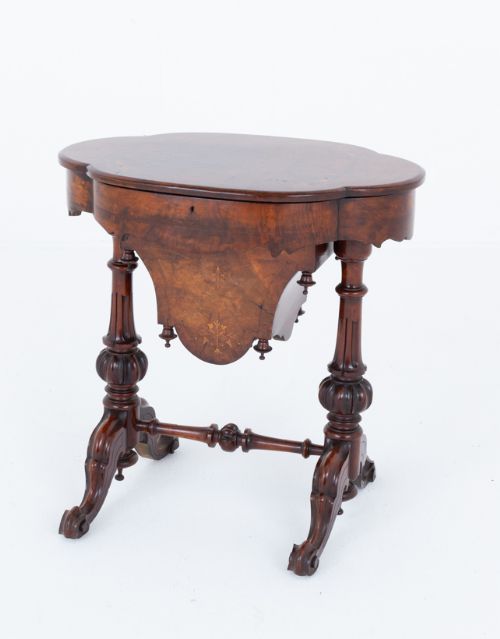
Wooden Table Basket
These wooden table basket pieces combine functional work surfaces with clever storage, offering a practical antique addition to any room.
Wooden Table Basket
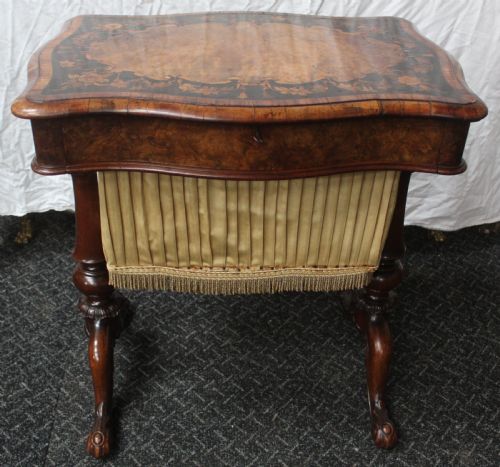
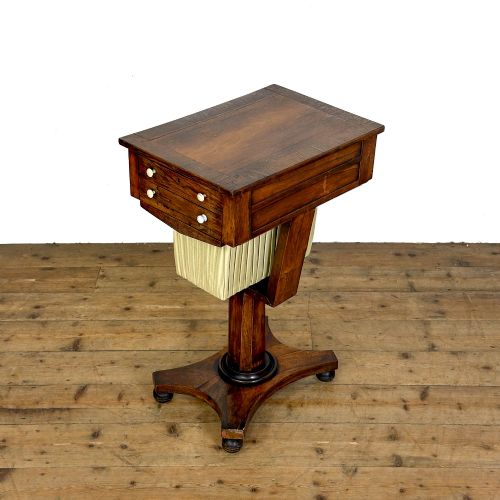
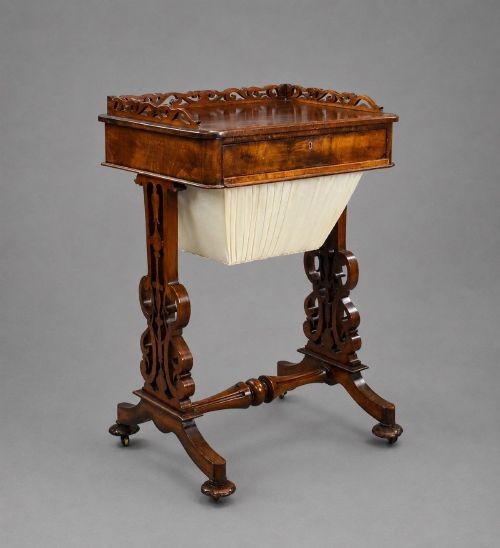
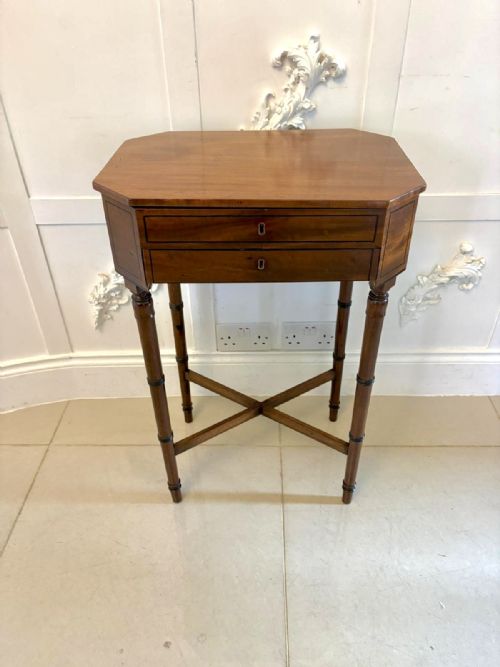
A wooden table basket typically takes the form of a work table, sewing table, or occasional lamp table designed for domestic utility. These pieces bring together a stable wooden surface with a dedicated compartment or removable basket for textiles and small items.
Most examples encountered here date from the nineteenth century, spanning the Regency, Victorian, and Edwardian periods. Alongside traditional work tables, the selection includes occasional side pieces and related forms like canterburys.
Makers utilised various formats, from inlaid mahogany occasional pieces to burr walnut sewing tables fitted with drop-in storage. Each piece serves as both a functional item of furniture and a decorative accent for the home.
How they were made
Makers relied primarily on cabinet timbers such as mahogany, rosewood, and burr walnut to construct the main frames and tabletops. These dense woods were frequently polished to highlight natural grain patterns, while select items incorporated delicate inlay work.
Internal components and fitted compartments often included secondary elements in bone and fabric to accommodate sewing implements. Metal mounts, handles, and occasional decorative rims utilised brass or silver plate.
Wooden Table Basket Retail Price Guide 2026
Typical asking prices for wooden table basket among the pieces listed under this phrase on Sellingantiques today, from the lower quarter to the upper quarter. They describe what is for sale here now, not the wider market.
What varies in quality
Quality rests heavily on the choice of timber and the precision of the cabinetwork. Pieces fashioned from finely figured rosewood or burr walnut demonstrate superior material selection compared to standard mahogany examples.
The refinement of decorative details, such as intricate woodwork inlay and the structural integrity of the integrated basket or compartment, distinguishes finer work tables from simpler utility pieces.
The Wooden Table Basket Glossary
- Work table
- A small domestic table designed with a drawer, bag, or basket to hold sewing and needlework materials. These pieces were popular throughout the nineteenth century for parlour use.
- Canterbury
- A low stand featuring partitions for holding sheet music, books, or magazines, often combined with a drawer below. Originating in the eighteenth century, they continued through the Victorian era.
- Inlay
- A decorative technique where pieces of contrasting wood, bone, or other materials are fitted into depressions in the base surface. This creates a flush, patterned design on tabletops.
- Burr walnut
- Timber taken from the gnarled growth of a walnut tree, prized for its swirling, highly figured grain patterns. It was frequently utilised on high-status Victorian furniture.
Wooden Table Basket: Frequently Asked Questions
What is a wooden table basket used for?
These pieces were originally designed to hold needlework, sewing supplies, and small domestic accessories close to hand while seated. The integrated basket or fabric bag kept materials organised beneath the main surface.
Today, they function well as lamp tables or occasional side tables in a living space, offering discreet storage for modern clutter.
How do I date a nineteenth-century work table?
Dating relies on observing the prevailing wood choices, structural forms, and decorative styles of periods like Regency, Victorian, and Edwardian. Mahogany and rosewood dominate earlier pieces, while burr walnut gained favour later in the century.
Secondary indicators include the style of turning on legs, the presence of specific inlay motifs, and overall cabinet construction methods.
Are the baskets usually removable?
Many period work tables feature removable sewing baskets or drop-in fabric bags suspended beneath the tabletop. Some Georgian and Victorian examples incorporate fitted trays that lift out entirely.
Others utilise hinged wooden lids or compartmented drawers that serve a similar organising function without a fabric component.
Where should I place a work table at home?
These compact tables suit placement beside a sofa, armchair, or bed as an occasional or lamp table. Their modest proportions allow them to fit into smaller spaces where a full-sized table would prove too bulky.
The combination of a flat top and lower storage makes them practical surfaces for daily use.