




Wooden Saddle Stand
A wooden saddle stand or related tack and mount offers traditional utility, bringing genuine equestrian history and classic country house character directly into your interior.
Wooden Saddle Stand
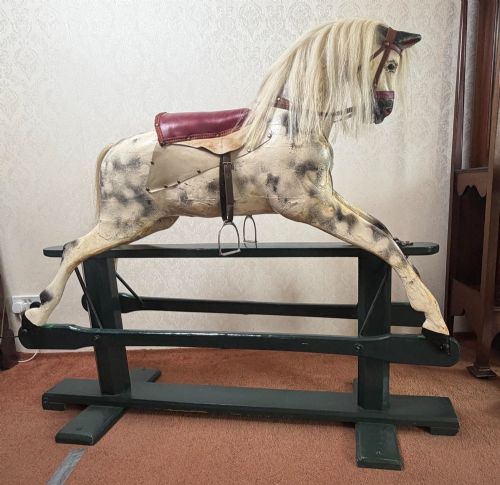
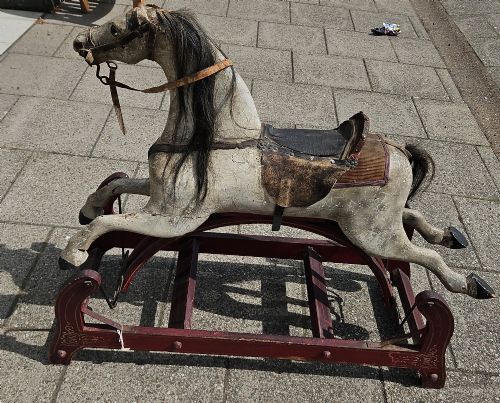
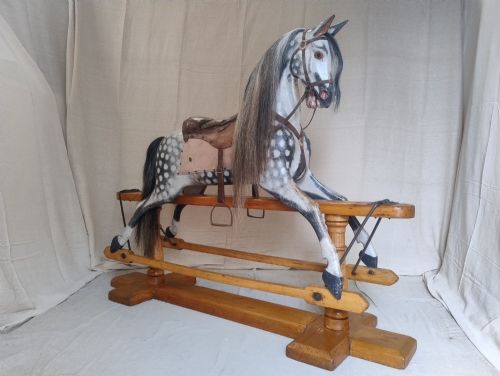
When you search for a wooden saddle stand, you encounter a selection of items primarily comprising antique rocking horses and country house saddle racks spanning the Victorian period through to the mid-twentieth century. These objects bridge the gap between working equestrian equipment and traditional children's playthings, reflecting the prominent role of horses in daily life.
The most common examples you meet on this page are carved wooden rocking horses, often presented on their original rockers, alongside practical wall-mounted or freestanding saddle racks from the Edwardian era. Makers constructed these items from robust timbers suited to enduring heavy physical use, whether supporting a leather saddle or bearing the weight of a swinging child.
Origins stretch from the late nineteenth century into the nineteen-forties, capturing both formal Victorian craftsmanship and simpler English country styles. Each piece carries the distinct marks of its era, visible in the choice of wood, the method of carving, and the overall structural form.
How they were made
Construction relies heavily on traditional woodworking techniques applied to sturdy timbers like pine and oak, providing the necessary structural integrity for large objects. Artisans shaped these woods using hand tools to create the curved bodies of horses and the solid brackets of saddle racks.
Materials extend beyond plain timber to incorporate leather, horsehair, iron, and steel for manes, tails, tack, and mechanical pivot points. These mixed media elements ensured durability and realistic movement, combining rigid metal hardware with soft organic padding.
Wooden Saddle Stand Retail Price Guide 2026
Typical asking prices for wooden saddle stand among the pieces listed under this phrase on Sellingantiques today, from the lower quarter to the upper quarter. They describe what is for sale here now, not the wider market.
Listings feature items spanning the Victorian era through the nineteen-forties, constructed primarily from pine, oak, leather, and iron.
What varies in quality
The degree of artistic ambition in the carving defines the upper tier of these pieces, separating standard utilitarian items from sophisticated sculptural examples. Finer horses display detailed anatomical modeling and expressive painted finishes that reflect considerable artisan skill.
Subtleties in original hardware and timber selection also distinguish finer pieces, where intact leather components and untouched surface patination reveal superior preservation. Lesser examples often feature replacement parts or simplified construction intended purely for basic utility.
F.H. Ayres·Collinson
The Wooden Saddle Stand Glossary
- Rocking horse
- A toy horse mounted on curved wooden rockers or a safety stand designed for children to ride. These objects range from modest pine toys to large carved examples by prominent makers.
- Saddle rack
- A wall-mounted or freestanding wooden and metal fixture designed to support the panels of a horse saddle without damaging the leather. They served practical storage functions in stable yards and country house tack rooms.
- Rocking
- The curved wooden base or bow upon which a traditional rocking horse pivots to create motion. Original rockers remain a significant feature for collectors.
- Pine
- A softwood commonly utilised for the bodies and stands of nineteenth and twentieth century toys and utility items. It offered a workable material that took paint and carved details effectively.
- Oak
- A dense, durable hardwood chosen for robust furniture and structural fixtures requiring high strength. It provides exceptional longevity in country house saddle racks.
Wooden Saddle Stand: Frequently Asked Questions
What is a wooden saddle stand?
A wooden saddle stand or associated rack is a piece of equestrian equipment designed to hold a leather saddle securely off the ground. These items utilise sturdy timbers and metal brackets to maintain the shape of tack in a stable or tack room.
In the context of this page, the search also encompasses related wooden equine forms, specifically antique rocking horses from the Victorian and Edwardian periods. Both categories reflect traditional woodworking skills tied to nineteenth and twentieth century horse culture.
How do I date an antique rocking horse?
Dating relies on examining the construction methods, the style of the carving, and any visible maker marks or labels. Late nineteenth-century examples often feature distinct body proportions and pegged joints that differ from later twentieth-century production.
Materials such as original horsehair manes and early leather tack also provide clues to the era of manufacture. Comparing the rocker design and the type of pine or oak used helps narrow down the decade.
Where were saddle racks used?
Saddle racks originally stood in the tack rooms of country houses, stable blocks, and farm outbuildings. Their primary purpose was to store leather saddles safely between uses, preventing the panels from warping or absorbing dampness from stone floors.
Today, these practical wooden and iron fixtures transition into domestic interiors as functional coat hooks, shelf supports, or display pieces. They bring authentic equestrian heritage into modern hallways and studies.
Are these pieces made of solid wood?
Traditional items from the Victorian and Edwardian eras typically employ solid timbers such as pine and oak for their main structural components. Craftsmen selected these woods for their ability to withstand heavy daily use in busy households and stables.
Additional materials like iron, steel, leather, and horsehair appear alongside the wood to complete the functional aspects of the pieces. This combination of natural materials ensures each object retains its structural character.