


Wooden Saddle Horse
These wooden saddle horse pieces are substantial carved rocking horses and pull along toys that bring traditional craftsmanship and play into the home.
Wooden Saddle Horse
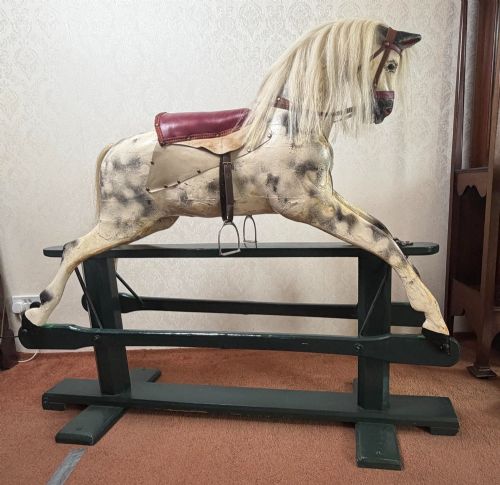
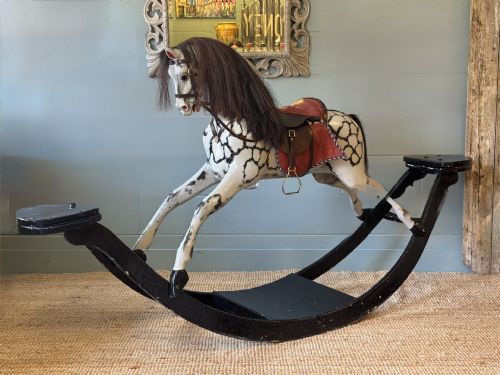
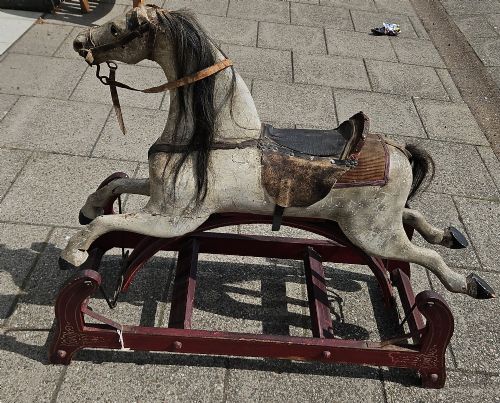
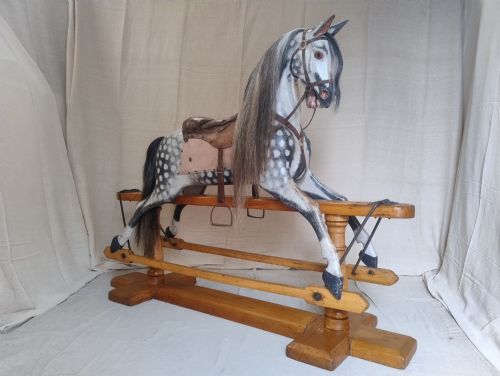
A wooden saddle horse primarily encompasses large antique rocking horses and childs pull along toys. Buyers searching for a wooden saddle horse encounter substantial carved figures mounted on curved wooden rockers or pull platforms.
The selection ranges from late nineteenth century Victorian examples to interwar period pieces. Most items span the decades from eighteen eighty through nineteen forty, capturing distinct eras of toy manufacture.
Makers such as G and J Lines, F H Ayres, and Collinson produced these robust wooden toys. Alongside carved pine and painted rocking horses, the inventory includes related paintings of mares.
Materials and construction
Makers utilised carved wood and pine to build the substantial bodies and rocker frames of these toys. Metal, iron, and steel components provided internal strengthening and operational hardware for the rocking mechanisms.
Finishing touches involved real leather and horsehair for tack and manes, alongside painted surfaces and glass eyes. These diverse materials worked together to create durable playthings that survived decades of use.
Some horses retain their original glass eyes, watching over the room with mild Victorian astonishment.
Assessing quality and character
Quality rests in the depth of the carving and the presence of original painted dapple finishes. Finer examples retain their initial character, including authentic horsehair and leather fittings.
Scale also dictates desirability, with extra large and very large pieces commanding attention. The integrity of the original wooden rockers and overall structural retention separate standard workshop output from premier maker pieces.
G and J Lines·F H Ayres·Collinson
The Wooden Saddle Horse Glossary
- Rocking horse
- A toy horse mounted on rocking arcs or safety stands designed for children to ride. These objects form the majority of the available items.
- Pull along horse
- A small toy horse mounted on a wooden base with wheels for pulling. These smaller items date back to the late nineteenth century.
- Curved wooden rockers
- The traditional arched wooden bases that allow the horse to sway back and forth. They define the classic rocking horse silhouette.
- Dappled
- A painted spotted coat pattern historically applied to wooden rocking horses to mimic real horse markings. This finish appears frequently on Victorian and Edwardian examples.
Wooden Saddle Horse: Frequently Asked Questions
How old are most wooden saddle horses?
The majority of these pieces date from the late nineteenth century through the interwar period. Victorian and Edwardian examples are particularly common in the listings.
Production methods shifted across these decades, moving from heavy carved pine constructions to slightly later twentieth century variations.
What materials were used to make them?
Constructed primarily from carved wood and pine, these horses incorporate metal, iron, and steel for structural support. Glass eyes and painted details bring the figures to life.
Leather and horsehair were standard for creating realistic tack, manes, and tails on the better pieces.
Are these pieces suitable for children?
While originally built as toys for children, antique wooden saddle horses are now largely appreciated as decorative items and historic artefacts. Their age and construction mean they require careful handling rather than heavy daily play.
Larger specimens make striking focal points in family rooms or nurseries.
How do I identify a maker?
Certain notable makers like F H Ayres, G and J Lines, and Collinson produced distinctive rocking horses with recognisable carving styles and proportions. Maker attribution often relies on structural traits and historical documentation.
Not all pieces bear stamps or labels, requiring careful comparison with known works.