


Wooden Rocking Baby Crib
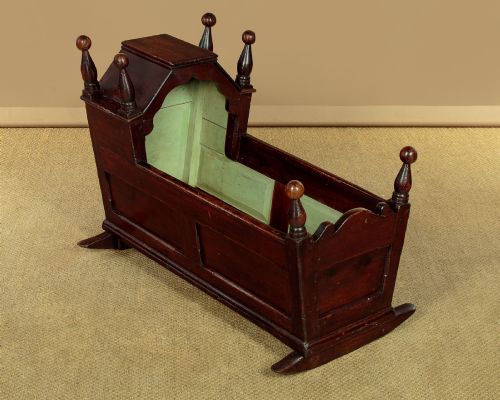
These wooden rocking baby crib pieces are historic slumber beds built to lull infants to sleep.
Wooden Rocking Baby Crib
A wooden rocking baby crib brings centuries of domestic history into a room, serving as both a functional infant bed and a striking decorative focal point. When searching for a wooden rocking baby crib, buyers encounter sturdy country examples alongside formal period models designed with hooded canopies or panelled sides.
The selection ranges from seventeenth-century oak and fruitwood iterations to nineteenth-century pine, mahogany, and painted variants. Most pieces rely on curved wooden rockers beneath the frame to create a gentle motion for soothing infants.
Earlier formats favour pegged construction and heavy timber panels, while later Victorian versions introduce cane work, upholstery, and painted finishes. Buyers frequently meet oak designs featuring traditional fielded panels alongside simpler pine cradles built for everyday use.
Materials and construction
Local cabinet makers relied primarily on native timbers such as oak and pine, shaping solid boards with hand tools and securing joints with wooden pegs. Master joiners utilised traditional frame and panel construction to accommodate wood shrinkage over time.
Curved rockers were attached to the base using robust joinery to withstand continuous motion. Finer examples incorporated secondary materials like mahogany, fruitwood, cane, and brass fittings, while country pieces often received protective coats of historic paint.
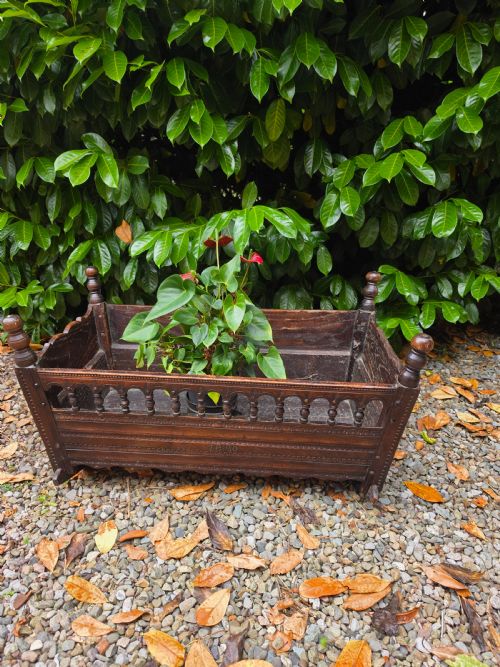
One robust Victorian oak cradle comes with a suggested second life as a handsome hearth log basket.
Quality variations
The standard of a wooden rocking baby crib depends on the selection of timber and the precision of the joinery. Superior examples display dense, well-figured oak with crisp panel mouldings and intact original rockers.
Artisanal skill shows in the proportion of the hood, the tightness of the pegged joints, and the survival of historic painted surfaces or cane work. Lesser pieces suffer from heavy timber replacement, degraded secondary woods, or unstable structural frames.
Heals and son
The Wooden Rocking Baby Crib Glossary
- Fielded panel
- A wooden panel with bevelled edges designed to fit tightly within a grooved frame. This technique allowed timbers to expand and contract naturally with changes in humidity.
- Hooded cradle
- A infant bed featuring a protective canopy or hood at the head end. This design sheltered the sleeping child from cold draughts in historic homes.
- Fruitwood
- Dense timber harvested from fruit-bearing trees such as pear or apple. Cabinet makers utilised these woods for decorative contrast and turning work.
- Pegged construction
- A method of joining wooden components using handmade wooden pins rather than iron nails. This traditional technique provides enduring structural flexibility.
- Caning
- Woven rattan material used to form decorative panels in furniture sides. This technique added lightweight ventilation to nineteenth-century sleeping quarters.
Wooden Rocking Baby Crib: Frequently Asked Questions
How old is my wooden rocking baby crib?
Dating relies on examining the timber species, tool marks, and assembly methods used in the frame. Hand-pegged joints and heavy oak panels typically point to seventeenth or eighteenth-century origin.
Later nineteenth-century pieces often utilise machine-sawn boards, softer pine timbers, or applied factory mouldings. Comparing the hardware and surface wear helps narrow down the decade of manufacture.
Can I use an antique crib for a baby today?
Historic infant beds do not meet modern safety standards for unsupervised sleeping due to slat spacing and drop-side regulations. Most buyers choose to repurpose these items as decorative storage.
Many collectors utilise them to hold nursery blankets, soft toys, or firewood logs in a living space. Their historic charm makes them ideal interior display pieces.
How do I clean and care for old wood?
Maintain the timber surfaces by dusting gently with a dry, soft cloth to prevent particulate accumulation. Avoid modern silicone sprays or harsh chemical cleaners that strip historic wax finishes.
Applying a quality microcrystalline wax once or twice a year nourishes the dry wood and preserves the natural patina. Keep the piece away from direct heat sources and severe humidity fluctuations.
What is the difference between a cradle and a crib?
Traditional terminology often uses cradle to describe a rocking infant bed suspended or mounted on curved runners. A crib generally refers to a stationary bed with high vertical sides.
Many historic listings use the terms interchangeably when describing rocking infant furniture. The presence of integrated rockers remains the defining feature across these listings.