




Wooden Plan Chest
A wooden plan chest gives you deep, shallow drawers designed for maps and drawings that now anchor a room as a statement piece.
Wooden Plan Chest
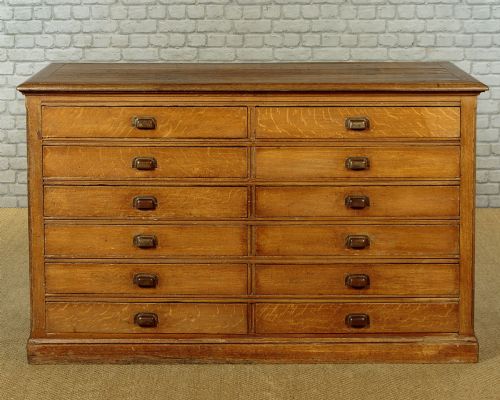
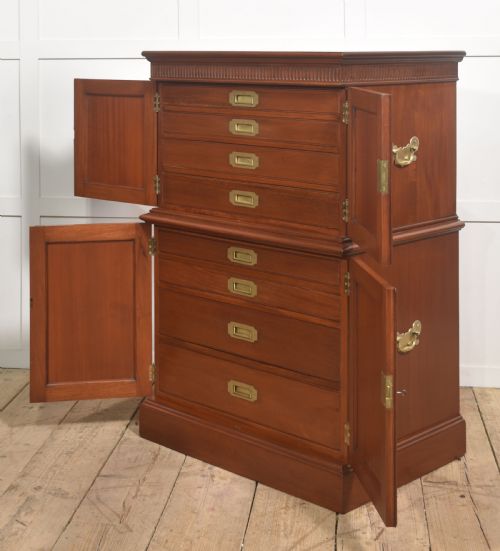
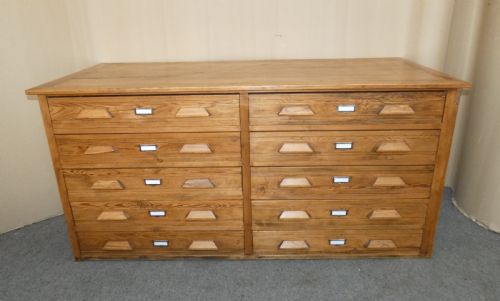
A wooden plan chest is essentially a substantial bank of shallow drawers originally built for architects, artists and cartographers to store large sheets flat. On this page, you are most likely to meet examples taking the form of collectors cabinets, banks of drawers and workshop units from the nineteenth and twentieth centuries.
The material palette relies heavily on utilitarian woods like pine, deal and oak, alongside finer timbers such as mahogany and red walnut. Styles range from Victorian campaign and Arts and Crafts to industrial utility and Edwardian Chippendale, reflecting their varied professional origins.
These pieces function brilliantly in modern homes as kitchen islands, hallway consoles or living room storage for art supplies and linens. Their generous proportions and multiple drawers provide exceptional utility without sacrificing period character.
Construction and Materials
Makers built these pieces using solid timbers like oak, pine and deal for structural carcases, often applying mahogany or red walnut for display surfaces and drawer fronts. Cabinetmakers utilised robust dovetail joints on the drawers to withstand the heavy daily pull of storing dense paper and specimens.
Wooden Plan Chest Retail Price Guide 2026
Typical asking prices for wooden plan chest among the pieces listed under this phrase on Sellingantiques today, from the lower quarter to the upper quarter. They describe what is for sale here now, not the wider market.
Listings feature pieces spanning from the mid nineteenth century through the Edwardian era up to mid twentieth-century industrial utility forms.
Judging Quality
The distinction between a standard workshop unit and a finer furnishing piece lies in the choice of cabinet timber and surface finish. Mahogany and red walnut cabinets with polished patination sit at the upper end, whereas painted or heavy deal workshop banks represent the utilitarian side of the craft.
Drawer construction tells its own story through the tightness of the joinery and the smoothness of the timber runners. Original brass pulls, intact backing boards and well-figured grain elevate an ordinary storage chest into a piece of serious interior architecture.
The Wooden Plan Chest Glossary
- Campaign
- Furniture built in modular sections with recessed brass fittings designed for easy transport by military officers. These pieces prioritize sturdy corners and flush handles to resist travel damage.
- Deal
- A traditional term for fir or pine timber used extensively in British cabinetmaking for secondary framing and carcases. It provides a pale, straight-grained base that accepts paint or stain readily.
- Folio cabinet
- A specialised piece of furniture intended for holding large sheets of paper, prints or drawings flat. They resemble plan chests but often feature finer styling suitable for a gentleman's library.
- Dovetail
- A joint formed by interlocking wedge-shaped fingers that locks wood panels together permanently at right angles. Fine hand-cut dovetails indicate patient craftsmanship and superior drawer longevity.
Wooden Plan Chest: Frequently Asked Questions
What fits inside these shallow drawers?
The wide, shallow proportions suit large paper sheets, art supplies, textiles and flat collections perfectly. They also work well in domestic settings for organising stationery, maps and accessories.
Because the drawers are not overly deep, items remain visible and accessible without stacking up into messy piles. This makes them practical for organising modern belongings while keeping surfaces clear.
How do I date a wooden plan chest?
Dating relies on observing the timber species, construction methods and hardware styles. Pieces from the nineteenth century often feature hand-sawn framing and solid deal or mahogany, while twentieth-century examples lean towards industrial utility.
Secondary clues include the type of brass pulls and the presence of makers marks or workshop stamps. Comparing the drawer linings and backboards helps distinguish Victorian workshop furniture from later twentieth-century commercial output.
Are these chests heavy to move?
These pieces are exceptionally heavy and solid, often constructed in two sections or as a single massive bank of drawers. Moving them requires two people and careful planning around tight stairwells and doorways.
Many period chests split into a top and bottom module to ease transport, resting on a simple plinth base. Removing all the drawers beforehand significantly lightens the main carcase for relocation.
How do I care for old timber surfaces?
Maintenance involves applying natural beeswax periodically to nourish dry wood and preserve the antique lustre. Avoid placing them near direct heat sources or strong sunlight to prevent timber warping and fading.
Cleaning requires only a soft, dry cloth to remove dust from the grain and brass hardware. Keeping the humidity in the room stable ensures the drawer runners continue to slide smoothly.