





Wooden Period Canterbury
A wooden period canterbury offers clever compartmentalised storage for sheet music and newspapers, bringing refined craftsmanship and timeless practicality to any sitting room.
Wooden Period Canterbury
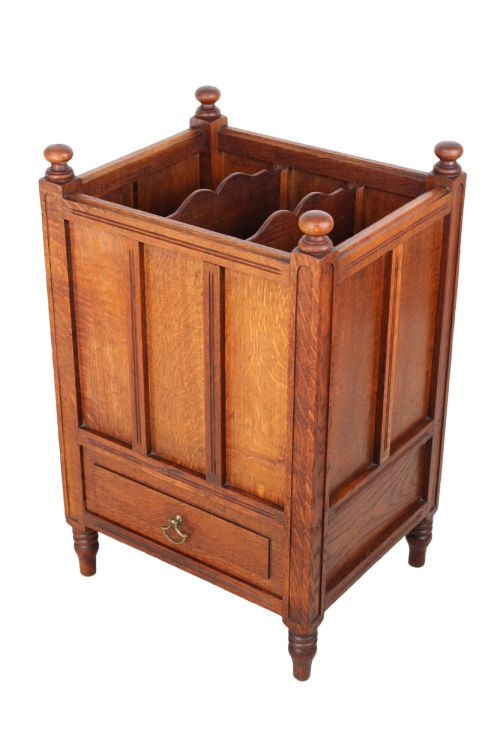
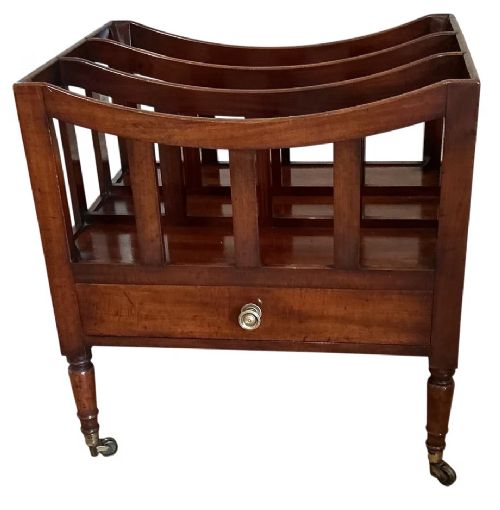
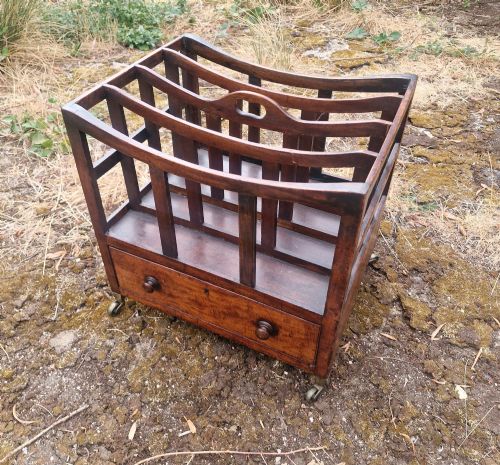
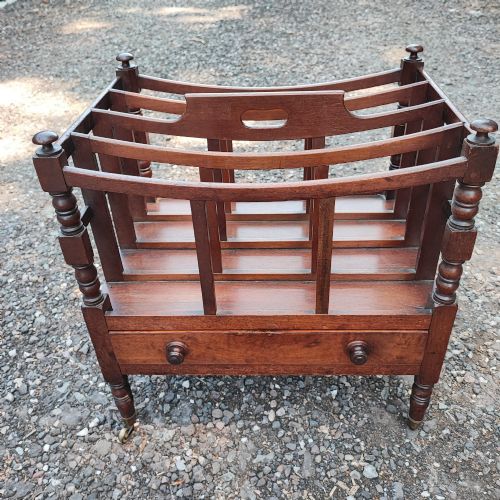
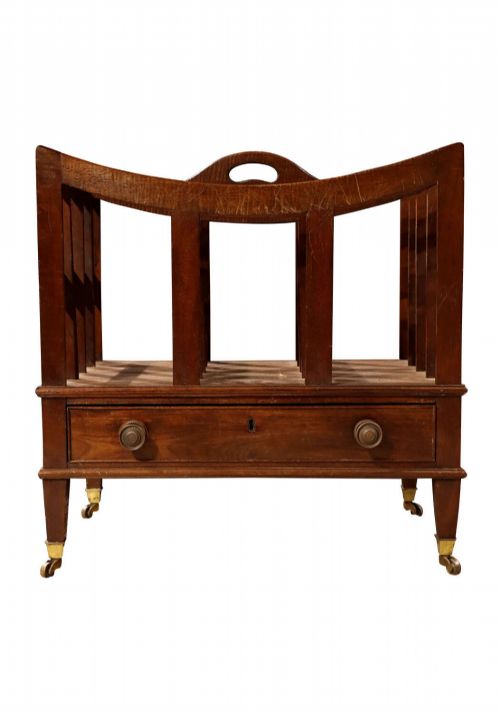
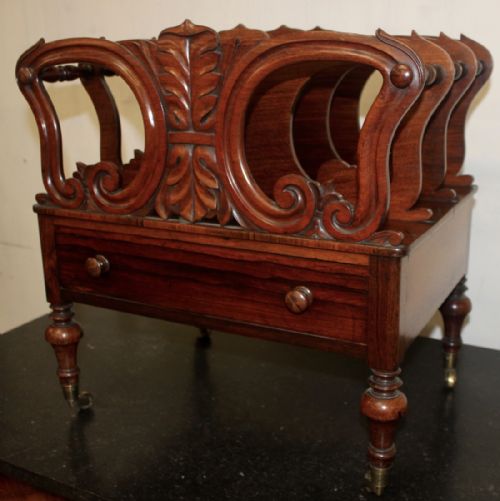
When you search for a wooden period canterbury, you are looking at a specialised stand designed to hold books, sheets of music, and newspapers within divided upright sections. These pieces typically feature a low stand configuration, frequently incorporating a single drawer beneath the partitions and supported on castors.
The versions you are most likely to meet on this page span several distinct eras, originating from the Georgian, Regency, William IV, Victorian, and Edwardian periods. Alongside traditional canterburys, the listings include related forms such as magazine racks, sheet music cabinets, whatnots, and etageres.
Woods such as mahogany, rosewood, walnut, burr walnut, and oak dominate the construction, often enhanced by satinwood inlay or brass details. Forms range from boat-shaped Regency designs to multi-tiered Edwardian and later magazine racks.
How they were made
Cabinet makers utilised dense timbers like mahogany, rosewood, and oak to build the robust frames and slender vertical dividers required to support heavy volumes of paper. Turning, carving, and fine joinery formed the structural skeleton of each piece, ensuring stability while maintaining a light visual profile.
Decorative refinement was achieved through contrasting veneers, elaborate satinwood inlay, and moulded brass fittings. Certain models also featured painted surfaces or intricate carved elements to suit changing interior fashions across the nineteenth and early twentieth centuries.
Wooden Period Canterbury Retail Price Guide 2026
Typical asking prices for wooden period canterbury among the pieces listed under this phrase on Sellingantiques today, from the lower quarter to the upper quarter. They describe what is for sale here now, not the wider market.
Named after the Archbishop of Canterbury, who supposedly requested a low compartmentalised stand for his music books, these pieces brought order to Georgian parlours.
What varies in quality
The choice of primary timber and secondary veneers marks the initial division, with figured rosewood, burr walnut, and finely grained mahogany sitting at the upper end of the scale. Superior examples display meticulous attention to the dovetailing of drawers, crispness of wood carving, and the integration of original brass castors.
Proportion and decorative restraint dictate the overall elegance of the design, separating standard utilitarian pieces from exceptional cabinet work. The sharpness of inlay work and the harmonious balance between the storage dividers and the supporting legs further define the distinction between ordinary and high-grade specimens.
The Wooden Period Canterbury Glossary
- Canterbury
- A low stand with vertical partitions used originally for holding sheet music or books. It frequently includes a drawer in the base and rests on castors.
- Etagere
- A piece of furniture consisting of a set of open shelves for displaying small objects. They appear alongside whatnots in multi-tiered storage formats.
- Boat-Shaped
- A distinctive curved outline seen in certain Regency designs, giving the upper rails a sweeping silhouette reminiscent of a vessel's hull.
- Satinwood Inlay
- Contrasting light-toned wood inserted into a darker primary timber to create decorative geometric or botanical patterns on the surface.
- Whatnot
- An open set of shelves used for storage and display, often combining compartments for literature with tiered platforms.
Wooden Period Canterbury: Frequently Asked Questions
What is a wooden period canterbury used for?
Originally designed to hold folios of sheet music and unbound newspapers near a piano or seating area, these stands kept reading materials organised and accessible.
Today, they serve a similar practical function in modern living spaces for holding magazines, journals, and books while adding period character to a room.
How do I identify a Regency canterbury?
Regency pieces often feature crisp architectural lines, dark timbers like mahogany or rosewood, and distinctive design motifs such as boat-shaped frames or finely turned uprights.
They frequently rest on slender legs fitted with original brass castors, reflecting the neoclassical aesthetic popular during the early nineteenth century.
What is the difference between a canterbury and a magazine rack?
A traditional canterbury typically combines vertical partitions for holding upright volumes with an enclosed drawer beneath, built from fine furniture timbers.
Magazine racks tend to emerge in later Edwardian and twentieth-century contexts, sometimes adopting simpler open frames or multi-tiered structures without drawers.
How do I care for a antique wooden canterbury?
Maintain the finish by keeping the timber away from direct heat sources and strong sunlight, which can dry out rosewood, mahogany, or walnut veneers.
Apply a traditional beeswax polish occasionally to nourish the grain and protect the surface without building up excessive residue.