
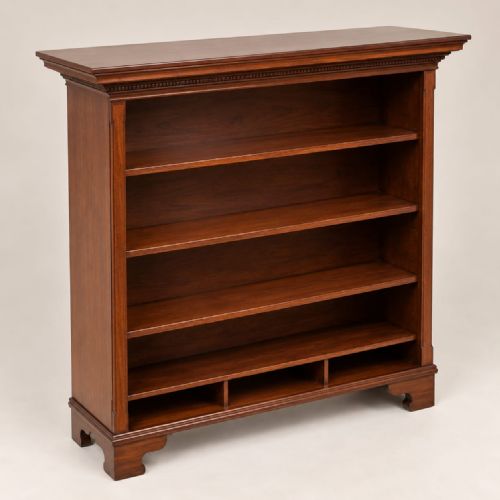

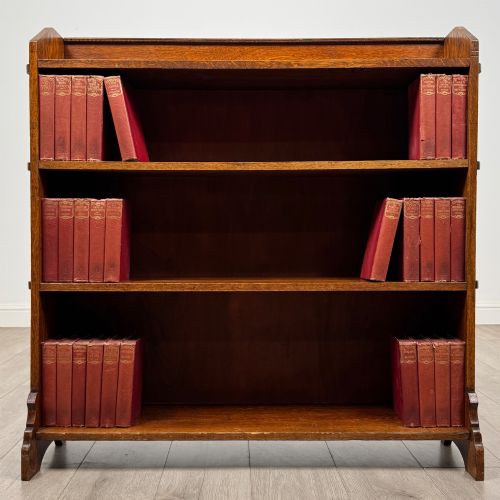
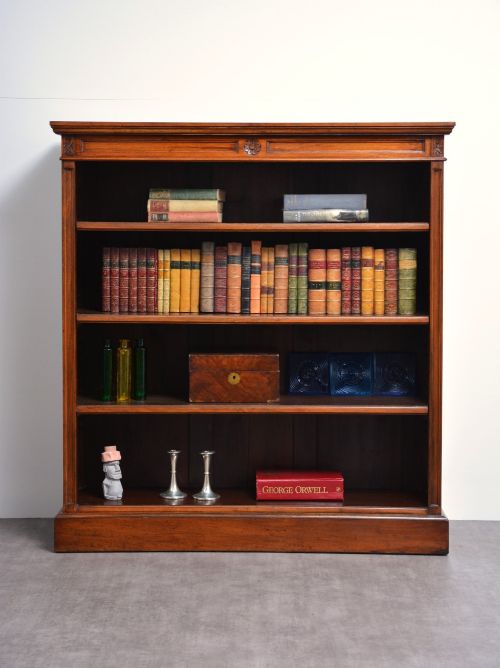
Wooden Open Shelving Unit
A wooden open shelving unit offers practical display space, bringing architectural form and accessible storage to a room through varied period designs.
Wooden Open Shelving Unit
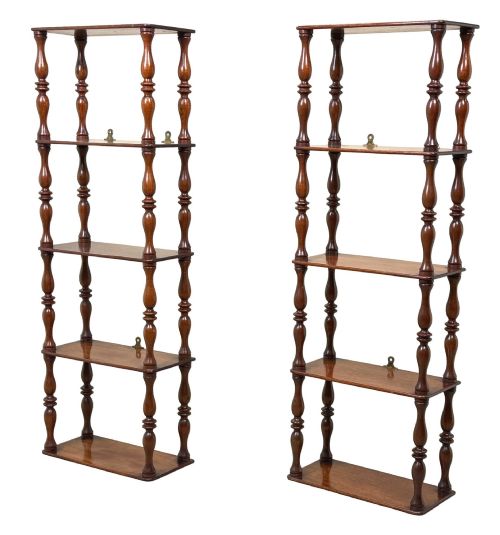
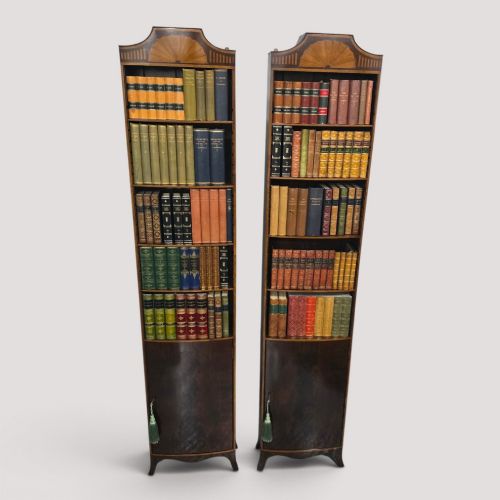
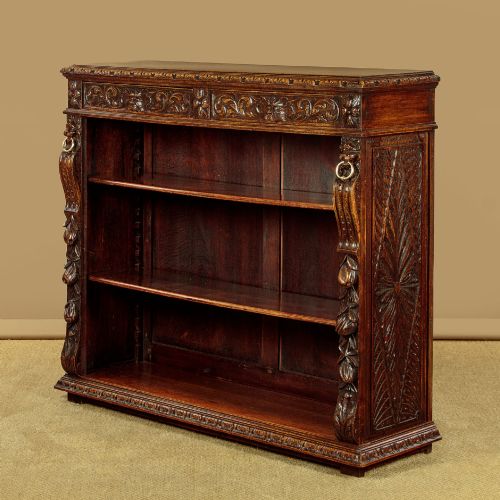
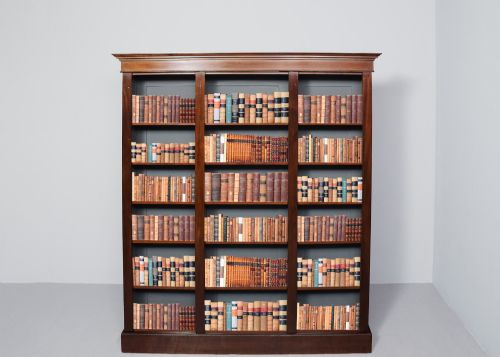
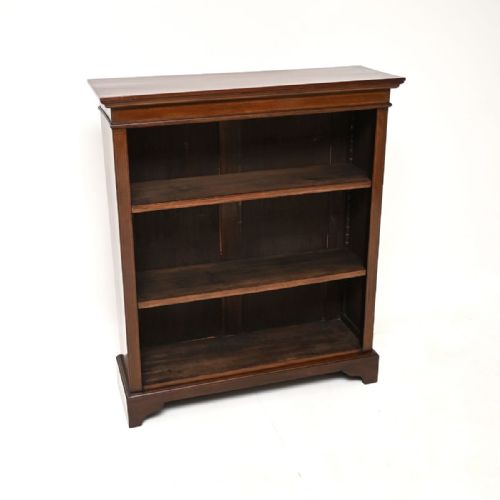
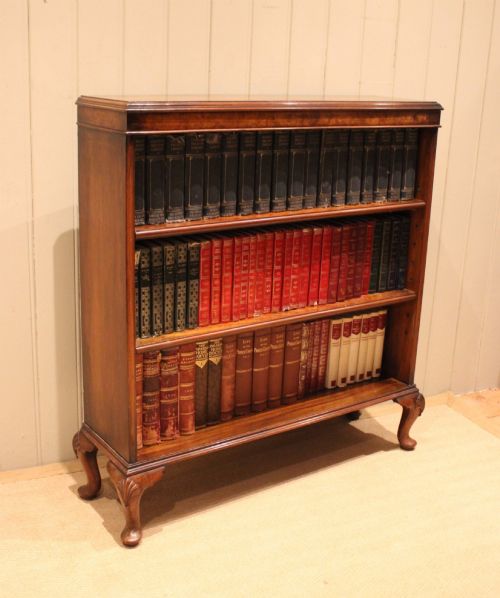
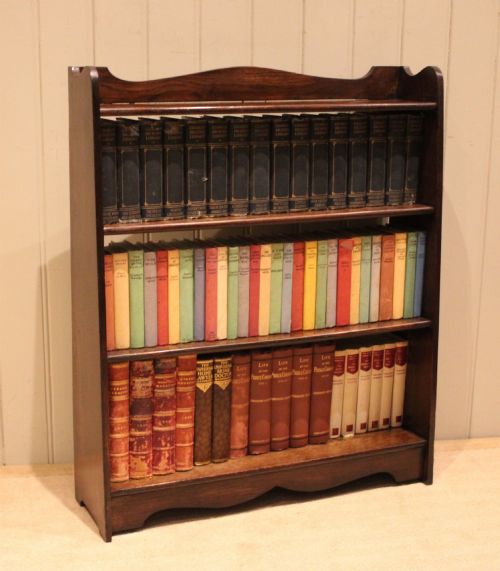
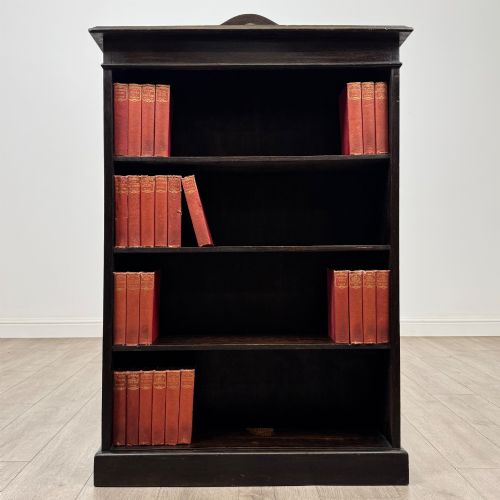
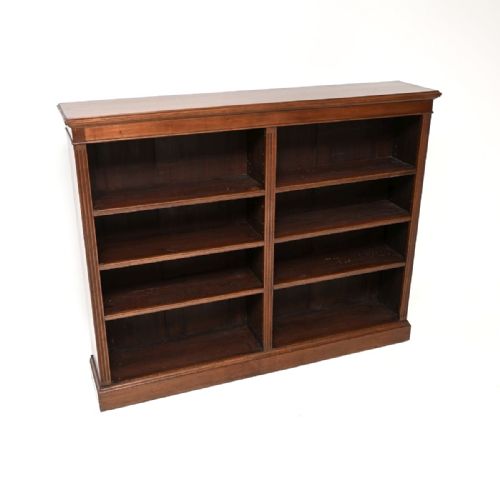
A wooden open shelving unit functions primarily to display books and decorative objects without the visual barrier of doors. When you examine a wooden open shelving unit on this page, you encounter forms ranging from compact Victorian bookcases to larger Edwardian library pieces.
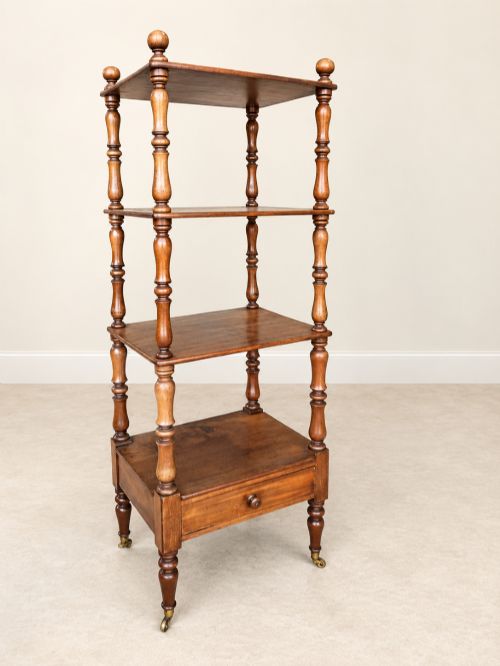
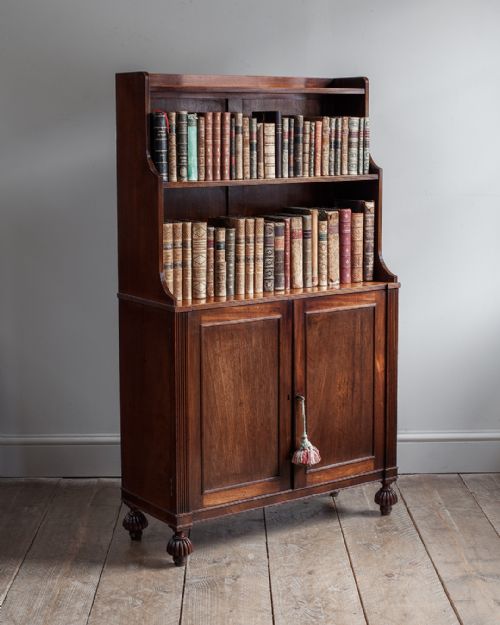
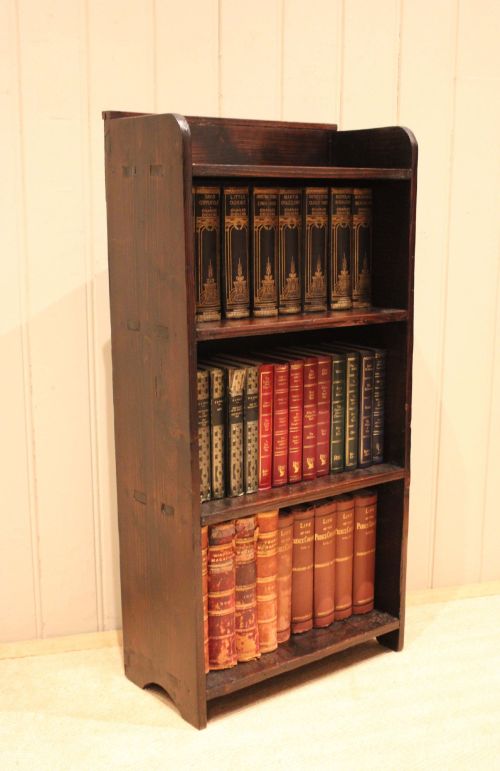
The selection encompasses distinct regional and stylistic variations, including rustic pine constructions alongside refined inlaid mahogany waterfall bookcases. These pieces frequently appear as freestanding bookcases, etageres, and wall shelves spanning the nineteenth and twentieth centuries.
Makers utilised diverse timber varieties to suit domestic interiors, producing structured geometric layouts as well as stepped waterfall tiers. Each wooden open shelving unit reflects the prevailing domestic requirements of its period, from formal nineteenth-century libraries to early twentieth-century rustic settings.
Materials and construction
Makers relied principally on hardwoods such as oak, mahogany, walnut, and burr walnut, alongside softer pine and general timber. These woods were selected for structural integrity and surface figure, frequently enhanced with brass castors or inlaid details.
Construction techniques prioritised functional adaptability, incorporating adjustable shelves supported by internal wooden racks or brass fittings. Joinery methods varied from robust nineteenth-century carved frames to lighter twentieth-century panel assembly.
Listings feature timbers including oak, mahogany, walnut, burr walnut, pine, and padauk across the nineteenth and twentieth centuries.
Distinctions in quality
Quality reveals itself in the selection and matching of timber veneers, particularly within burr walnut and figured mahogany pieces. Finer examples display meticulous craftsmanship in carved ornamentation and inlaid stringing.
Structural refinement distinguishes standard utility pieces from exceptional commissions, seen in the smooth operation of adjustable shelving and the integration of substantial brass hardware.
Heals
The Wooden Open Shelving Unit Glossary
- Waterfall bookcase
- A tiered shelving unit where each successive shelf steps back from the one below it. This form gained popularity during the nineteenth century for display purposes.
- Etagere
- A set of open shelves designed for displaying ornaments and small objects. These pieces often feature slender vertical supports.
- Adjustable shelves
- Shelves that can be moved to different heights within the bookcase interior. This system utilises vertical tracks or rows of peg holes.
- Inlay
- Decorative wood or brass inserted into the solid timber surface to form patterns. This technique frequently defines Edwardian and Regency cabinetwork.
- Padauk
- A dense tropical timber valued for its distinct reddish colour and durability. It appears in nineteenth-century Anglo-Indian furniture.
Wooden Open Shelving Unit: Frequently Asked Questions
How do I adjust the shelves?
Many period bookcases feature adjustable shelves supported by wooden ratchets, brass studs, or vertical slots cut into the interior sides. You simply lift each board to clear the support mechanism and reposition it at the desired height.
Older mechanisms may require careful handling if the wood has expanded over time. Ensure the shelf rests evenly on all four supports to maintain stability.
Where should I place an open bookcase?
An open bookcase suits living rooms, studies, and hallways where books and decorative objects remain easily accessible. Position the piece away from direct sunlight and heat sources to protect the timber from drying out or warping.
Because these units lack backing in certain designs, consider the colour of the wall behind the shelving when planning your arrangement.
How do I clean antique timber?
Dust your wooden shelving unit regularly using a soft, dry cloth to prevent particle buildup. Avoid silicone-based polishes, which can leave a residue and attract dirt over time.
Apply a traditional beeswax occasionally to nourish the grain and maintain the natural lustre of the wood surface.