



Wooden Nursery Toy
A wooden nursery toy brings the charm of historical playrooms into a modern home, offering tactile history through carved animals and wheeled conveyances.
Wooden Nursery Toy
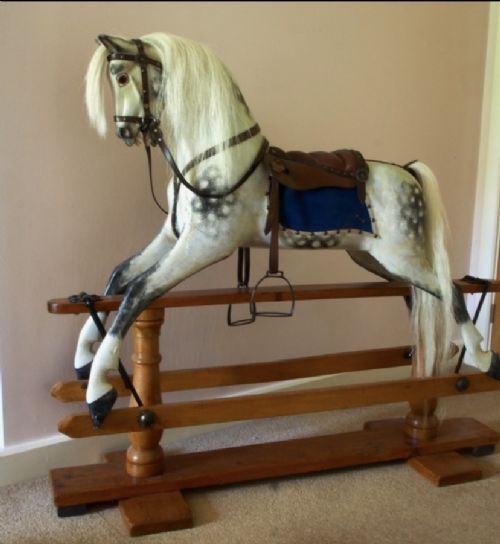
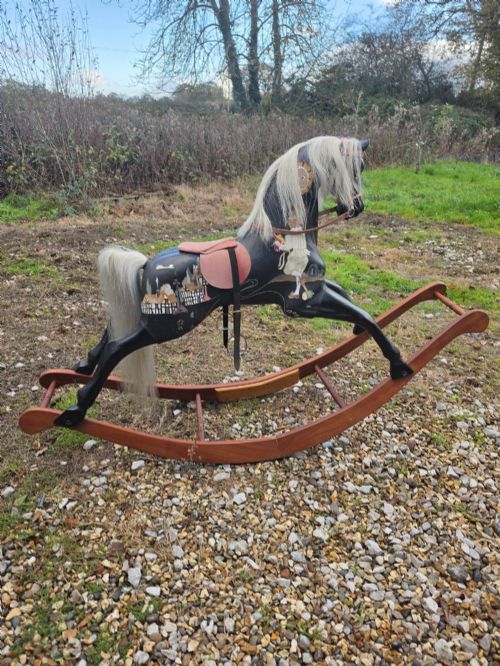
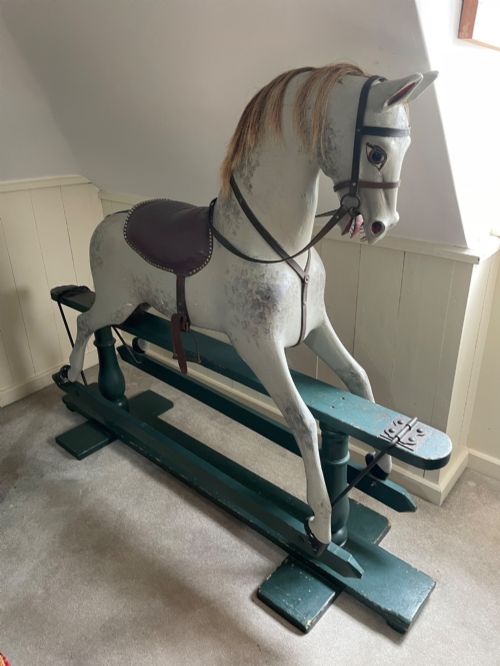
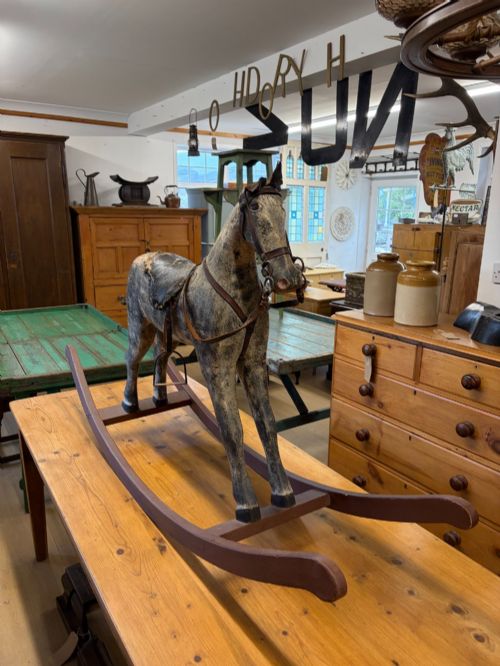
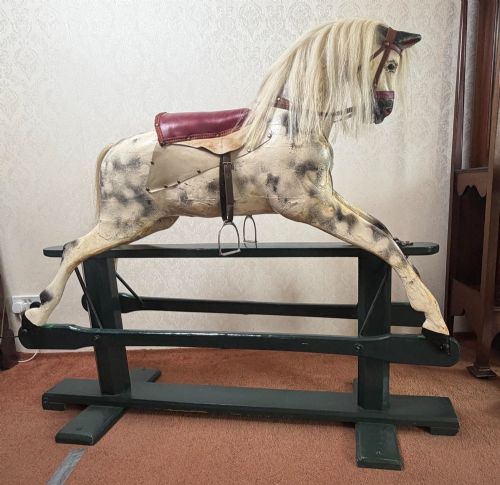
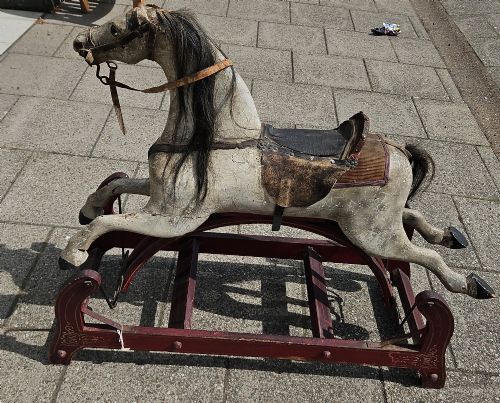
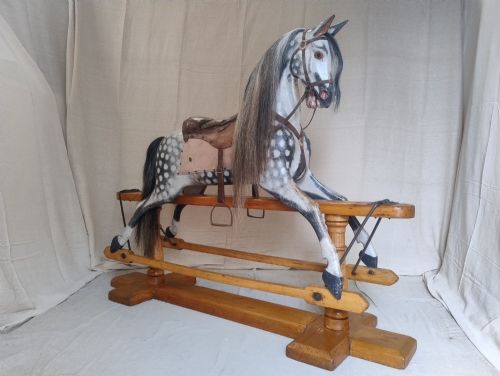
A wooden nursery toy most commonly takes the form of a rocking horse, alongside pull-along animals, tricycles, and rattles. These pieces date from the nineteenth century through the mid-twentieth century, spanning Victorian, Edwardian, and Art Deco periods.
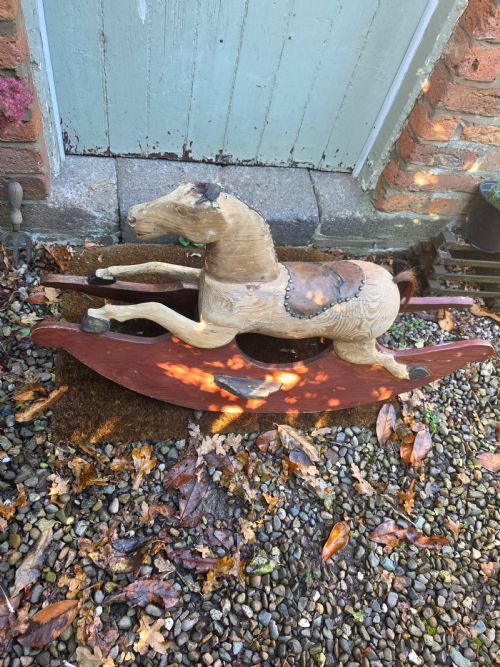
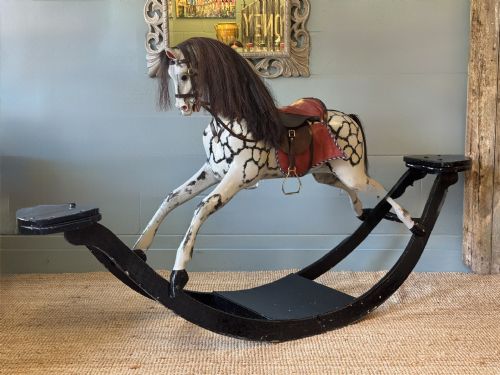
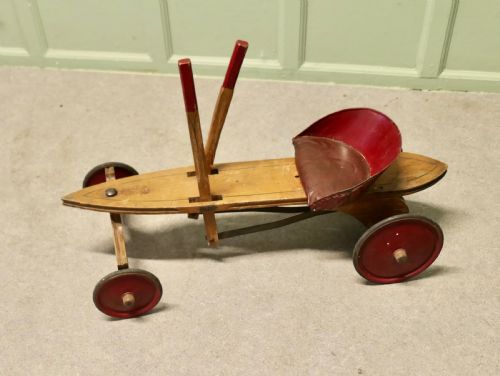
Rocking horses dominate the selection, appearing either mounted on safety frames or resting on curved wooden rockers. Smaller items like carved lionesses, pull-along horses, and hand-operated children's cars provide variety in scale and form.
Makers and regional styles range from English firms like F.H. Ayres, G & J Lines, and Collinson to Spanish naive folk art pieces. The materials reflect practical working methods of past decades, combining timber structures with leather, horsehair, and metal fittings.
Assessing quality and character
Quality shows in the depth and skill of the carving, particularly in the facial expressions and anatomical proportions of rocking horses and animal figures. Sculptural presence distinguishes a piece carved by a skilled hand from simpler, naive vernacular items.
The survival of original paint surfaces and authentic tack such as leather and horsehair elevates a piece above those with later repainting or missing components. Structural integrity of the underlying wooden frame and original rockers also defines the standing of each item.
Wooden Nursery Toy Retail Price Guide 2026
Typical asking prices for wooden nursery toy among the pieces listed under this phrase on Sellingantiques today, from the lower quarter to the upper quarter. They describe what is for sale here now, not the wider market.
Listings feature items spanning the 1880s to the 1950s, incorporating pine, paint, leather, and iron.
G & J Lines of London·F.H. Ayres·Collinson·Lines Bros Sportiboy
The Wooden Nursery Toy Glossary
- Treen
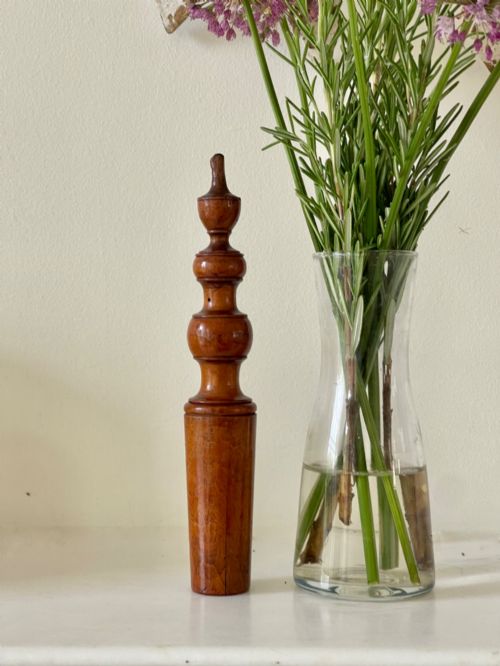
- Small handmade wooden objects and household items. These domestic pieces include turned rattles and miniature toys from the nineteenth century.
- Folk art
- Objects created by self-taught makers or within a regional tradition using local materials. Naive painted wooden horses often fall into this expressive category.
- Pull-along
- A toy mounted on wheels or a small platform designed to be towed by a child using a string or cord. These toys frequently depict horses or other animals.
- Rocker
- The curved wooden base upon which traditional rocking horses move back and forth. Some nineteenth-century examples retain their original single-piece curved timbers.
Wooden Nursery Toy: Frequently Asked Questions
How do I date a wooden rocking horse?
Dating relies on examining the construction methods, nail types, and the shape of the body and stand. Victorian and nineteenth-century examples often feature deep hand-carving and distinct iron brackets.
Later pieces from the twentieth century tend to show standardised manufacturing techniques or bear maker stamps from established firms.
Are these toys safe for children to ride?
These antique items function primarily as decorative objects or collector pieces rather than modern safety-tested playthings. Their historical construction may lack contemporary stability standards.
Collectors generally place them in living spaces or nurseries as sculptural focal points rather than active toys.
What is the difference between folk art and factory toys?
Folk art pieces display naive carving and individual stylistic choices made by regional artisans without standard templates. They often feature charming irregularities in proportion and hand-applied paint.
Factory toys from known makers follow consistent production patterns with refined anatomical carving and branded ironwork.
How should I care for painted wooden toys?
Preservation requires keeping wooden toys away from direct sunlight and maintaining stable indoor humidity to prevent wood splitting. Gentle dusting with a dry cloth protects fragile original paint surfaces.
Avoid using modern cleaning chemicals or water on antique painted or leather components.