


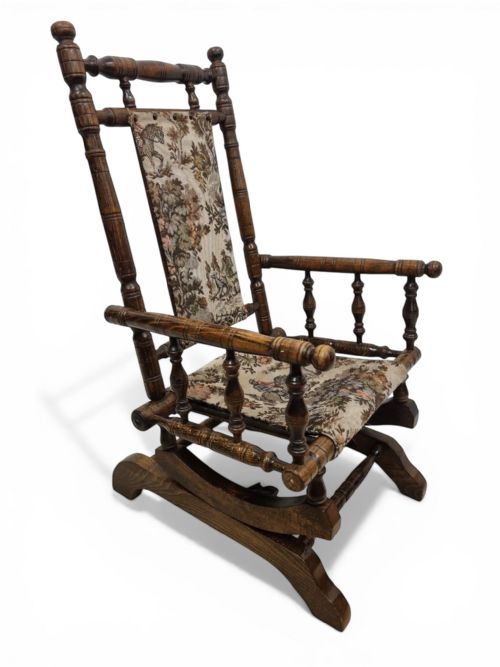


Wooden Nursery Rocker
A wooden nursery rocker brings historic charm into a home, offering sturdy elm, beech, pine, and oak forms designed for children and infants.
Wooden Nursery Rocker
A wooden nursery rocker encompasses a varied selection of antique seating and sleeping furniture built for the youngest members of the household. These pieces span centuries of domestic life, taking the form of childs rocking chairs, rocking horses, cradles, and cribs.
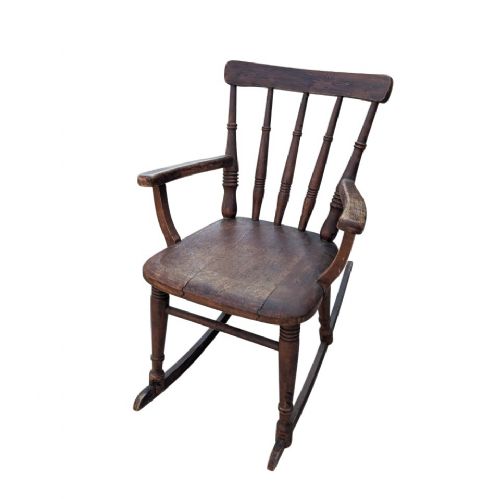
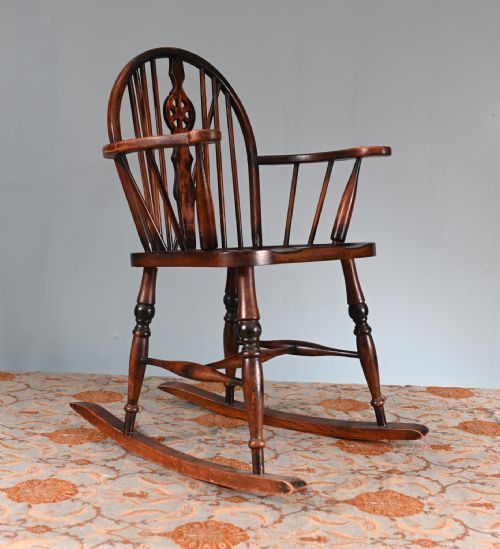
The version most commonly met on this page is the nineteenth century childs rocking chair, constructed from native timber like elm, beech, and pine. Such pieces frequently adopt Windsor, spindle back, or vernacular country styles suited to daily domestic use.
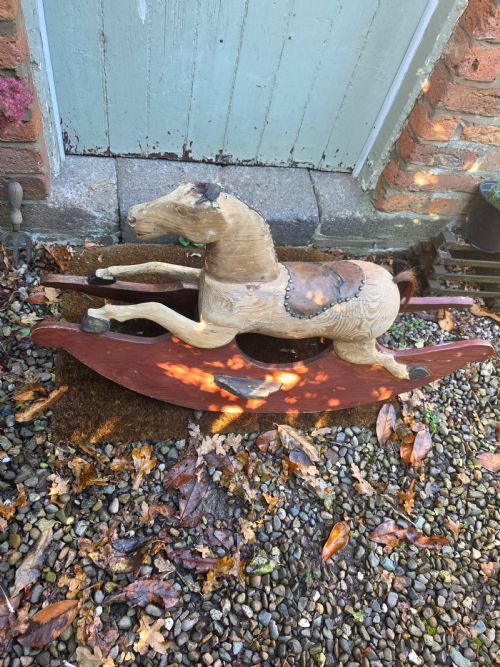
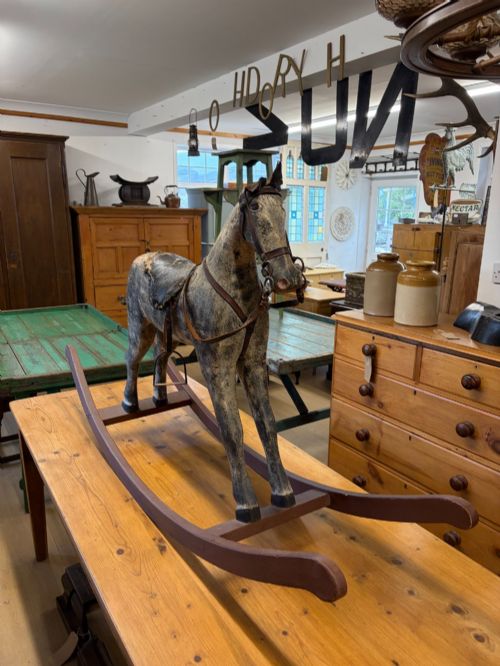
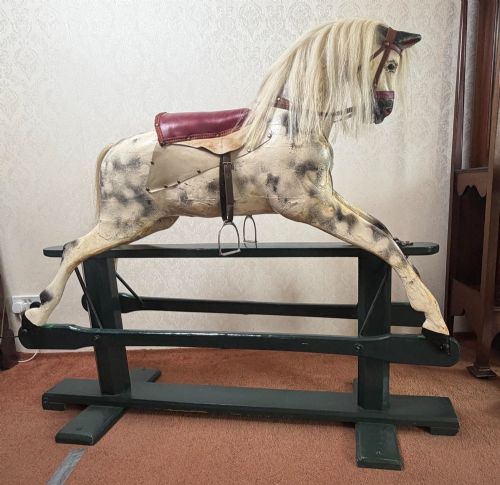
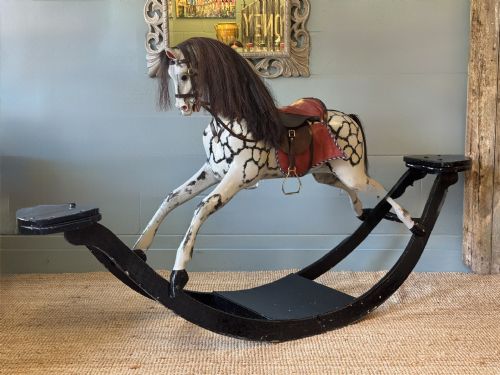
Alongside smaller seating, the selection includes larger wooden rocking horses mounted on original curved rockers or safety stands. These playthings and nursery furnishings reveal the practical hand of regional makers working across the Victorian era and earlier periods.
Materials and construction methods
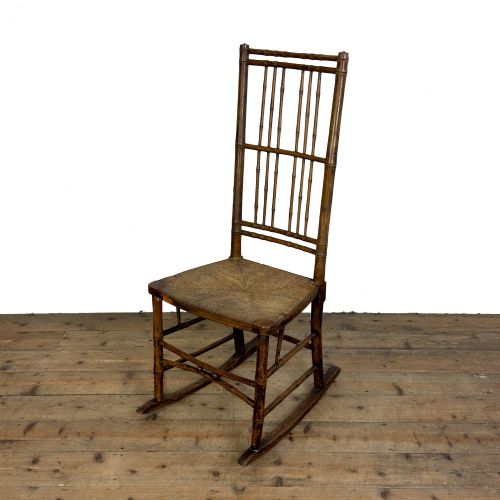
Makers relied on solid native timbers including elm, beech, ash, oak, and pine to build durable frames capable of withstanding constant movement. Fruitwood and mahogany appear in select pieces, while surfaces often display original paint, ebonised finishes, or faux bamboo detailing.
Joinery methods combined traditional pegged joints, turned spindles, and steam-bent components, particularly in Windsor and bentwood examples. Upholstery materials such as leather, horsehair, and tapestry occasionally supplement the solid wood seats.
Wooden Nursery Rocker Retail Price Guide 2026
Typical asking prices for wooden nursery rocker among the pieces listed under this phrase on Sellingantiques today, from the lower quarter to the upper quarter. They describe what is for sale here now, not the wider market.
Listings feature items spanning the 18th, 19th, and early 20th centuries, constructed from elm, beech, pine, oak, and mahogany.
Assessing quality in early pieces
Quality rests in the integrity of the timber and the honesty of the construction, from hand-carved rocking horse bodies to pegged Windsor joints. Pieces retaining their original paint surfaces or untouched original rocking bases command greater attention from those seeking authenticity.
Refinement in turning, such as delicate spindle backs and well-moulded seats, distinguishes finer vernacular workshop output from simpler utilitarian items. The survival of original upholstery materials like horsehair or early tapestry also elevates the character of a piece.
G & J Lines of London
The Wooden Nursery Rocker Glossary
- Windsor
- A chair built with a solid wooden seat into which the legs and back spindles are directly wedged. This technique creates a sturdy framework typical of country furniture.
- Bentwood
- Wood heated and bent into curved shapes using steam. This process defines lighter seating forms from the Victorian and Edwardian periods.
- Spindle back
- A chair back filled with numerous thin turned wooden rods. These uprights provide structural support while keeping the piece light.
- Faux bamboo
- Wood carved, turned, and painted to imitate the segmented stalks of natural bamboo. This decorative finish gained popularity during the Victorian era.
- Potty rocker
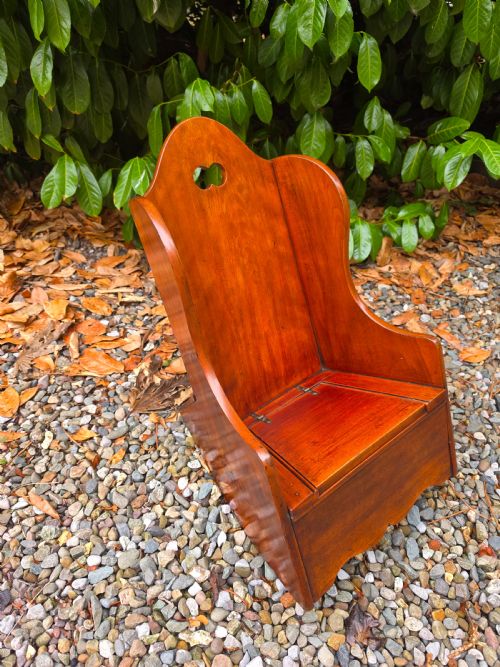
- A low childs chair featuring a cut-out seat designed for toilet training. These functional pieces date primarily from the Georgian and nineteenth century eras.
Wooden Nursery Rocker: Frequently Asked Questions
How do I date a wooden nursery rocker?
Dating relies on observing construction techniques, tool marks, and timber species. Earlier eighteenth-century examples display hand-turned elements and pegged joinery, whereas later Victorian pieces often utilise machine-sawn components and factory-applied finishes.
Comparing the style of the spindle back, arm shape, and rocker profile against documented periods helps narrow the decade of manufacture. Original surface treatments, such as early paint or patinated oak and elm, also offer clues to age.
Are these rockers safe for modern children?
Antique nursery rockers were built for historical domestic environments and rarely meet modern safety standards. Many feature open spindles, low guards on cradles, or steep rocking arcs that require careful adult supervision.
Most collectors treat these pieces as decorative items or display furniture rather than active playthings for small children. Careful placement ensures the historic timber remains protected from heavy daily wear.
What is the difference between a Windsor and a bentwood rocker?
A Windsor rocker uses traditional joinery where individual turned spindles and legs fit into bored holes within a solid elm or beech seat. This creates a rigid, heavy, and robust country chair.
By contrast, a bentwood rocker relies on steam-treated timber shaped into smooth, flowing curves. This technique produces a lighter, more elastic frame characteristic of later nineteenth and early twentieth-century design.