

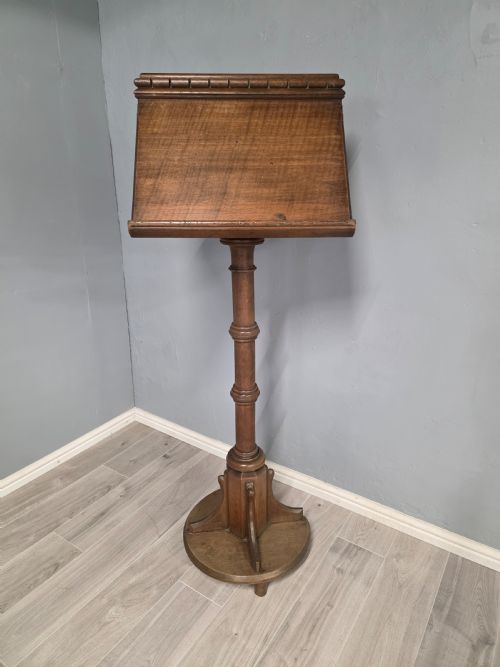


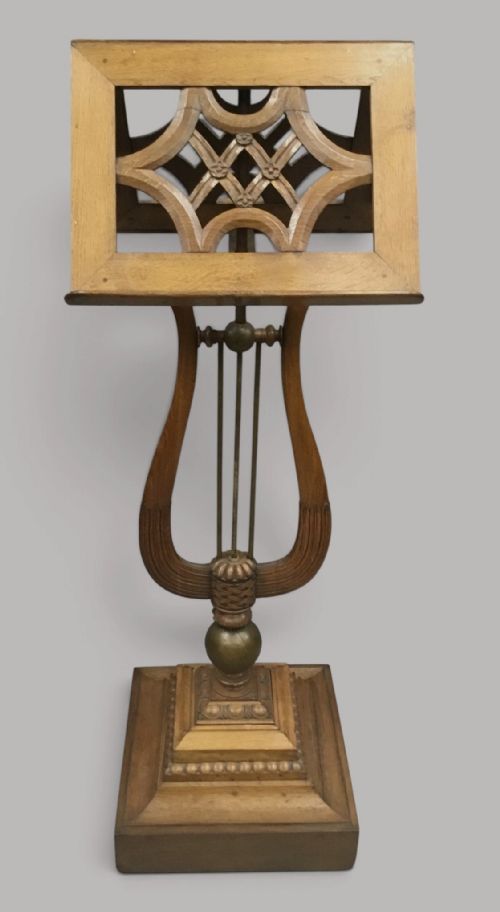


Wooden Music Desk
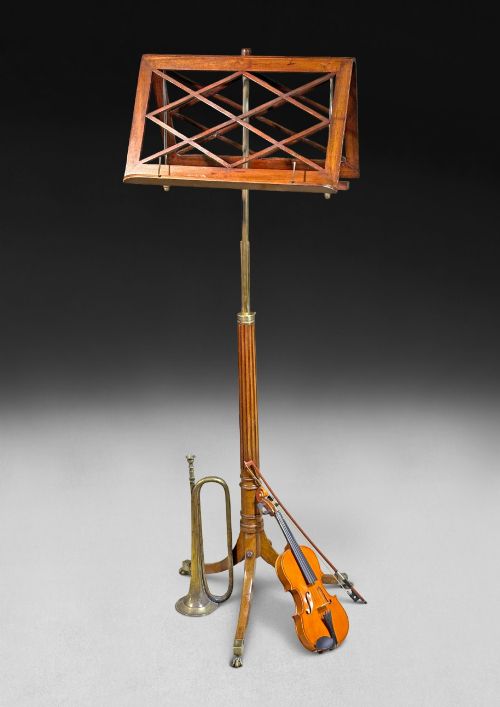
These pieces of wooden music desk furniture bring functional beauty to any room through adjustable stands and clever pivoting ledges.
Wooden Music Desk
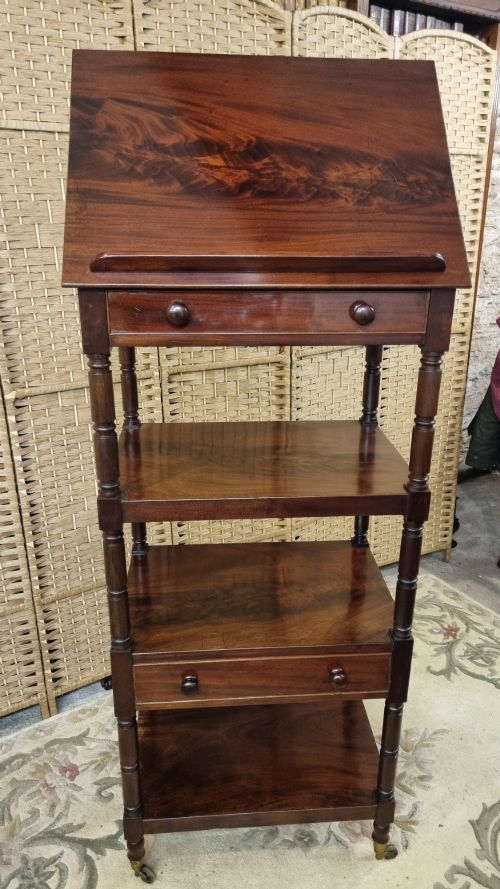
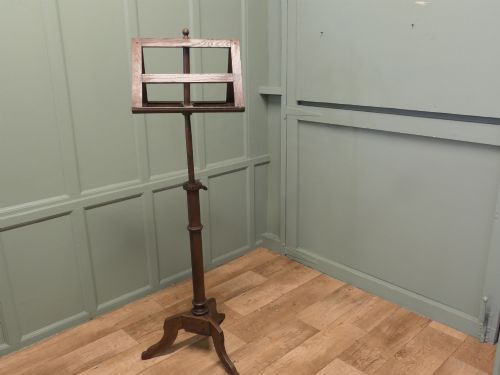
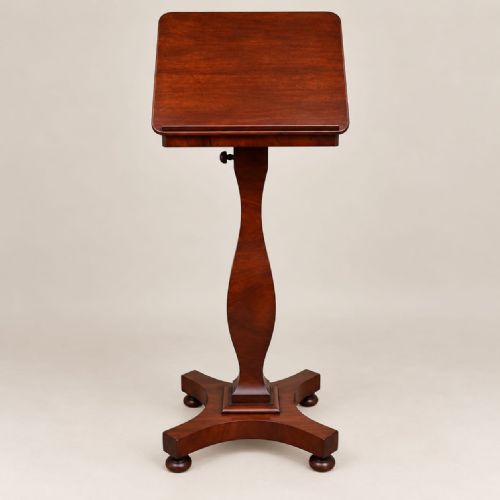
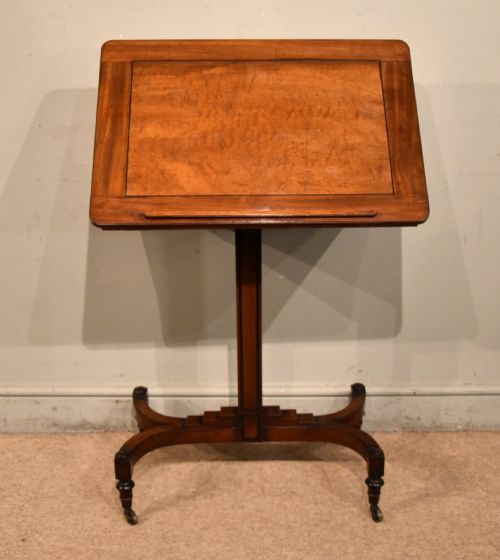
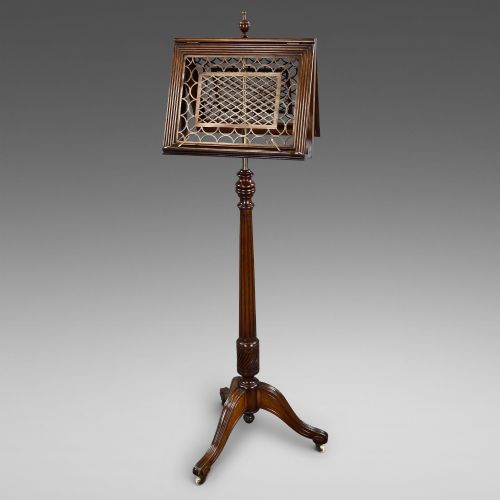
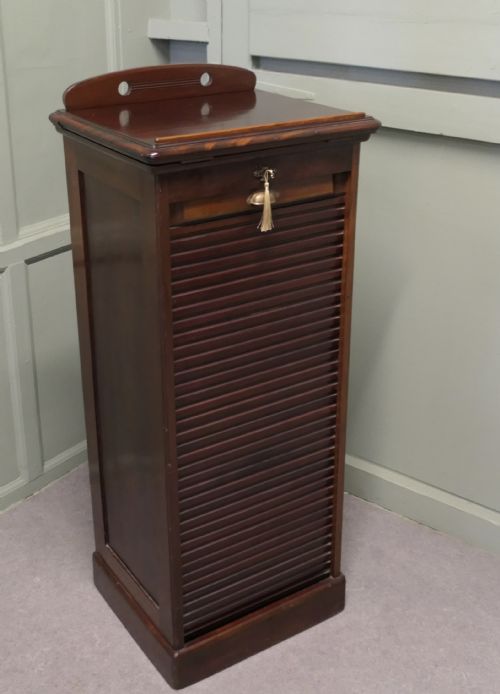
A wooden music desk serves primarily as a dedicated support for scores, folios and reading material, combining height adjustment with tilting surfaces. When you search for a wooden music desk, you will encounter various forms spanning the nineteenth century, including pedestal stands, tripod bases and occasional reading tables.
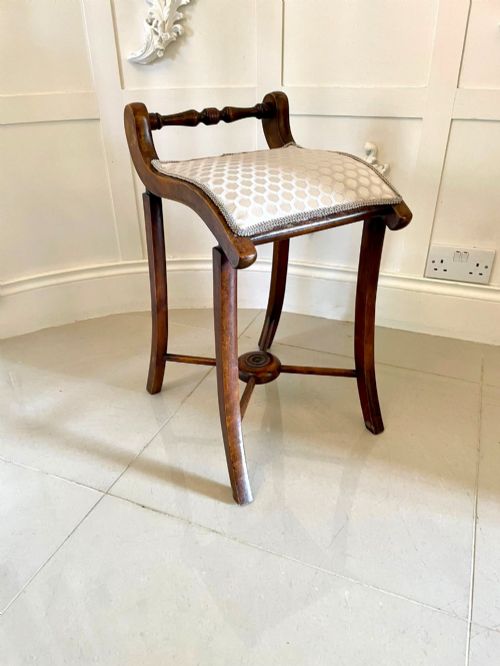
The objects appearing on this page encompass forms such as duet stands, church lecterns and music chairs with integrated surfaces. Mahogany and walnut examples dominate the selection, often featuring pivoting book rests supported by robust pedestals.
Makers designed these items for domestic parlours, churches and reception rooms, prioritising adjustability for seated or standing musicians. Regency and Victorian pieces emerge most frequently, showing both formal classical lines and heavier Gothic revival influences.
How they were made
Cabinet makers utilised dense hardwoods like mahogany, walnut and gonçalo alves to achieve stable columns and intricate fretwork on the adjustable ledges. Turning lathes shaped the central pedestals and tripod legs, while skilled joiners constructed folding mechanisms for the book rests.
Brass fittings and screw adjustments appear regularly to secure the extending stems and pivoting desks, contrasting with the dark polished timber. Carved details such as eagles and foliage decorate the heavier lecterns, requiring deep chisel work by specialist woodcarvers.
Wooden Music Desk Retail Price Guide 2026
Typical asking prices for wooden music desk among the pieces listed under this phrase on Sellingantiques today, from the lower quarter to the upper quarter. They describe what is for sale here now, not the wider market.
Materials recorded across these listings include mahogany, walnut, oak, gonçalo alves and brass hardware.
What varies in quality
The sophistication of the mechanical adjustment mechanism dictates much of the distinction between standard items and superior examples. Well-engineered brass ratchets, smooth screw threads and solid joints separate refined library pieces from basic workshop productions.
Selection of timber grain and the presence of burr walnut veneers or delicate fretwork indicate higher workshop ambition. The integrity of the tripod base and the weight distribution across the feet also govern how steadily the desk supports heavy folios.
The Wooden Music Desk Glossary
- Duet stand
- A music stand with two reading ledges designed for two musicians sharing a single score. These often feature wider tops and double adjustment screws.
- Lectern
- A tall reading stand designed for holding books at a comfortable height for a standing speaker or reader. They frequently incorporate sloping book rests and sturdy pedestal bases.
- Gonçalo alves
- A dense exotic hardwood with striking contrasting grain patterns utilised in select nineteenth-century furniture. Cabinet makers valued it for both durability and visual impact.
- Fretwork
- Openwork ornamentation cut from thin wood panels using a saw or piercing technique. This technique creates decorative patterns along the edges of music desks.
- Tripod base
- A three-legged support structure commonly found beneath nineteenth-century music stands and reading tables. It provides stability on uneven floor surfaces.
Wooden Music Desk: Frequently Asked Questions
What is a wooden music desk used for?
These pieces support sheet music, books and documents at an adjustable angle for reading or performance.
Historically placed in parlours, churches or music rooms, they kept scores at eye level for seated or standing musicians.
How do I adjust the height?
Most examples utilise a central sliding stem secured by a brass thumbscrew or a ratchet mechanism.
Loosening the screw allows the upper shaft to rise or fall before tightening to lock the desk in place.
Are these pieces suitable for modern books?
The sloping ledges and supporting lips accommodate standard books, tablets and heavy sheet music volumes.
The sturdy hardwood construction and weighted tripod bases provide reliable support for daily reading.
How do I tell Regency from Victorian pieces?
Regency items generally display cleaner classical lines, simpler reeded columns and lighter proportions.
Victorian examples often show heavier massing, darker finishes, and decorative details like Gothic revival carving or burr walnut veneers.