



Wooden Maritime Diorama
A wooden maritime diorama captures the drama of the open sea in a glazed box or bottle, offering buyers a tactile piece of seafaring history.
Wooden Maritime Diorama
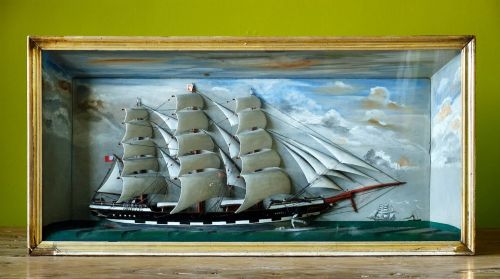
When you search for a wooden maritime diorama, you encounter three-dimensional scenes depicting sailing ships, racing vessels, and coastal landmarks housed within shadow boxes or glass bottles. These pieces capture historical vessels such as the sailing ship Glynllifon or local cobles against painted backgrounds.
The objects frequently fall under the umbrella of folk art, spanning the nineteenth century and the early decades of the twentieth century. Examples range from naive British sailing ship depictions to French handmade boat models in boxes.
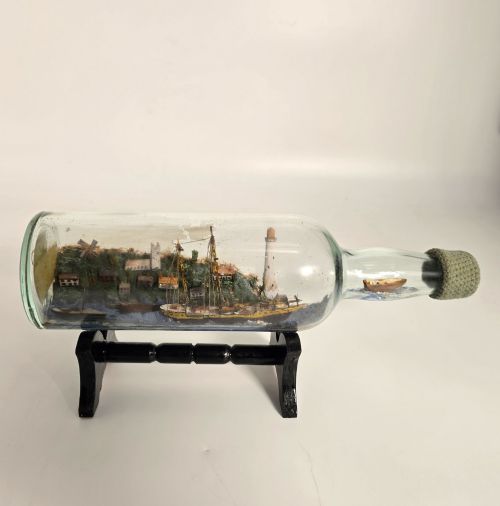
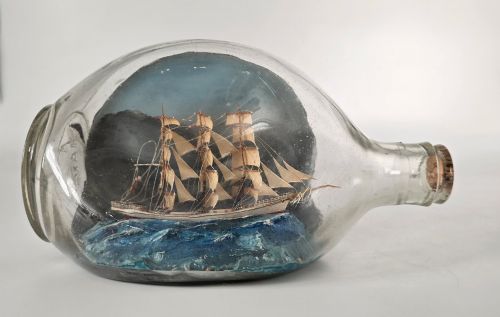
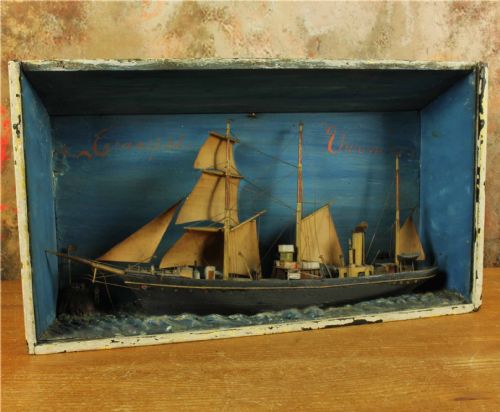
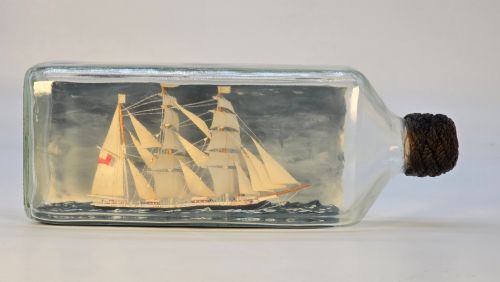
You are most likely to meet cased shadow box dioramas and ships preserved within glass bottles on this page. These forms often incorporate wooden hulls paired with painted canvas, plaster, or cork seascapes.
Materials and Construction
Maker construction relies on carved and painted wood for the ship hulls and model components, frequently mounted within wooden shadow boxes behind protective glass. Artists shaped these elements by hand, using putty, cork, and canvas to build up realistic coastal topography and textured waves.
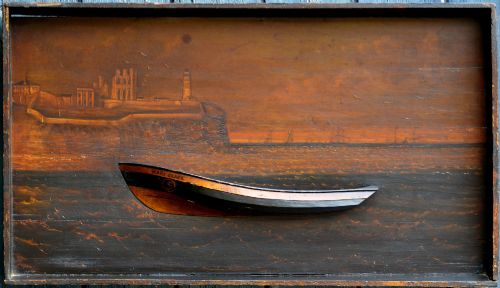
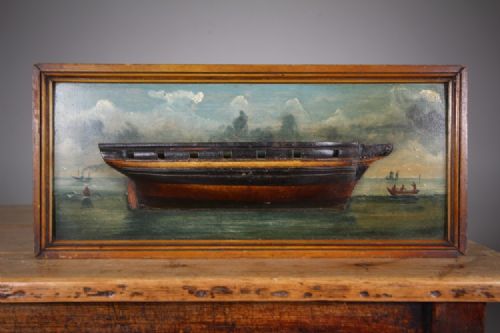
Surfaces receive detailed oil paint treatments to render Turneresque seascapes, distant castles, and the churning water surrounding racing vessels. Specialised pieces incorporate unexpected materials such as straw work to achieve surface texture and decorative maritime effects.
Wooden Maritime Diorama Retail Price Guide 2026
Typical asking prices for wooden maritime diorama among the pieces listed under this phrase on Sellingantiques today, from the lower quarter to the upper quarter. They describe what is for sale here now, not the wider market.
Sailors constructed intricate ship dioramas inside glass bottles using hinged masts that folded flat to pass through the neck.
Evaluating Quality
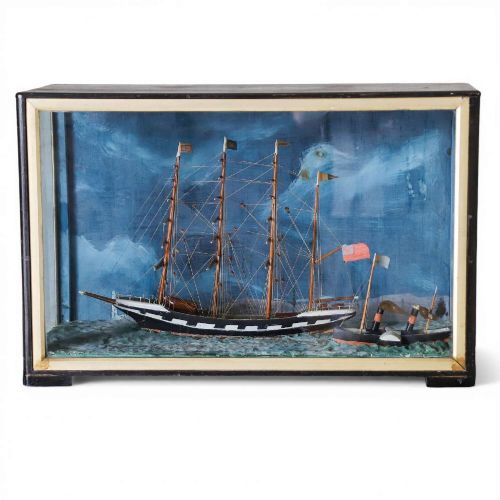
Quality rests upon the intricacy of the carved wooden rigging and the fidelity of the painted background. Superior pieces present detailed ship architecture, such as four-masted sailing vessels or racing barques, set within deeply proportioned shadow boxes that create a convincing sense of perspective.
The integration of mixed media separates standard constructions from finer folk art examples. When makers combine carved wood with skilled oil painting, canvas, and specialised elements like straw work, the resulting diorama achieves greater visual depth and historical presence.
The Wooden Maritime Diorama Glossary
- Diorama
- A three-dimensional scene enclosed within a glass-fronted box or bottle. These displays use painted backdrops and physical models to recreate maritime views.
- Folk art
- Artistic work created by untrained or traditional craftspeople outside academic traditions. Maritime folk art encompasses handmade ship models and sailor-made shadow boxes.
- Half model
- A representation of one side of a ship's hull built for design or display purposes. These wooden models are often mounted directly onto painted backdrops.
- Shadow box
- A deep picture frame enclosed with glass that protects an internal three-dimensional display. Maritime examples enclose miniature sailing vessels and coastal scenes.
- Barque
- A sailing vessel with three or more masts having square sails on the fore and main masts and fore-and-aft sails on the mizzenmast.
Wooden Maritime Diorama: Frequently Asked Questions
Where were these dioramas displayed?
Maritime dioramas traditionally sat upon mantelpieces, sideboards, or captains' desks in coastal homes and maritime offices. Wall-hung shadow boxes served to decorate rooms while keeping delicate paper, wood, and painted elements safe from dust.
Living with these pieces involves placing them away from direct sunlight and excessive humidity to protect the vintage wood, canvas, and oil paint components.
How do I date a maritime diorama?
Dating relies upon the ship type, rigging style, and construction materials recorded in the piece. Nineteenth-century examples often feature naive wooden hulls and oil-painted seascapes, while early twentieth-century pieces incorporate specific dated inscriptions or bottles.
Examining the underlying wood, the type of glass in the shadow box, and any accompanying maker details helps narrow the period of creation.
What is the difference between a shadow box and a bottle diorama?
A shadow box diorama uses a deep wooden frame with a glass front to present an open view of a ship sailing across a painted canvas or plaster sea. This format allows for complex rigging and multi-vessel compositions.
A bottle diorama requires the maker to construct a collapsible model that passes through a narrow bottle neck and is subsequently raised into place using strings inside the glass.