


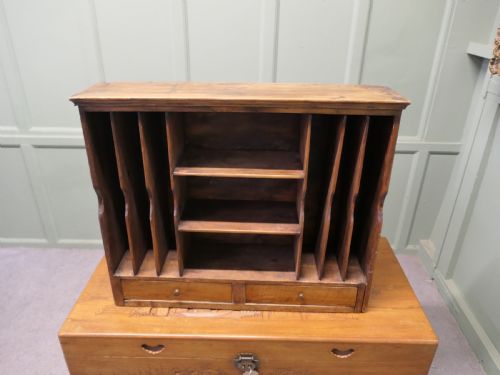


Wooden Letter Cabinet
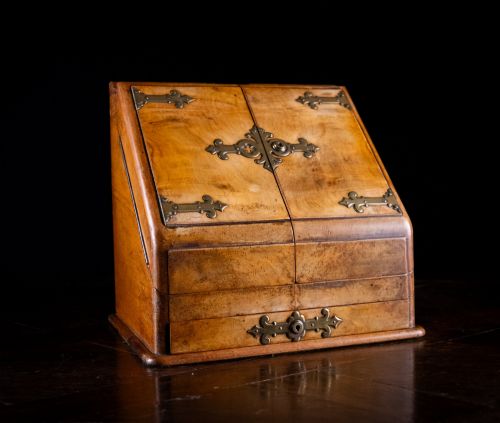
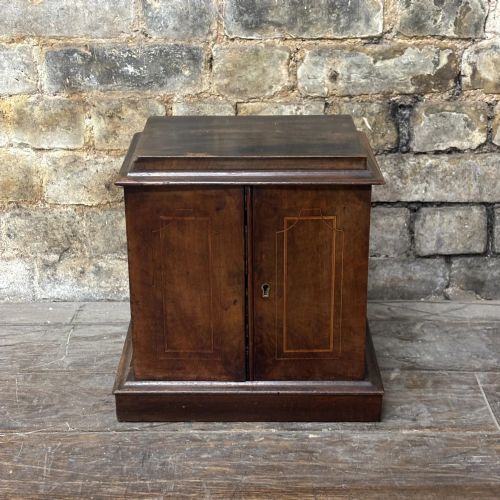
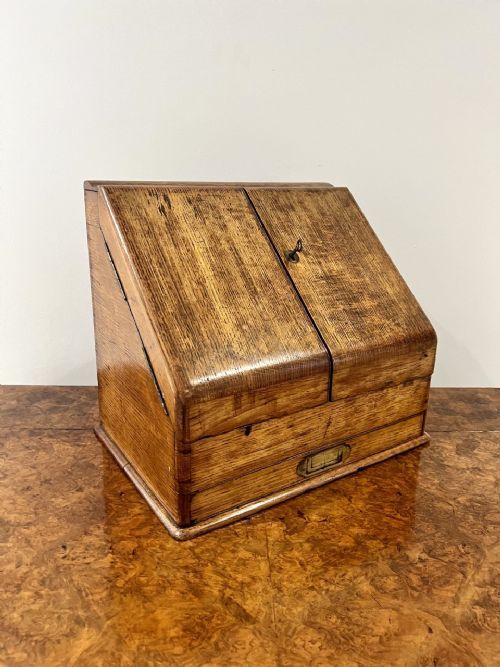
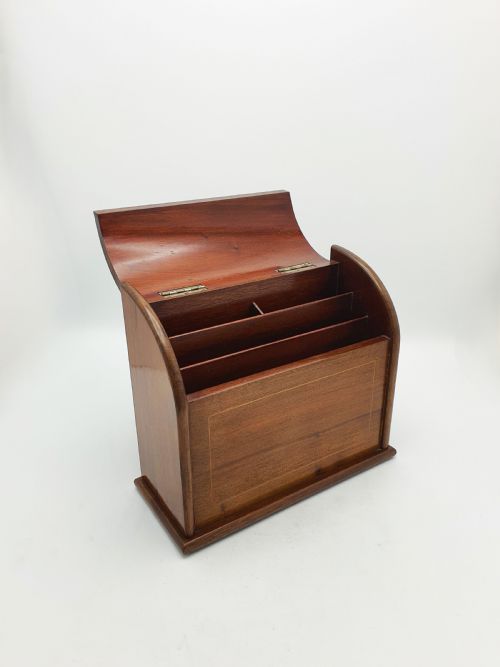
A wooden letter cabinet keeps correspondence sorted on a desk, bringing period utility and timber grain to a room.
Wooden Letter Cabinet
A wooden letter cabinet meets the demand for desktop organisation through stationery boxes, writing chests, and correspondence boxes dating from the eighteenth century to the 1930s. Buyers searching for a wooden letter cabinet encounter pieces designed to hold paper, envelopes, and ink in domestic studies, institutional offices, and commercial premises.
The selection ranges from compact Victorian and Edwardian desk tidies in oak and mahogany to larger institutional filing cabinets and school cupboards from the 1920s and 1930s. Desktop stationery boxes with hinged lids or drop fronts appear alongside wall-mounted postboxes and patent letter files.
Cabinet makers utilised varied timbers, including walnut, satinwood, coromandel, and pine, often incorporating brass hardware, glass panels, and inlaid details. These pieces reflect institutional utility, Victorian industrial production, and country house administration.
What varies in quality
The grade of timber selection and complexity of internal organisation set finer examples apart from standard utility boxes. Walnut, coromandel, and satinwood pieces with intricate marquetry or fitted pigeon holes represent a higher standard than plain pine or basic institutional storage.
The integration of functional mechanisms, such as adjustable dates, patent letter files, drop fronts, and matching ink bottles, indicates superior craftsmanship. Original brass hardware, makers' labels, and intact glass components further distinguish pieces produced for affluent domestic desks.
Listings feature woods including oak, mahogany, walnut, pine, satinwood, and coromandel across periods from the eighteenth century to the 1930s.
F Waller·Ermen & Roby·Fry·Amberg
The Wooden Letter Cabinet Glossary
- Stationery cabinet
- A desktop box or chest designed with internal compartments, pigeon holes, and sometimes ink bottles to store writing paper and envelopes.
- Pigeon hole
- An open compartment inside a desk or cabinet used for sorting letters and documents.
- Marquetry
- Decorative woodwork where pieces of contrasting veneer are fitted into a design on the surface of a box or cabinet.
- Drop front
- A hinged panel that folds downwards to reveal the interior desk surface or filing compartments of a cabinet.
- Patent letter file
- An institutional filing system, such as Amberg's design, incorporating mechanical indexes to hold correspondence in order.
Wooden Letter Cabinet: Frequently Asked Questions
What fits inside a wooden letter cabinet?
These cabinets hold writing paper, envelopes, correspondence, and ink bottles within internal pigeon holes and drawers. They were built to organise desktop stationery for daily letter writing.
Larger variations accommodate institutional files, school books, or business papers depending on whether the piece originated from a domestic study or a commercial office.
How do I distinguish Victorian from Edwardian pieces?
Victorian examples span the mid to late nineteenth century, often featuring heavy oak, mahogany, or walnut construction with robust brass mounts and traditional pigeon hole interiors.
Edwardian pieces tend to show lighter satinwood or inlaid marquetry details, reflecting changing decorative preferences around the turn of the twentieth century.
Where were these cabinets used?
Such pieces stood on desks in country house studies, Victorian parlours, and institutional offices to manage incoming and outgoing post. Wall-mounted versions hung in hallways for collection.
Commercial examples served in school libraries, post offices, and chemist shops for specific record-keeping and storage duties.
How do I care for antique timber?
Keep wooden cabinets away from direct heat sources and strong sunlight to prevent the timber and veneers from drying out or splitting. Gentle dusting preserves the polished surface.
Occasional application of appropriate wax feed helps maintain the natural lustre of mahogany, walnut, and oak without damaging historic finishes.