

Wooden Lectern Desk
A wooden lectern desk provides a sturdy, inclined surface for reading, writing or holding music, bridging domestic studies and ecclesiastical spaces.
Wooden Lectern Desk
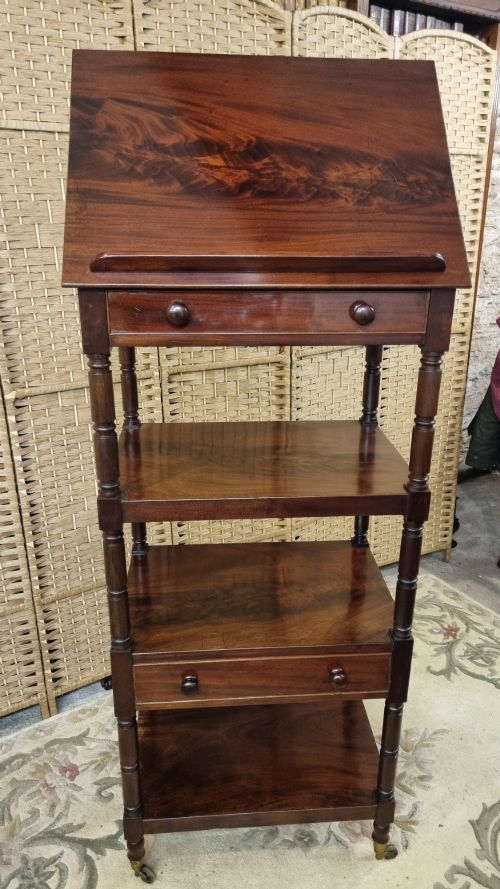
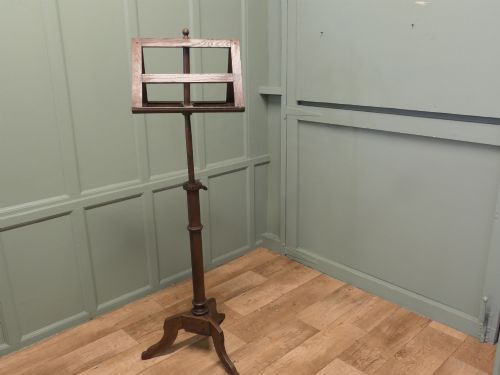
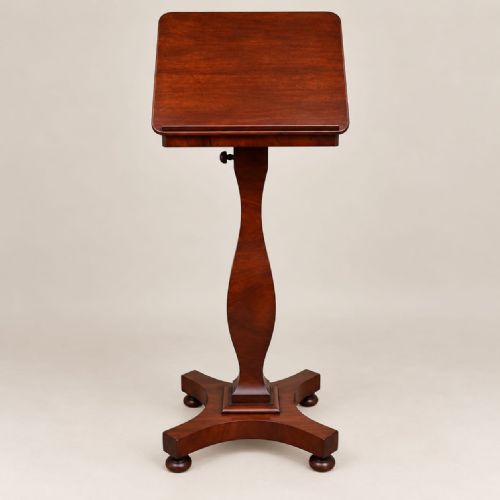
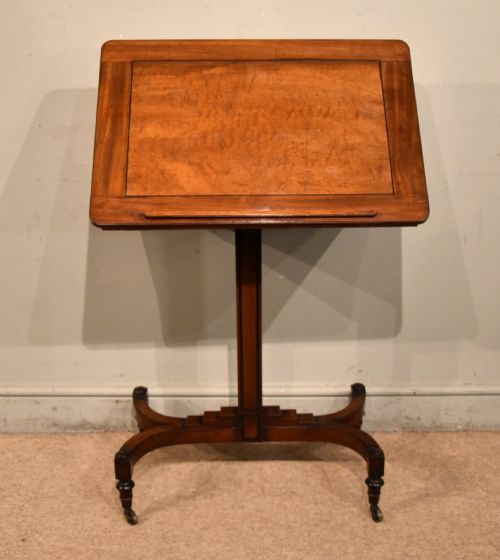
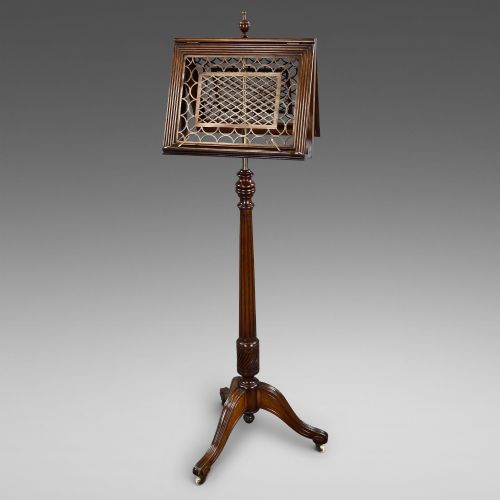
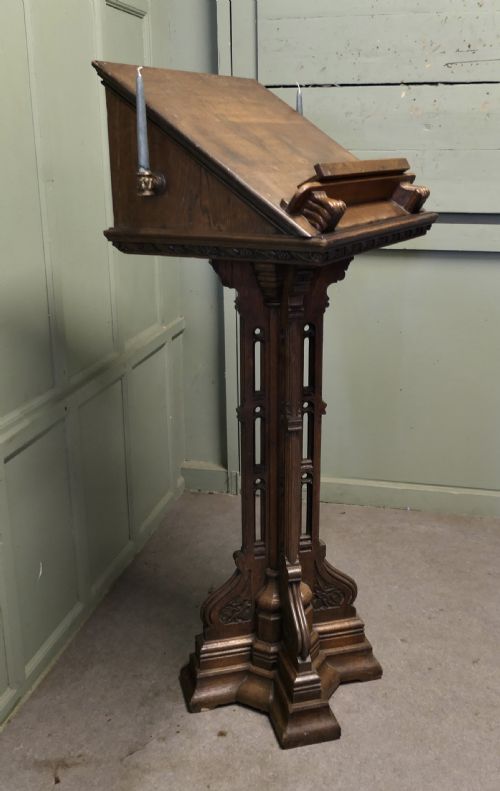
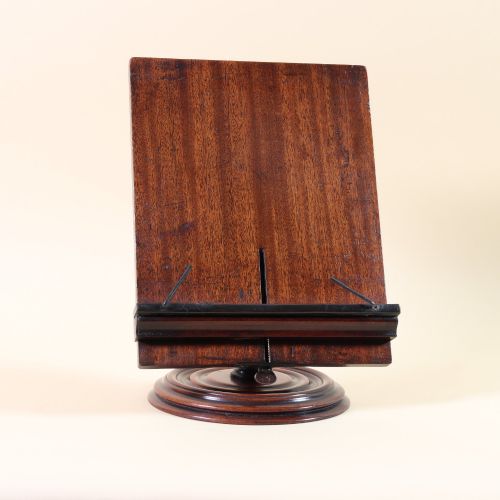
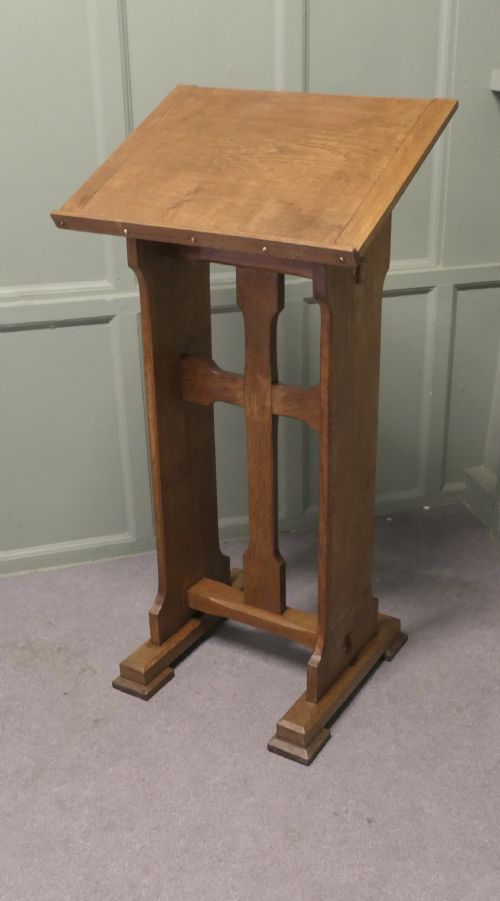
A wooden lectern desk encompasses reading stands, music stands, pulpits and adjustable tables designed to support books or papers at an angle. The pieces on this page span from the Regency and Victorian eras through the Edwardian period and the early twentieth century.
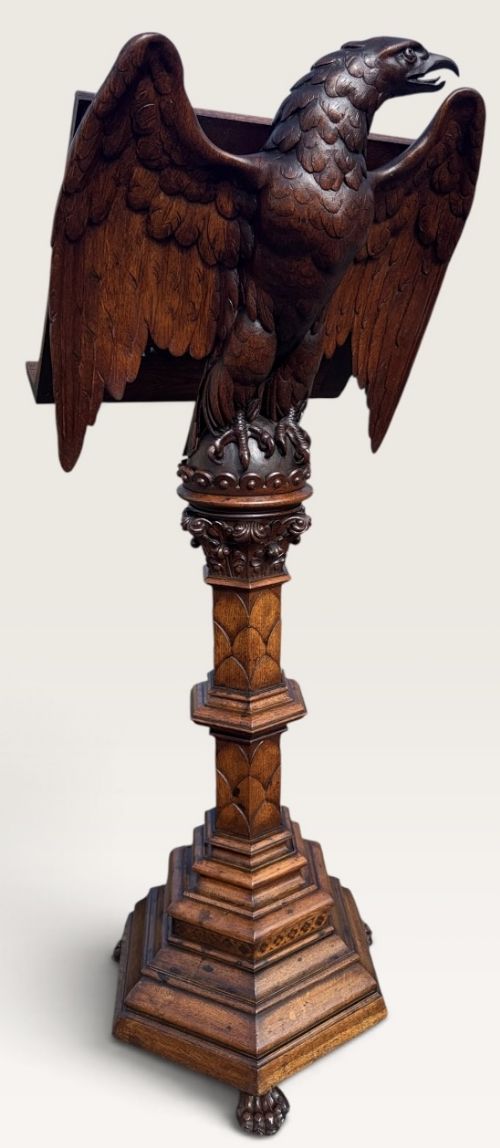
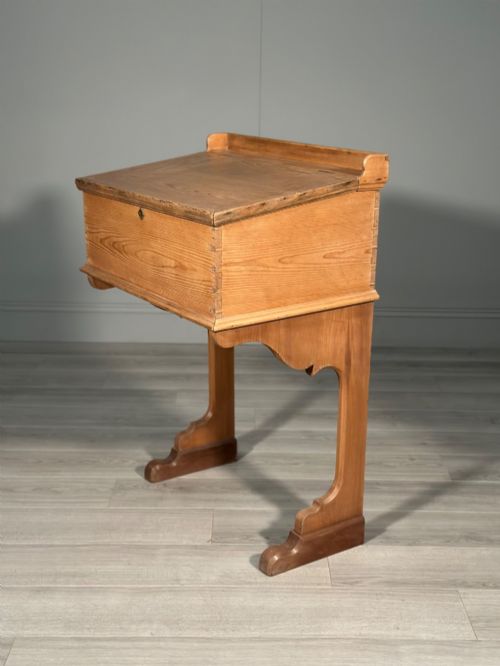
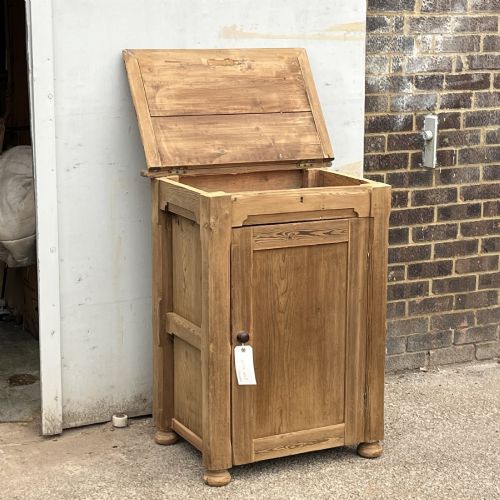
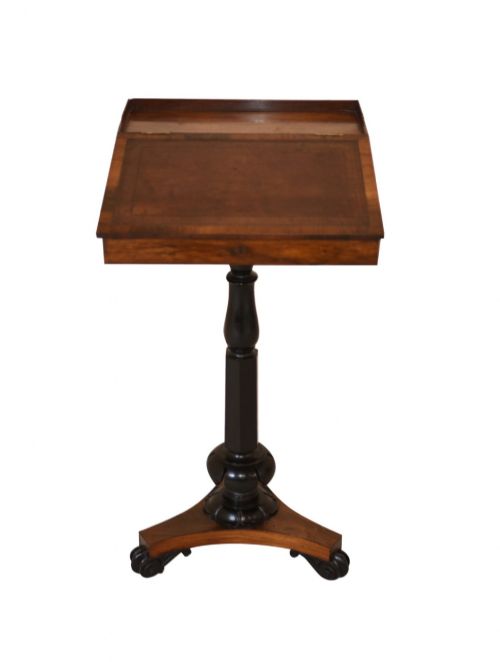
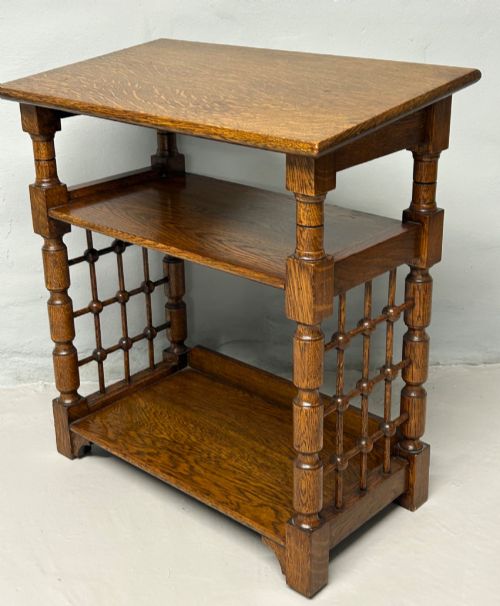
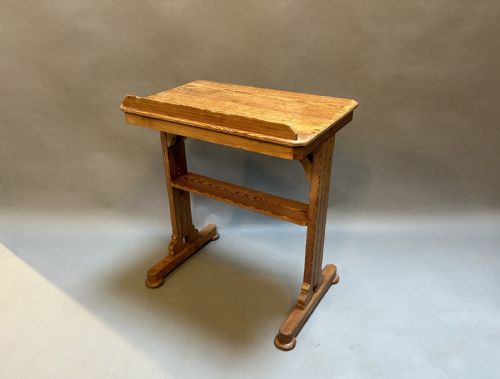
Domestic forms include mahogany reading tables, walnut duet stands and folding book pedestals intended for studies or drawing rooms. Ecclesiastical and institutional examples feature carved oak church lecterns, pine school desks and restaurant reception greeter stations.
Materials and Construction
Makers utilised timber such as oak, mahogany, walnut, pine and gonçalo alves, often pairing the primary wood with secondary pine or structural iron and cast iron. Cabinetmakers shaped solid planks and veneers, applying carving to enrich church and institutional pieces.
Functional elements rely on brass work for adjustment mechanisms, hinges and book rests. Brass bound edges and adjustable pedestals allow the stands to alter height and angle according to the user's requirements.
Wooden Lectern Desk Retail Price Guide 2026
Typical asking prices for wooden lectern desk among the pieces listed under this phrase on Sellingantiques today, from the lower quarter to the upper quarter. They describe what is for sale here now, not the wider market.
Listings span the nineteenth century, the Victorian and Edwardian eras, and the early twentieth century, utilising oak, mahogany, pine, walnut and brass.
Distinctions in Execution
The standard of a wooden lectern desk depends on the selection of timber and the crispness of any carved ornamentation, such as eagles or Gothic Revival tracery. Finer pieces demonstrate careful grain matching, particularly in burr walnut or figured mahogany.
Mechanical complexity separates standard reading stands from superior adjustable examples. Smooth operation in the brass ratchets, screws and folding pedestals indicates superior original engineering and preservation.
The Wooden Lectern Desk Glossary
- Lectern
- A reading desk with a slanted top, traditionally used to support books or notes for a standing speaker or reader. These pieces appear in both ecclesiastical settings and domestic studies.
- Duet Stand
- A music stand or reading stand wide enough to hold two open scores or books simultaneously. They often feature adjustable dual desks.
- Gothic Revival
- An architectural and decorative style popular during the nineteenth century, characterised by pointed arches, trefoils and heavy carved oak. This style frequently appears on church furniture.
- Reading Stand
- A piece of furniture designed to hold a book at a comfortable angle for reading. Many examples include folding mechanisms or adjustable pedestals.
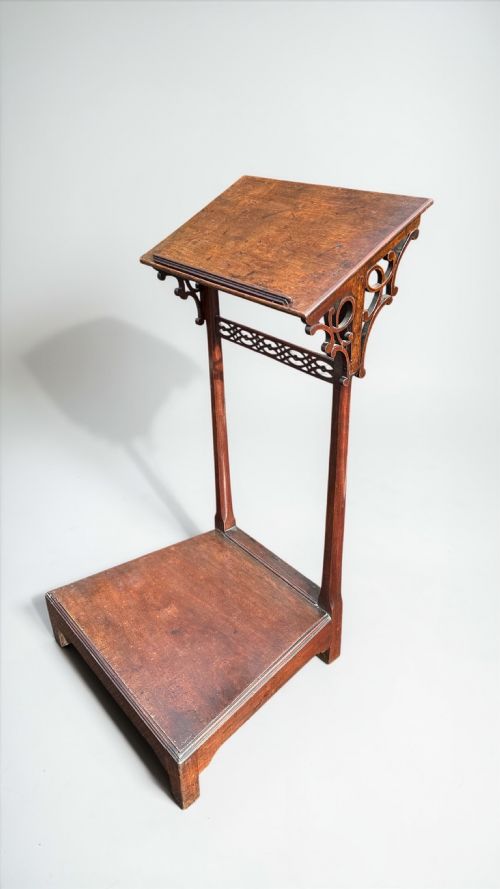
- Prie Dieu
- A devotional desk or kneeling chair designed for private prayer. An eighteenth-century example appears among these records.
Wooden Lectern Desk: Frequently Asked Questions
How do adjustable reading stands operate?
Adjustable reading stands generally utilise brass ratchets, hinges or sliding central columns secured by thumbscrews. These mechanisms allow the user to alter both the height of the column and the slant of the reading desk.
Finer models provide smooth movement across these joints without slipping under the weight of heavy volumes.
Where were these wooden lecterns originally used?
The pieces recorded here served various environments, ranging from churches and schools to domestic studies and hotel reception areas. Ecclesiastical lecterns often incorporate carved oak and religious motifs like eagles.
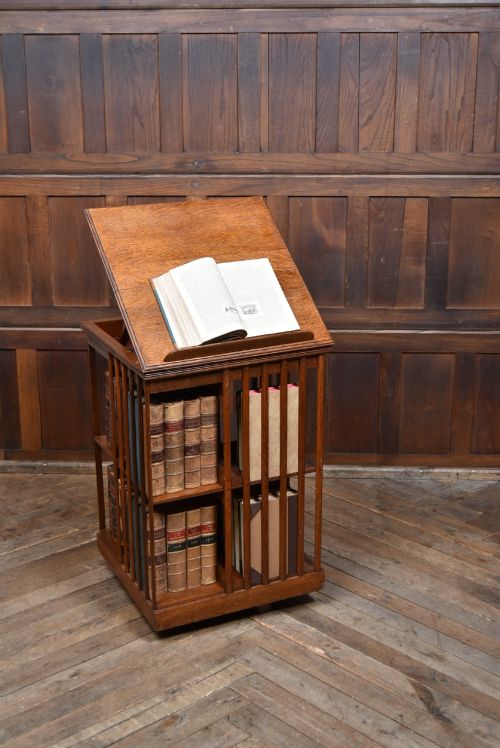
Domestic variants include mahogany reading tables, revolving bookcases and folding book pedestals intended for private libraries or drawing rooms.
Which woods are most common in these desks?
Oak and mahogany form the majority of the timber used in these pieces, appearing across Victorian, Regency and Edwardian examples. Pine appears frequently in school desks and utility church pieces.
More decorative items utilise walnut, burr walnut and gonçalo alves paired with brass hardware and metal framing.