


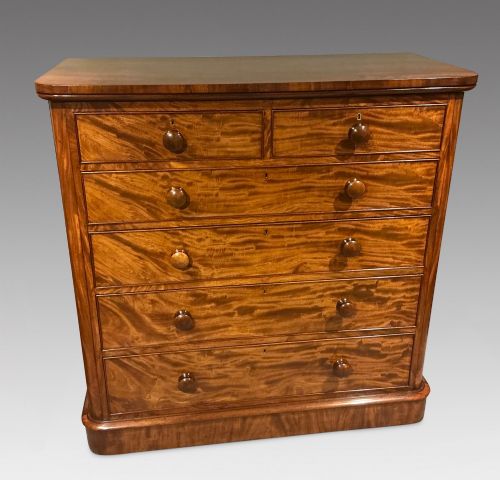
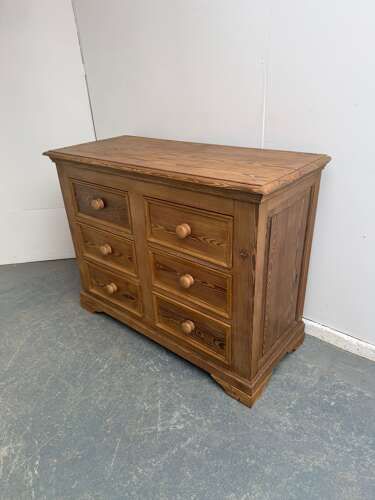

Wooden Knob Dresser
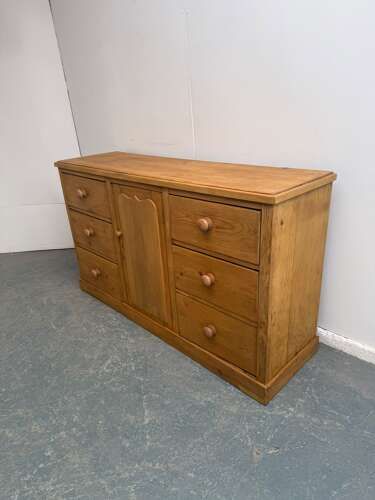
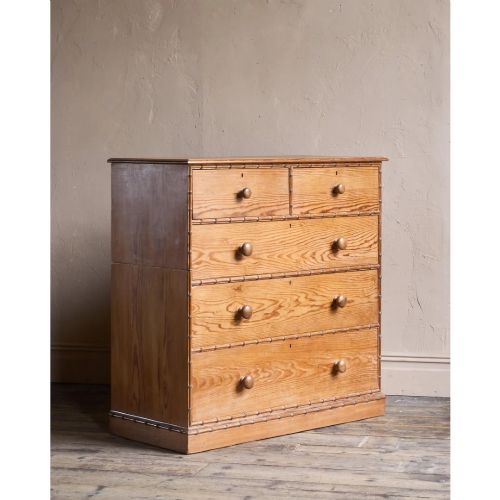
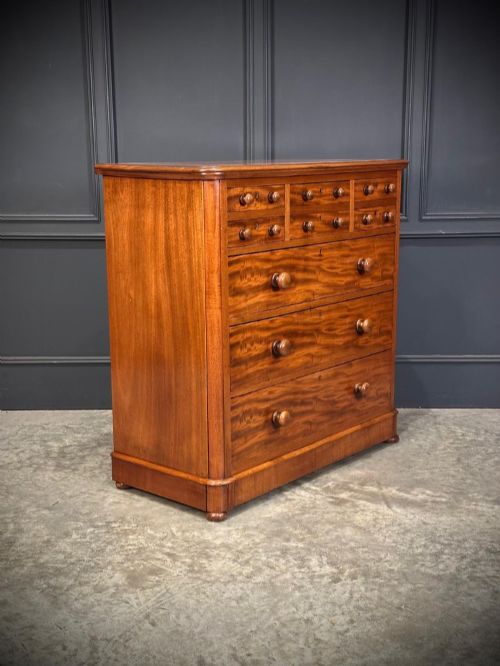
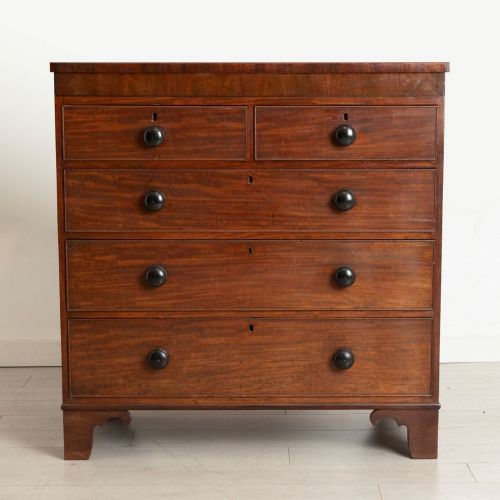
A wooden knob dresser or chest of drawers delivers honest proportions and practical storage, anchoring a room with dependable nineteenth century utility.
Wooden Knob Dresser
When you search for a wooden knob dresser, you encounter pieces primarily from the Victorian and Georgian periods, spanning the nineteenth century into the early twentieth century. The selection leans heavily toward sturdy pine and rich mahogany chests of drawers, alongside kitchen dresser bases and sideboards.
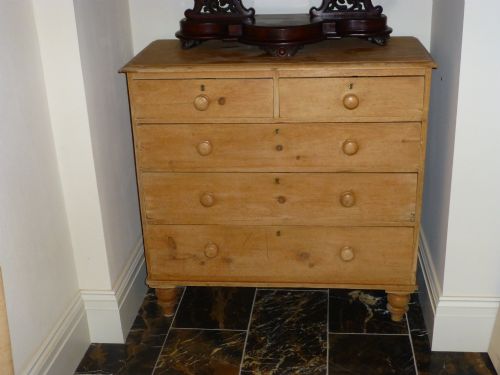
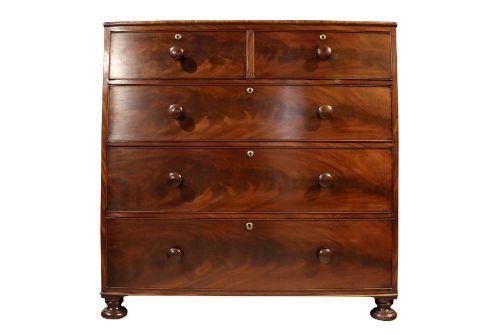
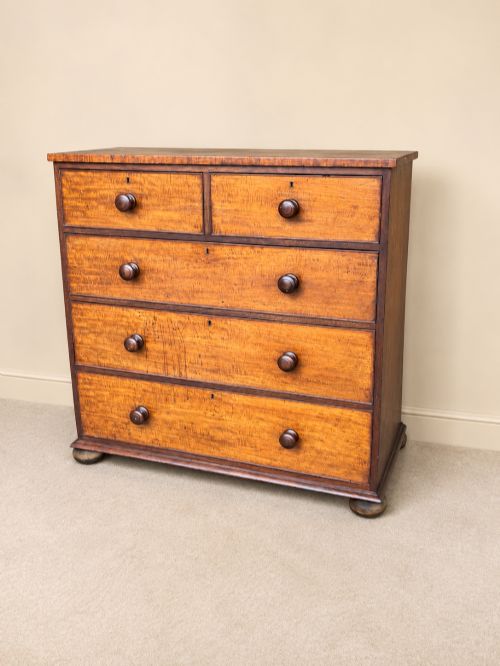
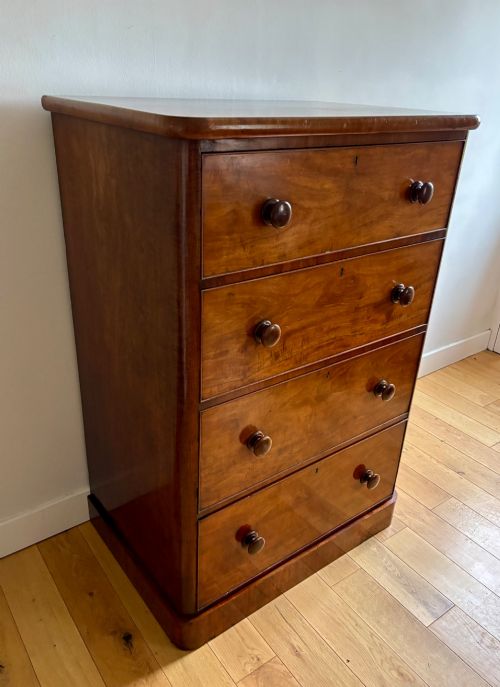
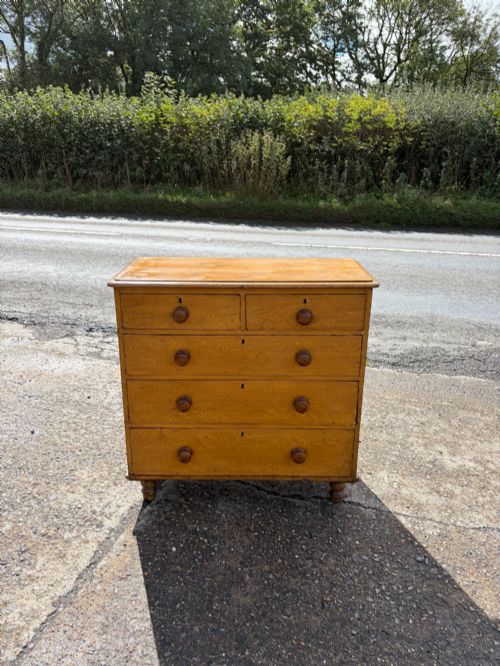
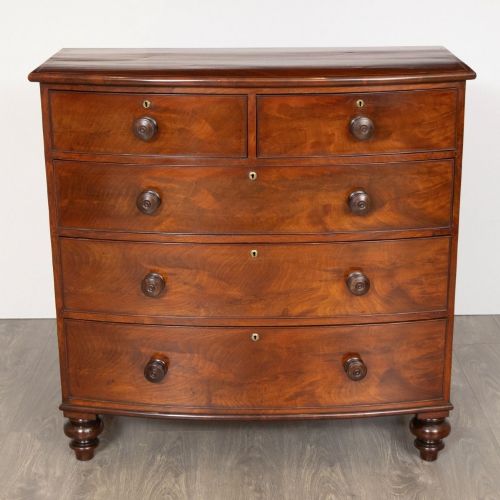
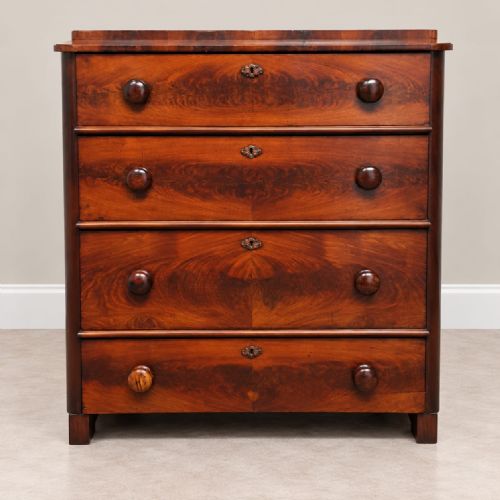
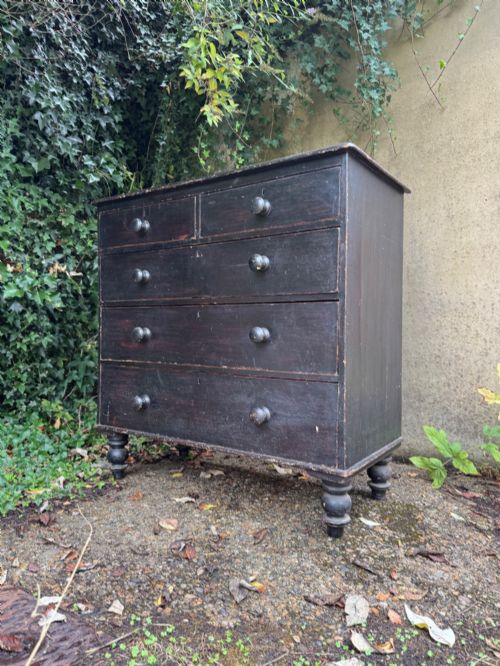
Most examples you meet on this page are upright drawer chests, constructed with turned wooden knobs fitted to each drawer front. These domestic items originate from English, Irish, and Scottish workshops, reflecting regional preferences in timber and finish.
How they were made
Carpenters built these carcases predominantly using solid pine or mahogany, often pairing them with secondary woods for internal drawer linings. Surfaces received either a traditional wax polish to nourish the grain or layers of original paint.
Makers turned the characteristic wooden knobs on a lathe, securing them centrally to drawer fronts that frequently incorporated brass, iron, or glass details elsewhere on the piece. Structural longevity relied on sound dovetail joinery within the drawer construction.
Wooden Knob Dresser Retail Price Guide 2026
Typical asking prices for wooden knob dresser among the pieces listed under this phrase on Sellingantiques today, from the lower quarter to the upper quarter. They describe what is for sale here now, not the wider market.
Hidden secret drawers tucked quietly beneath the top surface offer a delightful place to misplace your spare keys.
What varies in quality
The standard of a piece rests largely on timber selection and the integrity of its original surface treatment, whether an uncompromised coat of paint or a deep wax patina. Better examples display careful proportion in their drawer arrangements, such as secret top compartments or well-executed bow fronts.
Construction details differentiate ordinary utility items from finer work, visible in the tightness of the drawer dovetails and the precision of the turned wooden knobs. Originality of handles, locks, and backboards elevates the standing of a piece within its period.
Howard and Sons
The Wooden Knob Dresser Glossary
- Bow front
- A convex curved drawer front that projects outward from the centre. This style is frequently found on mahogany Victorian examples.
- Dovetail
- An interlocking joint utilised at the corners of drawers. It provides structural strength without relying entirely on metal fixings.
- Waxed finish
- A protective coating rubbed into the timber to enrich the colour. It leaves a soft lustre rather than a high gloss.
- Secret drawer
- A concealed compartment built into the upper section of a carcase. It requires releasing a hidden catch to access.
- Biedermeyer
- A Central European style emphasising utilitarian comfort and clean lines. Pieces from this aesthetic rely on the natural grain of the wood for decoration.
Wooden Knob Dresser: Frequently Asked Questions
What is a wooden knob dresser?
A wooden knob dresser or chest of drawers is a storage item featuring characteristic turned wooden pulls on its drawer fronts. These domestic furnishings date mainly from the nineteenth century.
They serve primarily to store clothing or household linens while providing a flat surface for display.
How do I care for a waxed pine chest?
Maintain a waxed pine surface by dusting it regularly with a soft, dry cloth. Avoid placing it near direct heat sources that might dry out the timber.
Apply a traditional beeswax polish occasionally to replenish the finish and protect the wood grain from moisture.
Were these painted originally?
Many nineteenth century pine pieces received coats of paint for protection or decoration in domestic settings. Surviving examples with original paint retain historical character and distinct surface textures.
Unpainted versions typically display a waxed finish that highlights the natural knots and grain of the pine.
How do I distinguish Victorian from Georgian pieces?
Georgian chests tend to originate from the earlier decades of the nineteenth century or late eighteenth century, often displaying formal mahogany veneers and classic proportions. Victorian examples frequently utilise pine or mahogany with distinct regional variations in construction.
Examining the drawer linings, backboards, and handles helps determine the manufacturing period and origin.