

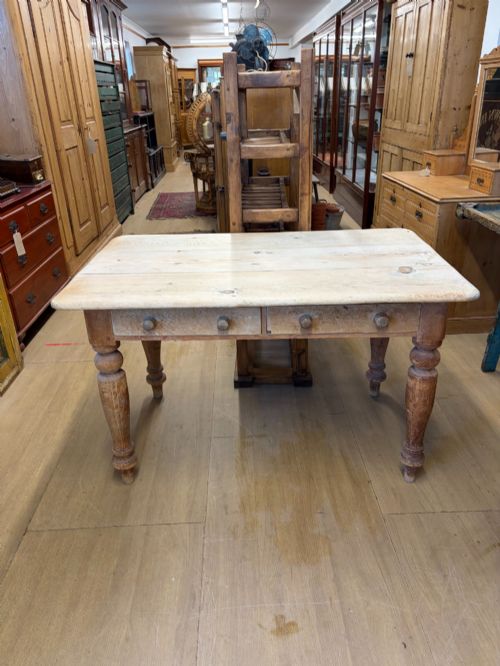
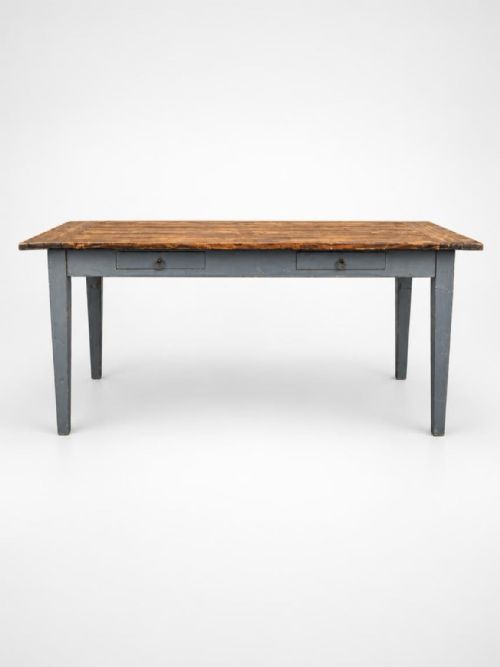
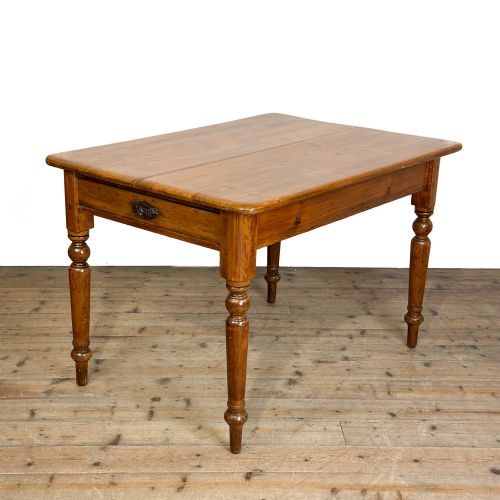
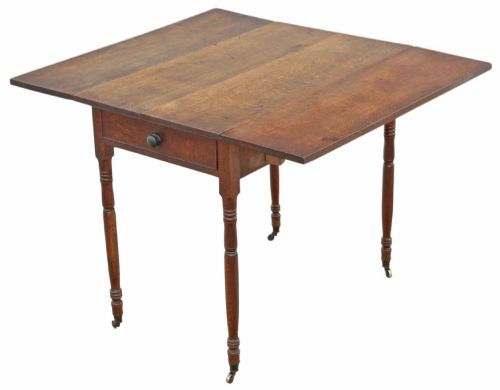
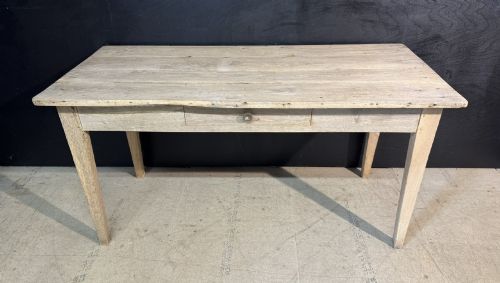
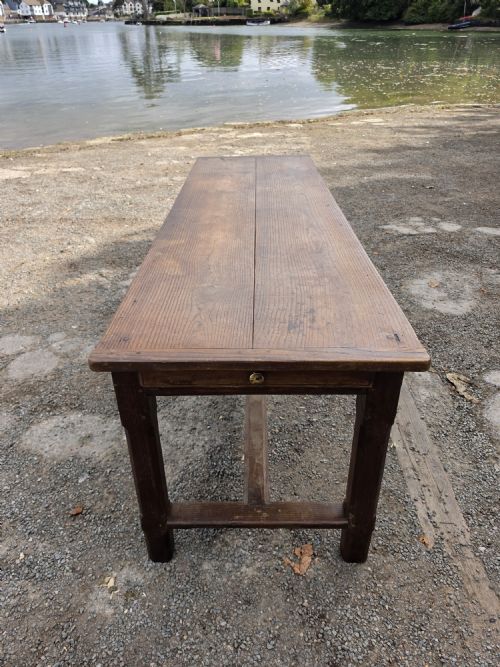
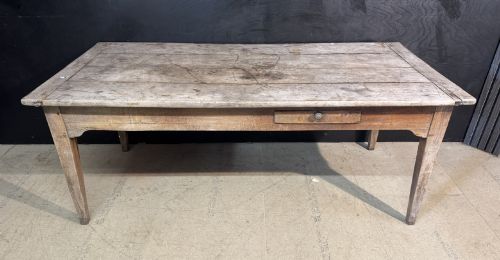

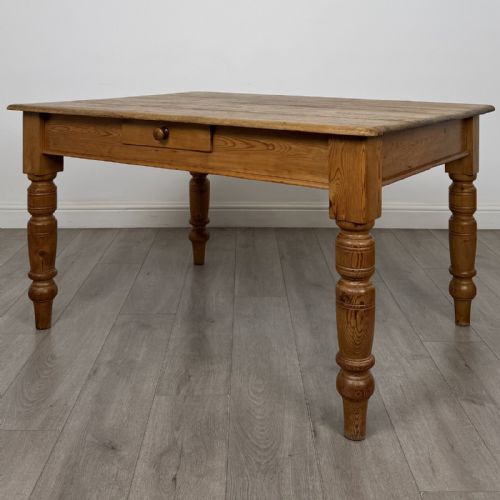
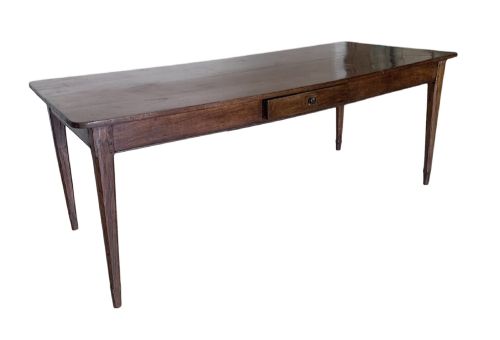
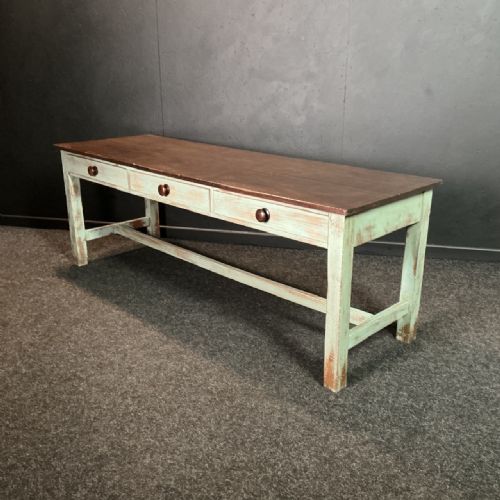
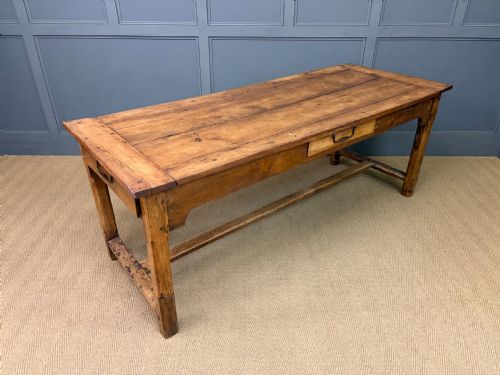
Wooden Kitchen Table with Drawers
A wooden kitchen table with drawers is a hardworking utilitarian surface designed for food preparation and daily domestic life.
Wooden Kitchen Table with Drawers
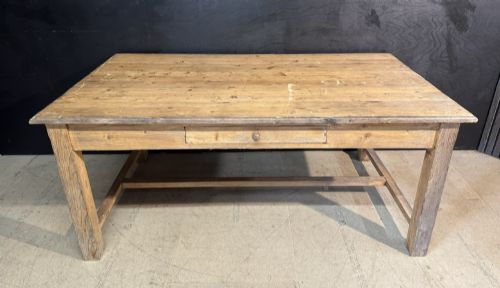
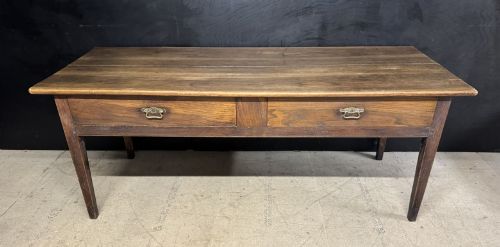
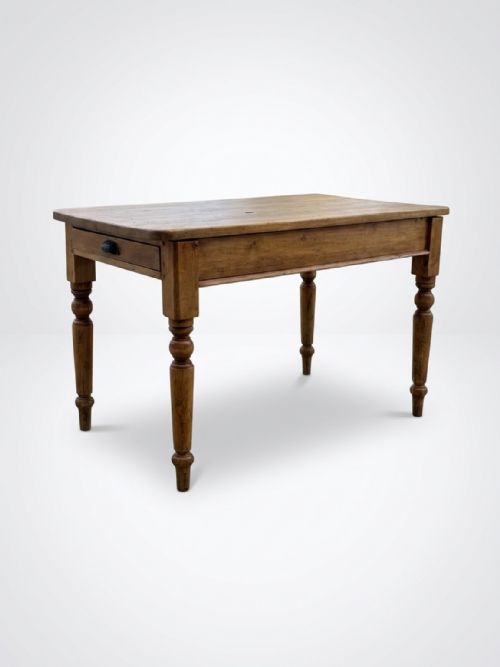
A wooden kitchen table with drawers brings robust functional history directly into a modern interior through honest utility. You encounter these primarily as nineteenth century and early twentieth century pine, oak, and cherrywood pieces built for hardworking environments like sculleries and farmhouses.
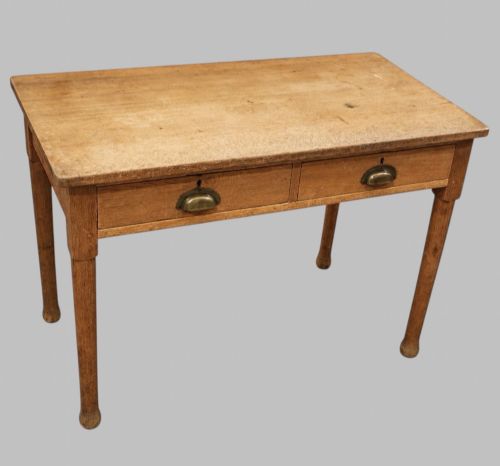
The format ranges from compact side tables and prep benches to large dining surfaces incorporating single or multiple storage compartments. These drawers originally held cutlery, cloths, or baking implements close to hand for daily domestic tasks.
Regional variations appear across English and French country styles, displaying straightforward joinery and practical proportions intended for daily use rather than formal display.
How they were made
Construction relies heavily on solid native timbers such as pine, oak, fruitwood, and cherrywood, often featuring scrubbed wooden tops designed for heavy daily food preparation. Supporting structures combine sturdy timber frames with traditional jointing methods to withstand regular daily movement and weight.
Hardware details typically involve simple wooden pulls or brass fixtures, while some examples incorporate iron reinforcement or painted leg finishes. Sliding elements like bread boards and functional side drawers demonstrate thoughtful utilitarian engineering developed for domestic efficiency.
Wooden Kitchen Table with Drawers Retail Price Guide 2026
Typical asking prices for wooden kitchen table with drawers among the pieces listed under this phrase on Sellingantiques today, from the lower quarter to the upper quarter. They describe what is for sale here now, not the wider market.
What varies in quality
Quality separates ordinary utilitarian construction from superior cabinetmaking through the selection of dense, well-figured timber and the precision of the drawer housing. Better examples maintain original scrubbed tops and intact internal drawer framing without excessive timber shrinkage or crude later alterations.
Proportion and structural integrity dictate the overall presence of the table, with finer pieces displaying balanced overhangs and clean stretcher connections. The presence of original painted finishes or untouched patination on secondary woods elevates the standing of a piece significantly.
The Wooden Kitchen Table with Drawers Glossary
- Scrub top
- A bare wooden tabletop designed to be repeatedly scrubbed clean with soap and water after food preparation. This treatment leaves the timber grain raised and pale.
- Bread slide
- A pull-out wooden board mounted beneath the tabletop used historically for slicing bread or expanding prep space temporarily. It operates on simple wooden runners.
- Refectory table
- A long, narrow dining table traditionally built with a central stretcher connecting the legs for extra stability. They originate from large monastic dining halls.
- Fruitwood
- Timber milled from fruit-bearing trees such as cherry, pear, or apple, prized for its fine grain and warm tone. Cabinetmakers utilised it extensively in French country furniture.
- Stretcher
- A horizontal wooden support connecting the legs of a table to prevent them from bowing outward under heavy loads. End stretchers are positioned low near the floor.
Wooden Kitchen Table with Drawers: Frequently Asked Questions
How were these tables used originally?
These tables served as the central workspace in domestic kitchens, sculleries, and farmhouses for food preparation, kneading dough, and general household tasks. The integrated drawers kept essential tools, linens, and utensils immediately accessible during daily chores.
Over time, families also gathered around these surfaces for meals, making them the literal and social heart of the historic home.
What woods should I expect to find?
The listings show a predominance of pine, oak, and cherrywood, alongside fruitwood, ash, elm, beech, and mahogany. Pine was commonly used for domestic kitchen and scullery tables due to its availability and resilience.
Hardwoods like oak, cherrywood, and fruitwood appeared frequently in French and English farmhouse designs, offering greater durability for heavy preparation work.
How do I date these tables?
Dating relies on examining construction techniques, tool marks, wood species, and overall style indicators such as Victorian proportions or French provincial turning. Hand-sawn timber elements and traditional joinery without modern metal fasteners typically point toward nineteenth-century or earlier production.
Hardware styles, including brass pulls or simple wooden knobs, also offer reliable clues to the manufacturing period.
Are painted finishes original?
Some pieces feature original painted legs or bases, particularly in nineteenth-century country and rustic furniture traditions where paint protected secondary woods from moisture and wear. Surviving historic paint shows natural wear patterns and patination consistent with age.
Many other examples have been stripped down to reveal bare scrub tops and natural timber grain.