





Wooden Framed Lounge
These wooden framed lounge seating and furnishing items combine period character with sturdy timber construction, offering a practical seating or display solution for the home.
Wooden Framed Lounge
When you search for wooden framed lounge items, you encounter a selection of seating and accessory pieces spanning the Victorian, Edwardian, and 1930 periods. The most common forms on this page include armchairs and chaise longues alongside occasional tables, wall mirrors, and magazine stands.
These items originate from various design traditions, ranging from Georgian Style and Rococo Revival to Anglo-Indian and 1930s Art Deco. Materials vary from walnut and mahogany to teak, fruitwood, and general timber frameworks.
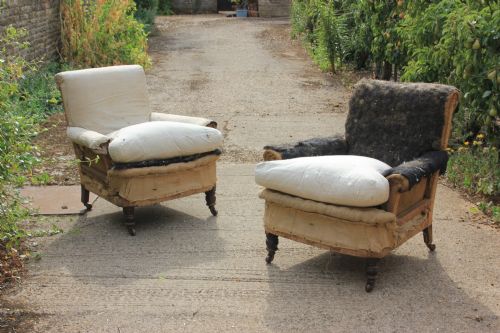
Buyers frequently find armchairs ready for re-upholstery or retaining original upholstery such as petit point, calico, and hessian. Frames incorporate functional elements like folding mechanisms, adjustable campaign beds, and detachable legs.
Materials and construction
Makers utilised solid timbers including walnut, mahogany, teak, and carved fruitwood to construct sturdy frameworks for seating and support items. Brass fittings, iron components, and folding wooden hinges provide structural support and mechanical adjustment where applicable.
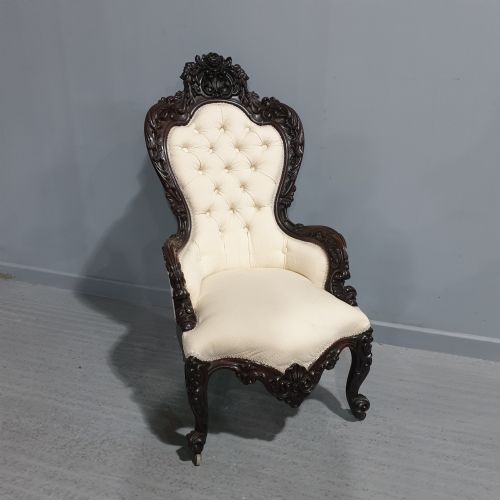
Upholstered pieces rely on traditional internal support layered with textiles such as calico, hessian, and needlepoint petit point. Carved details adorn wooden surfaces, particularly on Anglo-Indian and Rococo Revival items.
Wooden Framed Lounge Retail Price Guide 2026
Typical asking prices for wooden framed lounge among the pieces listed under this phrase on Sellingantiques today, from the lower quarter to the upper quarter. They describe what is for sale here now, not the wider market.
Listings feature timbers such as walnut, mahogany, and teak combined with brass and iron across Victorian and Edwardian periods.
Assessing quality
Quality depends upon the crispness of the timber carving and the structural integrity of the wooden frame, whether walnut, mahogany, or teak. Original mechanisms, such as those on folding book racks or adjustable campaign beds, indicate higher execution.
The degree of preservation in upholstery fabrics like petit point or the suitability of a frame designated for re-upholstery dictates the practical value of a seating piece.
The Wooden Framed Lounge Glossary
- Chaise Longue
- An upholstered long chair designed for reclining, appearing in mid-nineteenth-century and early nineteenth-century forms.
- Petit Point
- A fine, count-stitch needlepoint embroidery frequently utilised for period armchair upholstery.
- Anglo-Indian
- A descriptive style denoting furniture manufactured in India during the British period, often featuring intricate carved woodwork.
- Campaign Bed
- A portable bed designed for military or travel use, typically featuring folding components and detachable legs.
Wooden Framed Lounge: Frequently Asked Questions
What periods do these lounge items cover?
The pieces span the nineteenth and twentieth centuries, including specific dates such as 1850, 1880, 1920, and 1930 alongside general Victorian and Edwardian designations.
Craftsmanship reflects the prevailing styles of each decade, ranging from mid-nineteenth-century frames to 1930s Art Deco chairs.
Are all these items seating furniture?
While armchairs, daybeds, and chaise longues form a large part of the selection, the category also includes occasional tables, wall mirrors, and folding magazine stands.
These accessory pieces share timber framing and serve lounge or reception spaces.
What woods were used in these frames?
Makers constructed frameworks using mahogany, walnut, teak, fruitwood, and general timber.
Some pieces also incorporate brass and iron elements for hinges, adjustable legs, or folding mechanisms.