



Wooden Framed Footstool
A wooden framed footstool brings low, practical comfort to a room, grounding seating arrangements with solid timber and tactile upholstery.
Wooden Framed Footstool
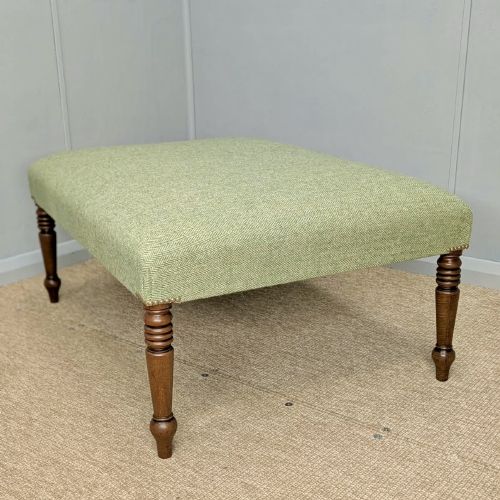
A wooden framed footstool is a low seating form designed to support the feet or serve as a low seat, appearing across various periods and stylistic revivals. The selection focuses heavily on nineteenth-century pieces alongside early twentieth-century examples, spanning the Victorian era, the Aesthetic Movement, and Queen Anne style revivals.
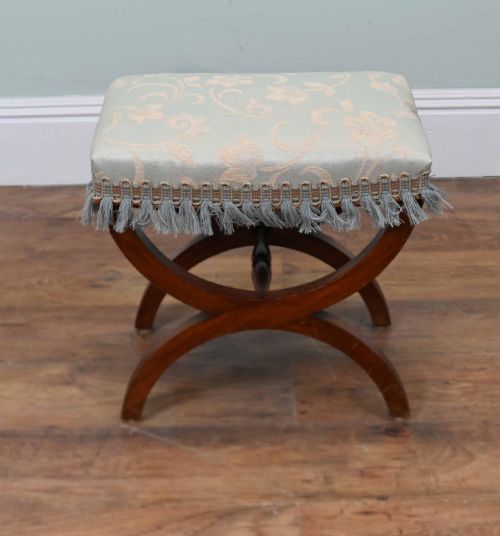
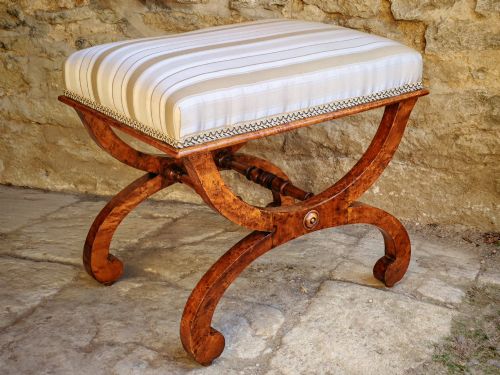
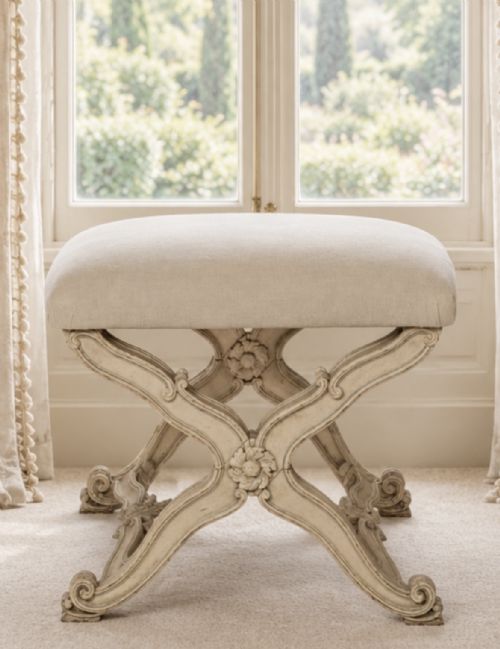
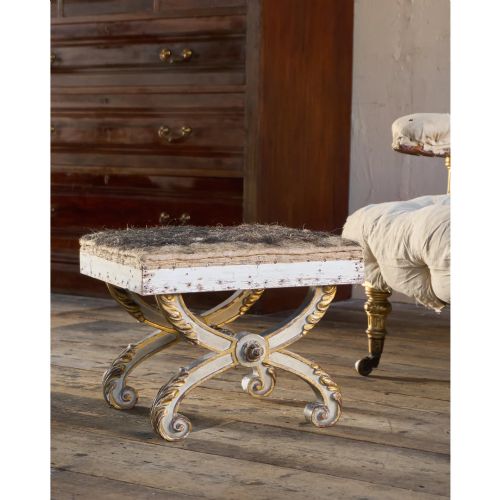
Makers shaped these items into diverse silhouettes, ranging from compact walnut frames to long mahogany formats and dramatic x-frame curule designs. Upholstery plays an essential role, with original textiles, wool, tapestry fabric, and kilim coverings defining the character of each piece alongside the underlying timber structure.
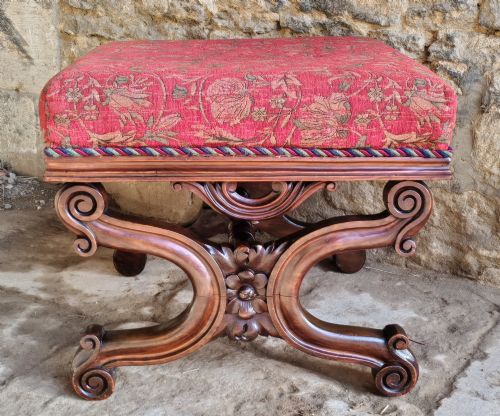
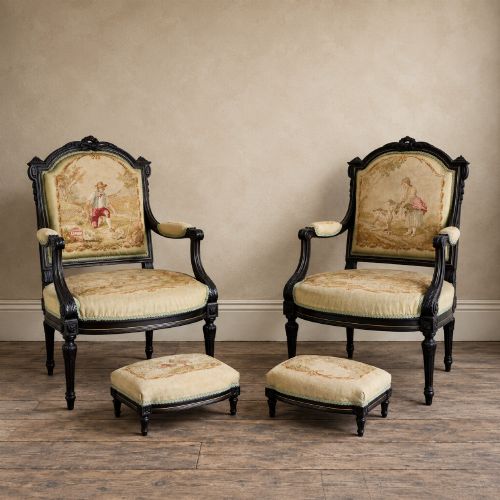
Construction varies from simple turned wooden legs to intricately carved frames featuring details like hunting dog heads and gilt highlights. Origin influences the aesthetic deeply, encompassing English mahogany and walnut works alongside French-inspired salon pieces and ebonized beech frames.
How they were made
Cabinetmakers utilised dense hardwoods such as mahogany, walnut, rosewood, oak, and beech to construct robust internal frames capable of enduring regular weight. Timber selection dictated the structural grace of the piece, allowing for slender turned supports or strong intersecting x-frame geometries.
Upholstery techniques involved durable webbing and stuffing fixed over wooden bases, finished with woven textiles, wool work, tapestry fabric, or cane panels. Brass fittings occasionally appeared to secure adjustable mechanisms or reinforce joints, combining mechanical utility with traditional joinery.
Wooden Framed Footstool Retail Price Guide 2026
Typical asking prices for wooden framed footstool among the pieces listed under this phrase on Sellingantiques today, from the lower quarter to the upper quarter. They describe what is for sale here now, not the wider market.
Listings feature eighteenth and nineteenth-century revival styles, including Queen Anne, Louis XVI, and Grand Regency forms executed in walnut, mahogany, and rosewood.
What varies in quality
Quality rests in the precision of the timber carving and the structural integrity of the frame joints, where hand-shaped detailing outperforms mechanical production. Dense hardwoods like rosewood and walnut command greater refinement, often exhibiting sharper lines and more ambitious forms such as curule bases.
The sophistication of the upholstery and the preservation of original textiles or cane work significantly elevate a piece. Integrated adjustments, carved flourishes like animal motifs, and balanced proportions separate standard domestic examples from exceptional workshop productions.
Miles & Edwards
The Wooden Framed Footstool Glossary
- X-frame
- A structural form utilising two intersecting diagonal members that cross to form an X shape, providing robust support beneath the seat. This ancient curule design appears frequently in nineteenth-century footstools and window seats.
- Ebonised
- Wood treated with a dark finish to imitate expensive ebony. Cabinetmakers applied this technique during the Victorian and aesthetic periods to create stark, dramatic contrasts with gilt details or colourful upholstery.
- Kilim
- A flatwoven textile originating from the Near East and Central Asia, utilised by makers to upholster nineteenth-century furniture. Its geometric patterns introduce durable texture and rich colour to wooden frames.
- Curule
- An ancient chair or stool shape characterised by crossing legs that curve outward. In later revivals, this classical form translated into sophisticated footstools with strong architectural presence.
- Cane
- Strips of woven rattan material utilised to create resilient, breathable seat panels. Long footstools often incorporate this technique to lighten the visual weight of extended wooden frames.
Wooden Framed Footstool: Frequently Asked Questions
How do I date a wooden footstool?
Dating relies on observing the primary hardwood species, joinery methods, and stylistic cues present in the frame. Nineteenth-century examples often display dense timbers like rosewood or walnut alongside period-specific upholstery techniques.
Later pieces from the early twentieth century may reveal revival characteristics, such as Queen Anne style cabriole legs or long oak frames with cane panels. Comparing the silhouette against documented design periods clarifies the likely decade of manufacture.
Are these stools comfortable to use daily?
Most antique footstools provide firm support due to traditional internal stuffing methods and sturdy hardwood frames. Their primary function historically was supporting the feet or serving as low auxiliary seating rather than deep lounging.
Living with them requires appreciating their original ergonomic scale, which suits placement beside armchairs or low firesides. The durability of the timber frame ensures they withstand normal household interaction.
How should I care for the wooden frame?
Preserving the timber involves maintaining stable indoor humidity levels away from direct heat sources that could dry out the wood. Gentle dusting with a dry cloth keeps the surface clean without stripping aged finishes.
Avoid chemical polishes that build up residue over time, opting instead for occasional specialist wax if the wood appears parched. Protecting the joinery from excessive strain keeps the antique structure secure.