

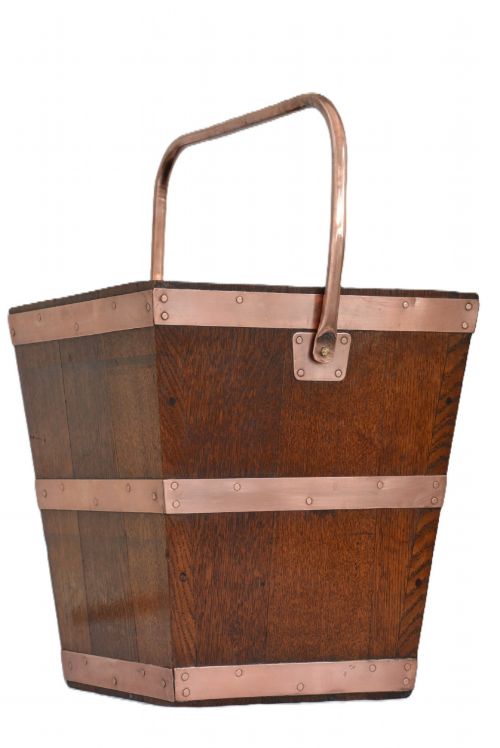
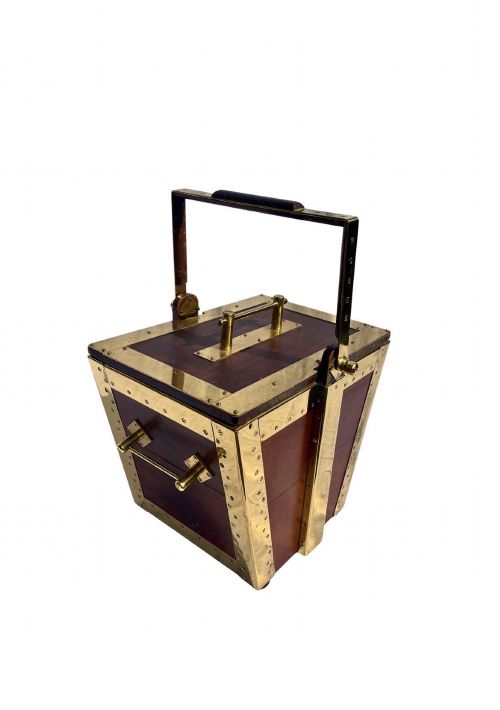


Wooden Fireside Bucket
These wooden fireside bucket designs combine sturdy craftsmanship with period charm, serving as practical fuel stores for the hearth.
Wooden Fireside Bucket
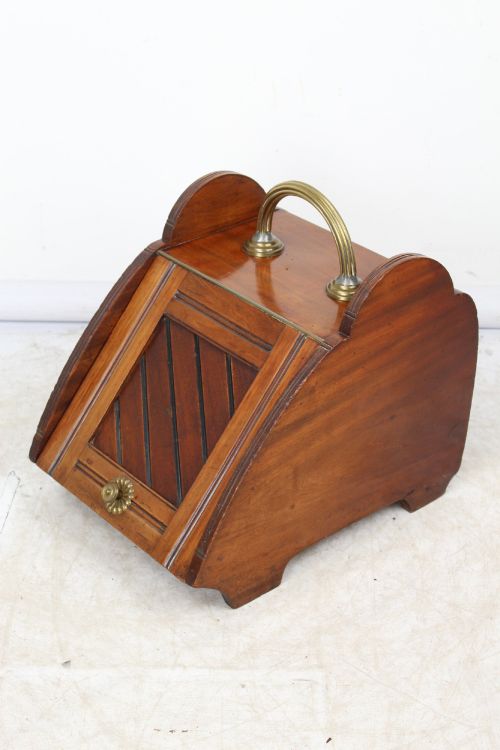
A wooden fireside bucket functions primarily as a coal scuttle, peat bucket, log bin, or purdonium designed to keep solid fuel tidy beside the hearth. When exploring this category, buyers encounter forms spanning the Georgian, Victorian, and Edwardian eras, with many pieces originating from English and Dutch workshops.
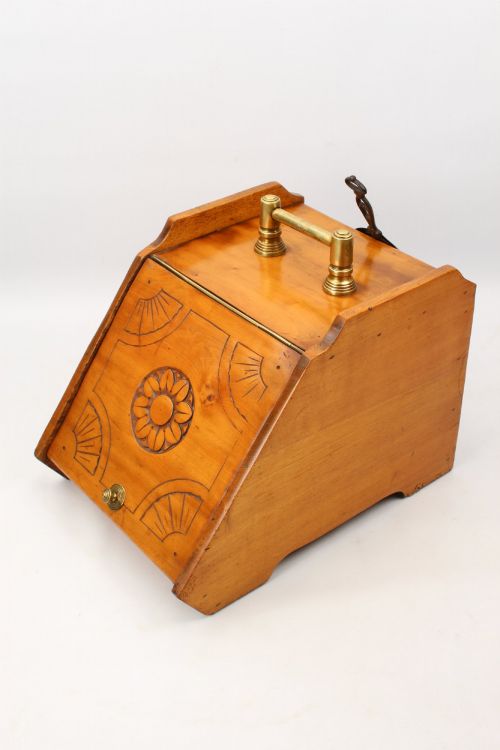
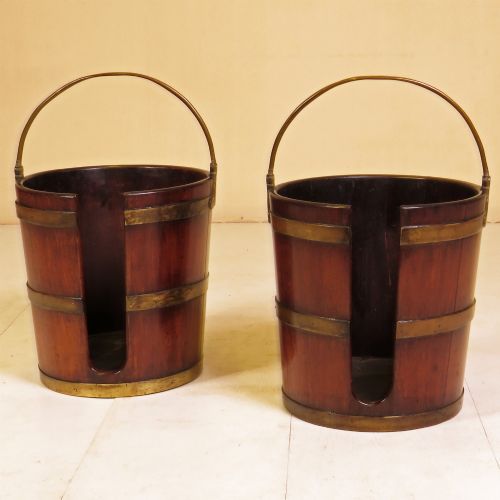
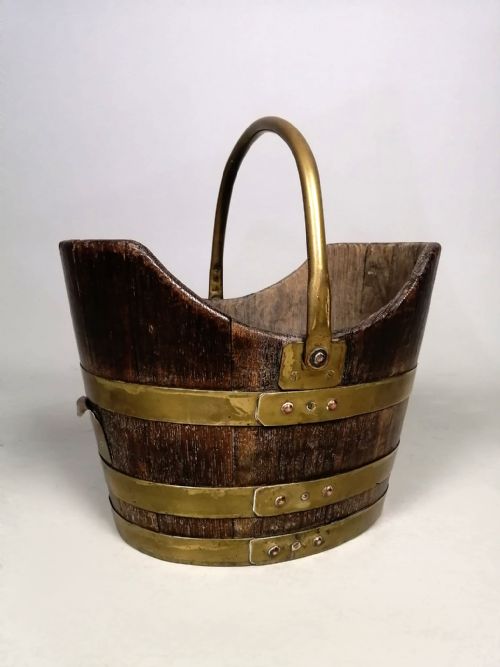
The most common examples on this page are Victorian mahogany and oak coal boxes, alongside coopered bins and brass-banded buckets. These vessels often double as fireside storage or garden planters, reflecting their adaptable utility over the centuries.
Materials and construction methods
Cabinet makers utilised dense hardwoods such as mahogany, oak, walnut, and elm, often shaping them through traditional coopered techniques with wooden staves. These bodies are typically reinforced with heavy brass bands, mounts, and swing handles to withstand the weight of coal and logs.
Makers integrated internal metal liners or shovels to protect the timber from moisture and ash, while others applied carved decoration, inlay, or ribbed forms to elevate the utilitarian wooden bin.
Wooden Fireside Bucket Retail Price Guide 2026
Typical asking prices for wooden fireside bucket among the pieces listed under this phrase on Sellingantiques today, from the lower quarter to the upper quarter. They describe what is for sale here now, not the wider market.
Listings feature items from the Georgian, Victorian, and Edwardian periods, constructed in oak, mahogany, walnut, elm, brass, and copper.
Factors influencing quality
Quality rests upon the selection of timber and the precision of the cooperage, where tight joints and heavy gauge brass fittings distinguish superior pieces from simpler utilitarian boxes. Original condition, untouched surfaces, and the inclusion of period liners or matching shovels elevate an object's standing.
Finer examples display careful carving, rich grain patination, and robust structural integrity, whereas lesser pieces show more basic construction without decorative mounts or refined joinery.
The Wooden Fireside Bucket Glossary
- Coopered
- Constructed from curved wooden staves bound together with metal hoops, much like a traditional barrel. This technique provided immense strength for holding heavy loads of coal or peat.
- Purdonium
- A specialised coal box featuring a sloping front door or a tipping compartment that allowed fuel to be emptied easily into the hearth. They often incorporated built-in spaces for a small metal shovel.
- Coal scuttle
- A container designed specifically for carrying coal from an outdoor store to the fireplace. Many period iterations include a swing handle for transport and a flat base for stability.
- Peat bucket
- A deep wooden vessel historically used for holding turf or peat briquettes in regions where coal was scarce. These often date from the Georgian period and display distinct stave construction.
- Plate bucket
- A deep cylindrical wooden container originally intended for carrying dining plates between rooms. Their sturdy proportions mean they frequently function as fireside fuel bins today.
Wooden Fireside Bucket: Frequently Asked Questions
What is a wooden fireside bucket used for?
These pieces were originally built to hold coal, peat, or logs near the fireplace for convenient refueling. Today, they continue this function while also serving as decorative hearthside storage or plant containers.
Their robust construction allows them to handle heavy solid fuels without compromising their period appearance.
How do I date a wooden fire bucket?
Dating relies on observing the timber species, the style of the brass mounts, and the construction methods used by the maker. Georgian examples often feature simple coopered staves with heavy brass banding, whereas Victorian pieces frequently include carved panels or drop fronts.
Examining the interior wear and hardware provides further clues to the manufacturing decade.
Are these buckets lined for coal?
Many period coal buckets and purdoniums retain their original metal liners designed to protect the wood from moisture and ash. Some listings include specific mention of these liners or integrated shovels.
Unlined bins are better suited for storing dry logs or serving as decorative planters rather than loose coal.
How do I care for antique wood by the fire?
Keep wooden fireside vessels at a sensible distance from the direct heat of the hearth to prevent the timber from drying out or splitting. Regular application of suitable wax helps maintain the grain and protect the finish from dust.
Avoid placing damp fuel directly against unlined wood to preserve the interior condition.