

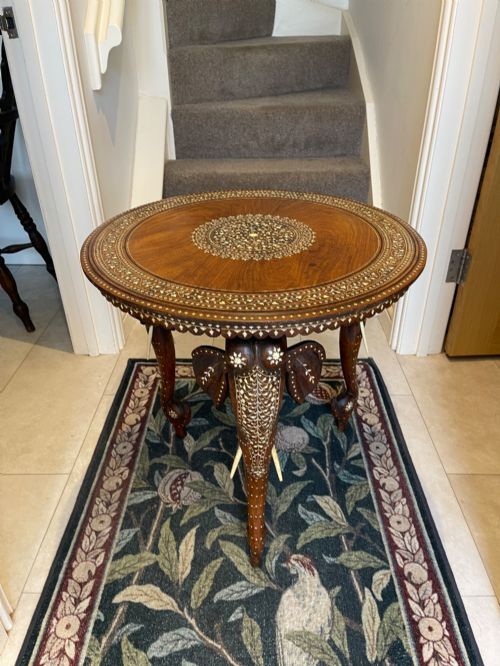


Wooden Elephant Accent Table
These carved wooden elephant accent table examples bring distinct Anglo-Indian and colonial character into a room through sculptural animal supports.
Wooden Elephant Accent Table
When you search for a wooden elephant accent table, you find pieces defined by carved animal supports carrying octagonal, rectangular, or tripod tops.
The versions you are most likely to meet on this page hail from the late nineteenth and early twentieth centuries, spanning the Victorian and Edwardian eras.
Originating largely from workshops in Hoshiarpur and the Bombay Presidency, these occasional tables and plant stands combine functional surfaces with intricate regional carving traditions.
How they were made
Artisans worked dense timbers including teak, rosewood, and general hardwoods, carving the thick sections required to form realistic elephant heads and trunks for the bases.
Many examples incorporate detailed bone or ebony inlay work into the wooden surfaces, creating geometric patterns that contrast with the dark grain of the timber.
Wooden Elephant Accent Table Retail Price Guide 2026
Typical asking prices for wooden elephant accent table among the pieces listed under this phrase on Sellingantiques today, from the lower quarter to the upper quarter. They describe what is for sale here now, not the wider market.
Current listings feature pieces spanning the late nineteenth century to 1920, incorporating teak, rosewood, bone inlay, and ebonised hardwood.
What varies in quality
The intricacy and preservation of the inlaid bone or dark wood sections also separate standard production from exceptional examples, as does the stability of the joined timber top.
The Wooden Elephant Accent Table Glossary
- Anglo-Indian
- A descriptive term for furniture made in India during the British colonial period, often combining European furniture forms with local carving traditions. These pieces frequently utilise native hardwoods.
- Hoshiarpur
- A city in Punjab known for its distinct woodworking and inlay techniques. Items from this region typically feature elaborate bone or wooden mosaic patterns.
- Tripod
- A piece of furniture supported by three legs. In this context, the three supports often take the form of elephant figures.
- Ebonised
- Wood treated to imitate ebony, giving a deep black finish. This technique creates high contrast when paired with lighter inlay materials.
Wooden Elephant Accent Table: Frequently Asked Questions
What is a wooden elephant accent table?
These pieces are small occasional tables or plant stands featuring carved animal supports holding up a wooden top. They originated during the colonial period in India and Burma.
Craftsmen shaped dense timbers like teak and hardwood into sculptural elephant figures, often embellishing the tops with intricate bone or ebony inlay.
How were these tables used originally?
In British colonial homes, these stands served as decorative display surfaces for ornaments, lamps, or small plants. Their compact sizes allowed them to sit easily beside chairs or in corners.
Today, they function similarly in domestic interiors, providing a practical surface while adding a distinct sculptural element to a room.
How do I date a wooden elephant table?
Dating relies on examining the timber species, the style of the carving, and any regional decorative traits. Pieces seen here generally span from the late nineteenth century into the early twentieth century.
Characteristics such as the specific geometry of the inlay work and the tool marks left by the carver help establish the period of origin.
Where were these tables made?
The pieces originate primarily from workshops across the Indian subcontinent and Burma, encompassing styles such as Anglo-Indian and Anglo-Burmese colonial.
Specific production centres included Hoshiarpur and the Bombay Presidency, each contributing distinct approaches to carving and surface decoration.