

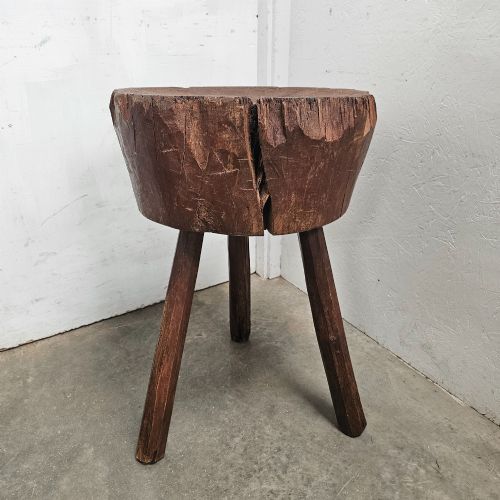


Wooden Chopping Table
A wooden chopping table is a sturdy working station built for heavy kitchen labour, prized for its honest utility and enduring domestic presence.
Wooden Chopping Table
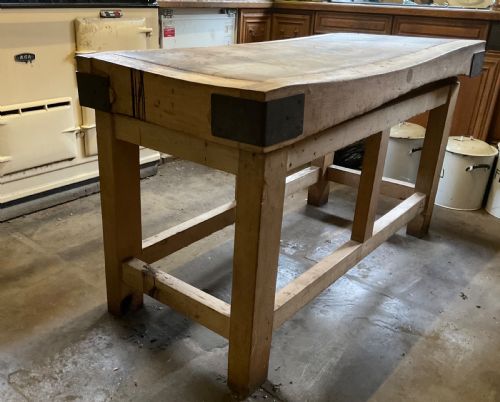
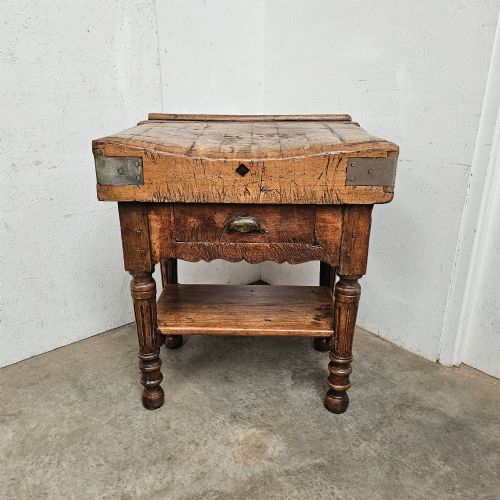
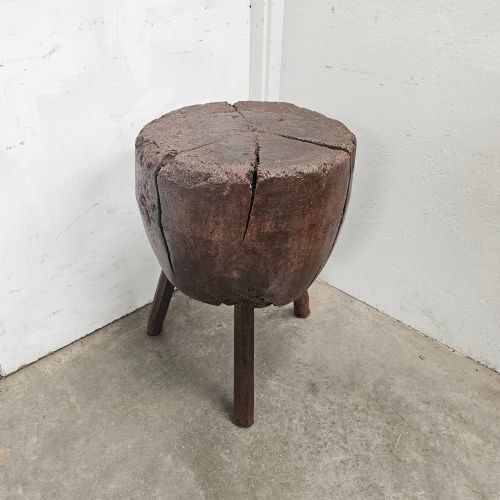
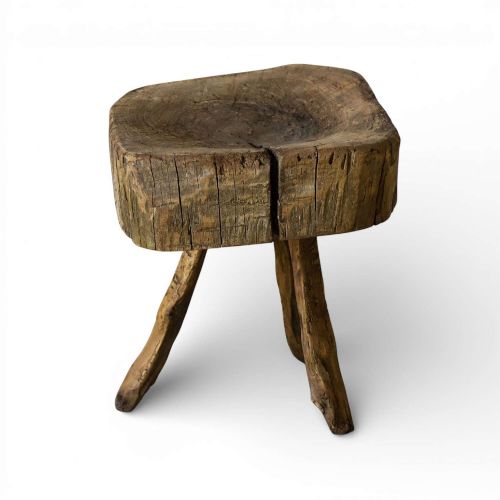
A wooden chopping table serves as the central work surface for heavy kitchen preparation, combining thick timber tops with robust supporting bases. When seeking a wooden chopping table, buyers encounter formats ranging from French provincial examples to industrial stands and vernacular rural blocks.
The pieces listed on this page span the nineteenth century, the Edwardian era, and the mid-twentieth century up to nineteen fifty. Forms include butchers blocks, game blocks, and kitchen islands originating from French and vernacular traditions.
Materials such as beech, elm, oak, and general hardwood dominate the construction of the tops, often paired with metal, iron, or steel elements. Buyers are most likely to meet French beech and elm variants showcasing rustic farmhouse and rustic country styles.
How they were made
Makers constructed the heavy surfaces of a wooden chopping table using dense timbers like beech, oak, and elm to withstand constant impact and cutting. These thick wooden tops were joined securely and mounted upon original gnarled legs, decorative bases, or metal and iron stands.
Construction techniques prioritised unyielding stability, uniting solid wood blocks with sturdy timber frames or industrial steel supports. The integration of iron and metal bracing in later twentieth-century variants provided additional reinforcement for rigorous daily use.
Wooden Chopping Table Retail Price Guide 2026
Typical asking prices for wooden chopping table among the pieces listed under this phrase on Sellingantiques today, from the lower quarter to the upper quarter. They describe what is for sale here now, not the wider market.
Listings feature periods spanning the nineteenth century, the Victorian era, the Edwardian period, and up to nineteen fifty, constructed in beech, elm, oak, and iron.
What varies in quality
Quality in a wooden chopping table rests in the integrity of the original timber top and the balance of its supporting structure. Dense hardwoods that retain their substantial thickness show superior original utility compared to heavily worn or altered surfaces.
The distinction between top examples and simpler versions lies in the character of the base, whether an ornate decorative wooden stand, original gnarled legs, or a sturdy industrial metal frame.
The Wooden Chopping Table Glossary
- Butchers block
- A thick wooden work surface designed for cutting and preparing meat. These blocks utilise dense timbers to endure heavy chopping.
- Game block
- A specialised wooden block traditionally utilised for dressing game. These pieces often feature deep wear and primitive French provincial construction.
- Vernacular rural
- A style reflecting local building traditions and practical needs rather than academic architectural canons. Objects in this style display straightforward, honest construction methods.
- French provincial
- A style originating from the regions of France, combining rustic simplicity with refined proportion. Such pieces demonstrate practical elegance suited to country houses.
Wooden Chopping Table: Frequently Asked Questions
What is a wooden chopping table?
A wooden chopping table is a heavy-duty preparation surface built from dense timbers like beech, oak, or elm. These pieces were designed for rigorous kitchen tasks and butchery.
Today they serve as central work islands in domestic kitchens, valued for their solid construction and historical character.
How do I date a chopping block?
Dating a block involves examining the timber species, the style of the base, and construction methods. Nineteenth-century examples often feature primitive elm or beech on gnarled legs.
Later twentieth-century variants incorporate steel or iron stands alongside standardised wooden blocks, reflecting industrial production changes.
Are these tables suitable for daily kitchen use?
These tables were originally built for heavy daily labour and remain exceptionally robust. Their thick wooden surfaces easily handle modern food preparation and culinary tasks.
Placing one in a kitchen provides a durable work surface that bears the patina of genuine domestic history.
What woods were used for these blocks?
Makers utilised hard, resilient timbers capable of absorbing repeated impact without splintering excessively. Beech, elm, and oak appear frequently across nineteenth and twentieth-century examples.
Support structures occasionally introduce metal, iron, or steel alongside the primary hardwood components.