


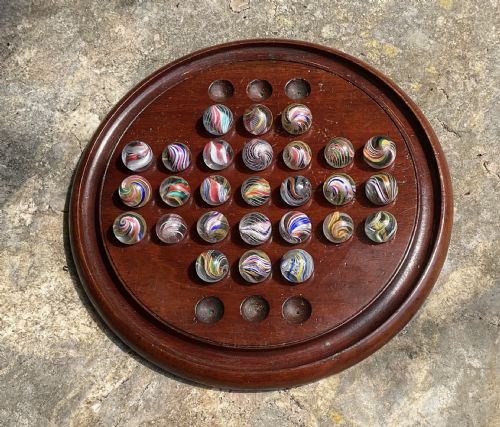


Wooden Board Game Set
A wooden board game set offers hours of tactile diversion, bringing nineteenth-century craftsmanship directly to the modern table.
Wooden Board Game Set
A wooden board game set encompasses a fascinating variety of pastimes, ranging from travelling chess and backgammon boards to elaborate games compendiums and solitaire boards. Buyers searching for a wooden board game set will encounter nineteenth-century pieces alongside Victorian and Edwardian examples, reflecting the era's great enthusiasm for parlour entertainments.
The selection here includes specific formats such as cribbage boxes formed to look like stacked books, folding boards complete with draughts and chess pieces, and comprehensive multi-game boxes in burr walnut or mahogany. Pieces originate from diverse traditions, extending to Ottoman Revival designs, Republic Period Chinese Mahjong sets from Shanghai, and intricate Tunbridge Ware.
Most items you are likely to meet on this page date from the nineteenth century, including specific years like eighteen fifty, eighteen seventy, and eighteen ninety. These functional objects served as central fixtures in domestic social life, often combining multiple games into a single portable or table-top cabinet.
Judging quality and craftsmanship
Quality in these sets depends on the selection of timber veneers, the precision of the joinery, and the complexity of the internal fittings. Superior examples utilise finely figured burr walnut or rosewood, whereas simpler utilitarian items rely on plain mahogany or basic softwood carcases.
The standard of carving and inlay separates ordinary sets from exceptional ones. Finely executed Staunton style chess pieces, meticulous Tunbridge Ware mosaic patterns, and well-fitted compartments for multiple games indicate superior workshop output and greater investment of time by the maker.
Wooden Board Game Set Retail Price Guide 2026
Typical asking prices for wooden board game set among the pieces listed under this phrase on Sellingantiques today, from the lower quarter to the upper quarter. They describe what is for sale here now, not the wider market.
Materials documented across the collection include bone, boxwood, walnut, rosewood, mahogany, brass, and mother-of-pearl.
The Wooden Board Game Set Glossary
- Compendium
- A single fitted box containing the equipment and boards for multiple different games. These multi-game sets became particularly popular during the Victorian period for entertaining guests.
- Cribbage box
- A specialised sliding or hinged box designed to hold cribbage boards and pegs, sometimes disguised as novelty objects like miniature books.
- Staunton style
- The standardised design of chess pieces introduced in the mid-nineteenth century, characterised by conventionalized, highly recognizable symbols and weighted bases.
- Tunbridge Ware
- A type of decorative woodwork produced in Kent, featuring tiny mosaic tiles made from different coloured woods to create intricate pictorial or geometric designs.
- Solitaire board
- A circular wooden board with a perimeter of indentations designed for a single player to jump marbles or pegs towards a central goal.
Wooden Board Game Set: Frequently Asked Questions
What is a games compendium?
A games compendium is an all-in-one box containing boards, pieces, and accessories for several different pastimes, such as chess, backgammon, and cards.
These versatile sets were designed to sit in a Victorian drawing room, providing varied entertainment for family members and guests during long evenings.
How do I care for antique wood?
Keep antique wooden game sets away from direct sunlight and extreme humidity fluctuations to prevent the timber from warping or the glue from failing.
Applying a light coat of appropriate wax periodically helps maintain the natural lustre of rosewood, walnut, and mahogany surfaces without damaging the finish.
Were these sets meant for travel?
Many nineteenth-century boards were specifically constructed for portability, featuring folding designs and secure locking mechanisms to keep pieces contained.
Travelling sets allowed Victorian and Edwardian travellers to continue playing chess, backgammon, or cribbage while on coaches, trains, or steamships.
What woods were commonly used?
Cabinet makers predominantly used dense hardwoods like mahogany, rosewood, and walnut for the main structural boxes and outer board veneers.
Contrasting light woods such as boxwood were paired with darker timbers to create distinct playing surfaces for chess and draughts.