

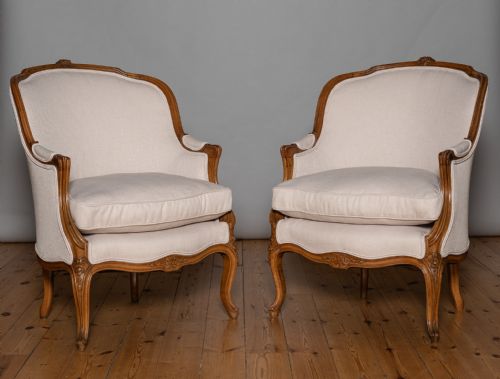
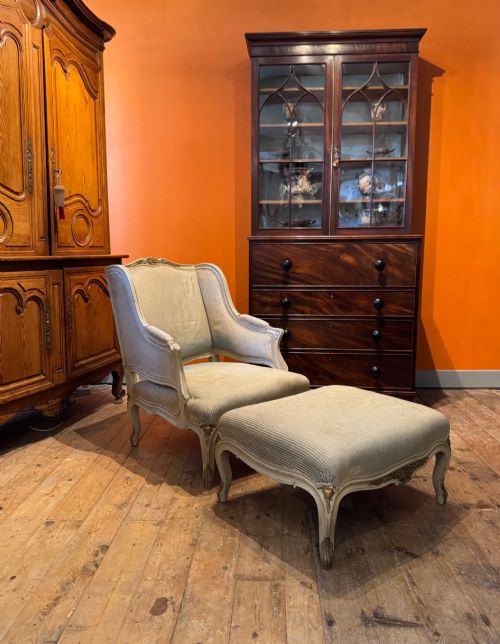


Wooden Bergere Chair
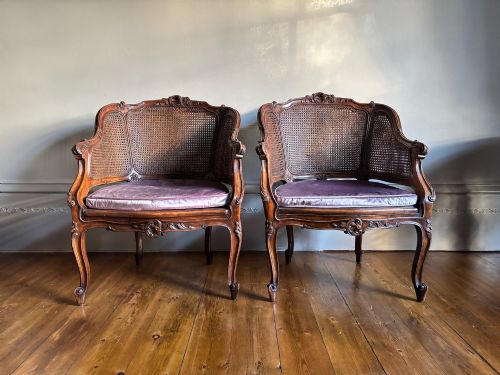
A wooden bergere chair brings classic French seating into a room, offering deep, enclosed comfort through woven cane panels.
Wooden Bergere Chair
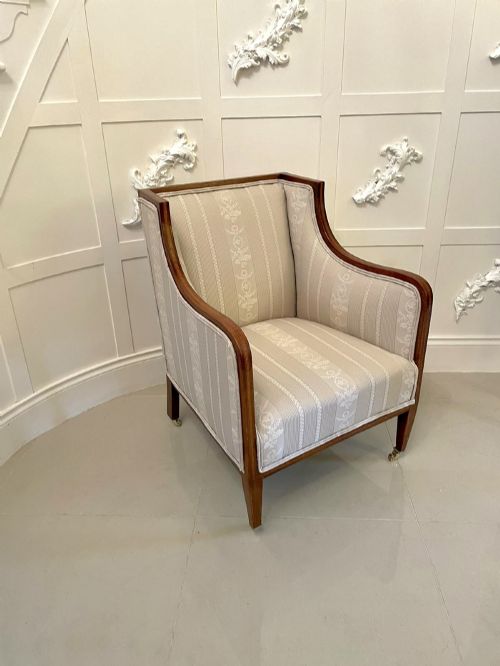
A wooden bergere chair is a traditional upholstered armchair featuring enclosed cane or split cane sides and back panels, paired with a loose seat cushion. When searching for a wooden bergere chair, buyers encounter pieces primarily from the nineteenth and early twentieth centuries, spanning Edwardian interpretations and French revival styles.
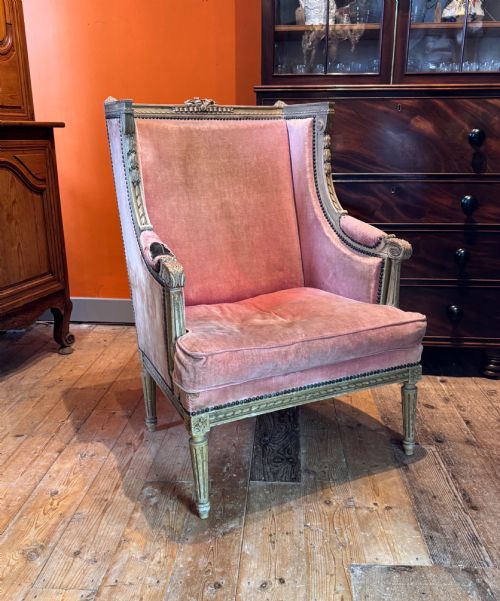
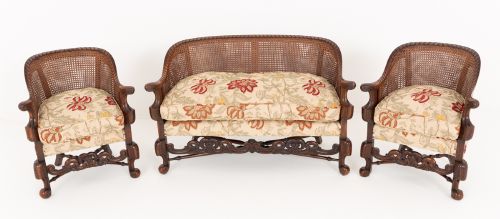
The selections on this page highlight forms rooted in historical French design, specifically Louis XV and Louis XVI styles, alongside Carolean and Regency influences. These seats appear in various configurations, including library armchairs, pairs of matching saloon seats, and occasionally children's high chairs.
Frames take shape in walnut, mahogany, beech, oak, and painted or giltwood finishes. Many examples retain original paint or patinated surfaces that show decades of gentle use within period interiors.
How they were made
Cabinetmakers constructed the supportive frames using solid timbers such as walnut, mahogany, beech, and oak, often shaping the structural rails through careful carving. Artisans applied decorative finishes directly to the wood, including traditional paint layers, giltwood, or polished clear coats.
The signature side and back panels utilise hand-woven cane or split cane, threaded meticulously through pre-drilled holes along the interior frame. Upholstered elements rely on traditional stuffing materials beneath outer layers of fabric, velvet, or leather.
Wooden Bergere Chair Retail Price Guide 2026
Typical asking prices for wooden bergere chair among the pieces listed under this phrase on Sellingantiques today, from the lower quarter to the upper quarter. They describe what is for sale here now, not the wider market.
Listings feature frames fashioned from walnut, mahogany, beech, oak, and brass, spanning the nineteenth century through the Edwardian period.
What varies in quality
Quality rests significantly on the crispness and depth of the wood carving along the frame, where fluid lines and hand-shaped details distinguish superior cabinetmaking from simpler production. The preservation of original surface treatments, such as authentic period paint or gilt, elevates a piece above later stripping or repainting.
The integrity of the woven cane work dictates daily durability, with tighter, uniform tension representing finer craftsmanship. Frame stability, determined by traditional joinery rather than modern adhesives, ensures the structural longevity of the armchair.
The Wooden Bergere Chair Glossary
- Bergere
- An enclosed upholstered armchair with wooden framing and cane or upholstered side panels. This seating form originated in France during the early eighteenth century.
- Caning
- A seating technique utilising woven rattan strips to create breathable, patterned panels. Split cane provides a smoother, flatter finish often found on nineteenth-century panels.
- Louis XV Style
- A revival design aesthetic characterised by asymmetric curves, cabriole legs, and floral scrollwork. Furniture from this tradition emphasises organic, flowing contours.
- Carolean Style
- A late seventeenth-century British design tradition featuring rich carvings, turned stretchers, and high cane backs. Pieces in this style display stately, formal proportions.
Wooden Bergere Chair: Frequently Asked Questions
How do I style a bergere chair?
A wooden bergere chair works well as a reading seat in a study or paired opposite a sofa in a living room. Its carved wooden frame and textured cane panels allow it to sit comfortably alongside both antique and contemporary furniture.
Keep surrounding pieces simple to let the intricate woodwork and curved silhouette remain the focal point of the space.
Are original painted finishes common?
Many nineteenth and early twentieth-century French bergere chairs retain their original painted or gilt surfaces. These finishes often show natural wear and craquelure acquired over generations of domestic use.
Original paint adds character and historical integrity, distinguishing untouched pieces from later decorative repainting.
How should I care for cane panels?
Cane panels require occasional dusting with a soft brush and gentle humidity to prevent the natural rattan from becoming brittle. Avoid placing these chairs directly against intense heat sources or in overly dry environments.
Weighing down the cane seat with heavy objects should be avoided, as the woven strands depend on even tension across the frame.