




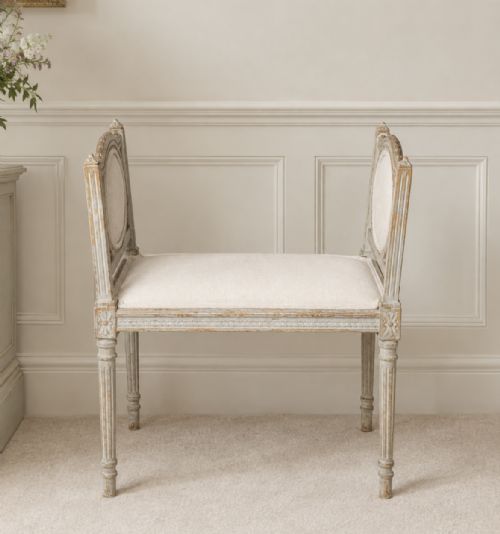
Wooden Bedroom Bench
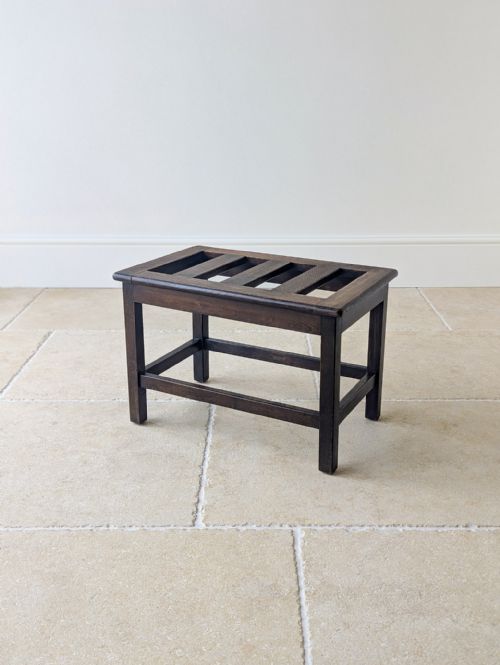
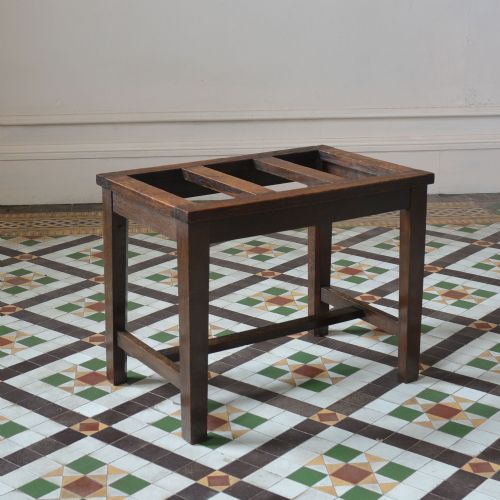
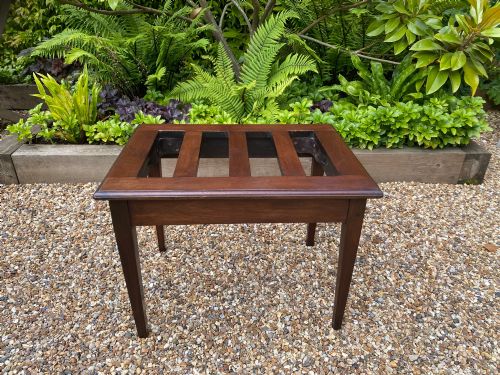
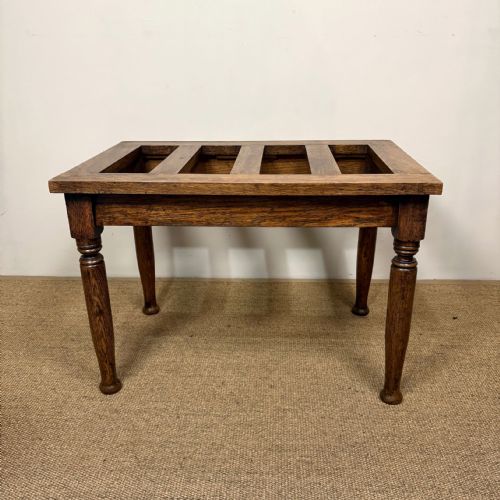
A wooden bedroom bench brings quiet utility to the foot of a bed, offering a sturdy perch or luggage support crafted from period timbers.
Wooden Bedroom Bench
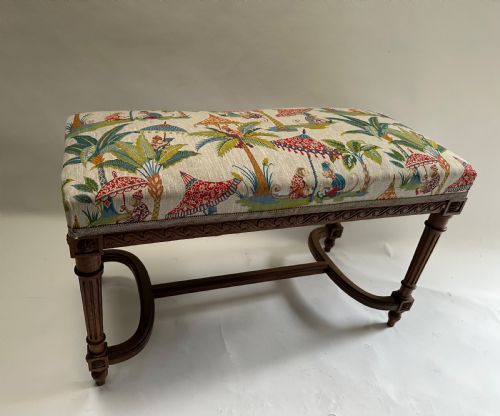
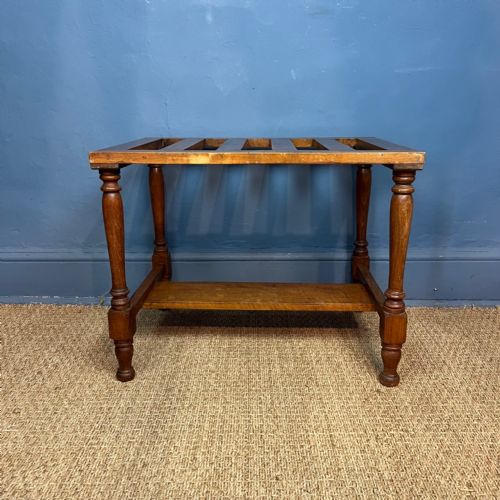
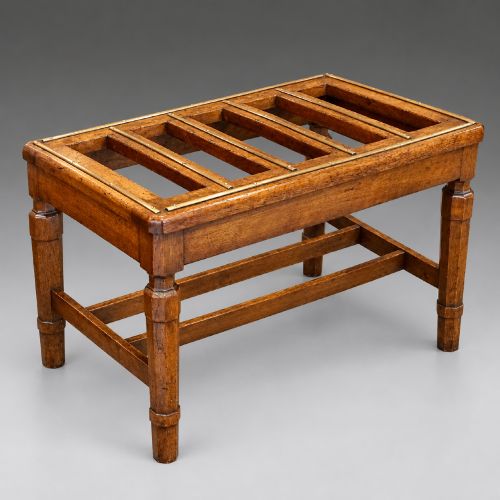
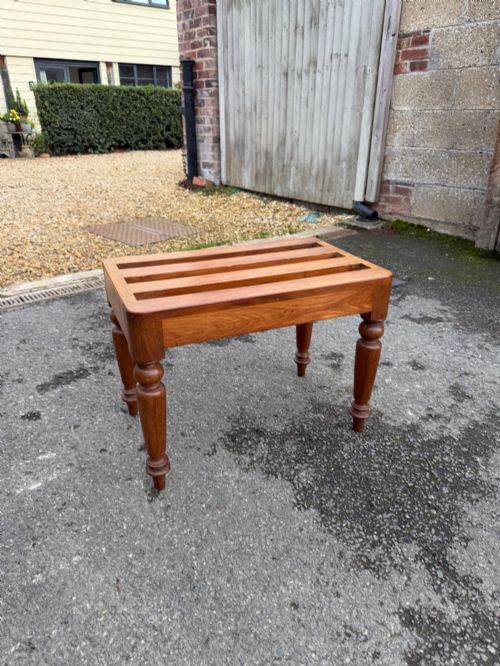
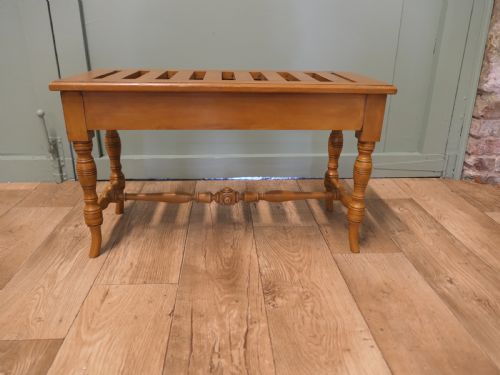
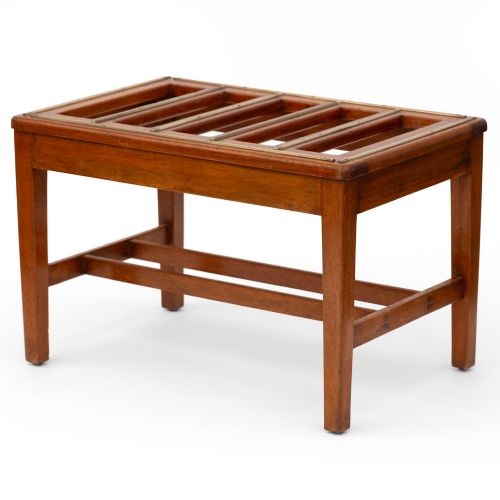
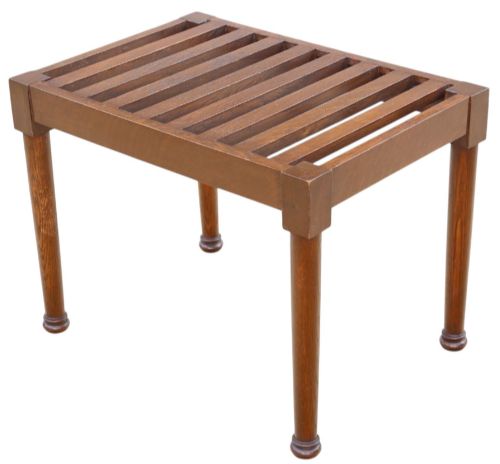
A wooden bedroom bench encompasses various forms such as luggage stands, window seats, and dressing stools designed for domestic spaces. These pieces appear across multiple periods including the Victorian and Edwardian eras, alongside pieces influenced by French Provincial and Arts and Crafts styles.
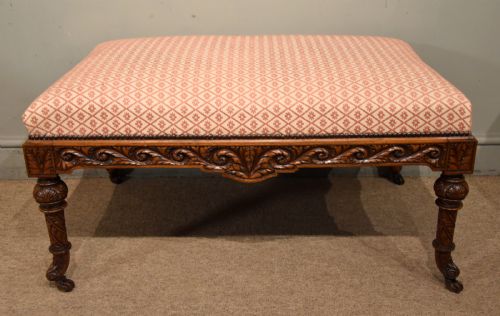
Shoppers will frequently encounter luggage racks and compact stools in oak and mahogany, often featuring upholstered pads or canework surfaces. Window seats and long French stools also emerge among the selection, providing low seating suited to the end of a bed.
Materials and Construction
Cabinetmakers utilised hardwoods such as oak, mahogany, walnut, and rosewood, applying polish or white paint to finish the timber frames. Joinery methods varied from straightforward pegged joints to carved detailing and inlaid veneers.
Upholstery involved fabrics like beige linen and decorative textiles, while seating surfaces occasionally incorporated woven cane or brass hardware for structural support.
Wooden Bedroom Bench Retail Price Guide 2026
Typical asking prices for wooden bedroom bench among the pieces listed under this phrase on Sellingantiques today, from the lower quarter to the upper quarter. They describe what is for sale here now, not the wider market.
The listings demonstrate a strong representation of Edwardian and Victorian oak and mahogany luggage stands alongside French-style window seats.
Evaluating Craftsmanship
The standard of a wooden bedroom bench rests on the selection of timber and the crispness of any hand-carved details or inlay work. Heavier proportions and raised rear upstands denote sturdiness in luggage stands, whereas refined execution distinguishes pieces attributed to notable workshops.
Surface preservation also dictates worth, as original polished finishes, intact canework, and tight joints reflect superior original construction and careful subsequent upkeep.
Harry & Lou Epstein
The Wooden Bedroom Bench Glossary
- Luggage stand
- A low folding or rigid wooden stand with slatted top rails, designed originally for suitcases at the end of a bed.
- Window seat
- An elongated upholstered or wooden stool sized to fit beneath a window recess or at the foot of a bed.
- Canework
- A seating surface woven from peeled rattan or cane strips, providing a lightweight and flexible panel.
- Upstand
- A raised vertical timber support at the rear of a bench or luggage rack designed to prevent items from sliding off.
- Inlay
- A decorative technique where contrasting pieces of wood or shell are inserted into recesses within the primary timber surface.
Wooden Bedroom Bench: Frequently Asked Questions
What is a wooden bedroom bench used for?
These pieces serve primarily as functional furniture at the foot of a bed, functioning as luggage racks for overnight bags or as seats for dressing.
They also occupy window recesses and hallways, providing compact surfaces that combine seating with decorative woodwork.
How do I identify an Edwardian bench?
Edwardian examples frequently display lighter mahogany or oak construction, sometimes featuring delicate string inlay or satinwood banding.
They tend to embrace simplified forms inspired by earlier Sheraton styles, distinguishing them from heavier Victorian pieces.
Are these benches suitable for daily sitting?
Most surviving luggage stands and stools possess solid hardwood frames capable of supporting regular weight, though slatted luggage racks are built principally for cases.
Upholstered window seats and padded dressing stools offer comfortable daily seating depending on the firmness of the webbing and padding.
What timbers were commonly used?
Cabinetmakers relied heavily on mahogany, oak, and walnut for their strength and grain patterns, occasionally utilising exotic hardwoods like Chinese huali.
Secondary woods like pine appear in hidden structural components, while beech and rosewood feature in specific regional or stylistic variants.