


Wooden Bed Steps
Wooden bed steps are clever multi-tier pieces designed to reach high beds, prized today for their compact footprint and rich timber grain.
Wooden Bed Steps
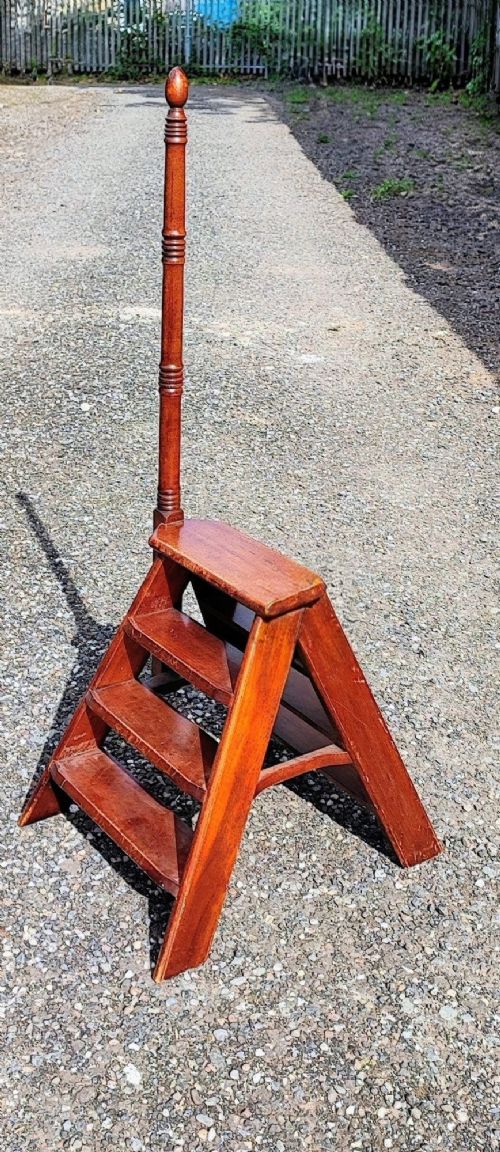
Wooden bed steps are compact sets of small steps designed historically to assist with climbing into high-frame beds. The examples you encounter on this page span the Regency, Victorian, and later periods, often sharing forms with library steps.
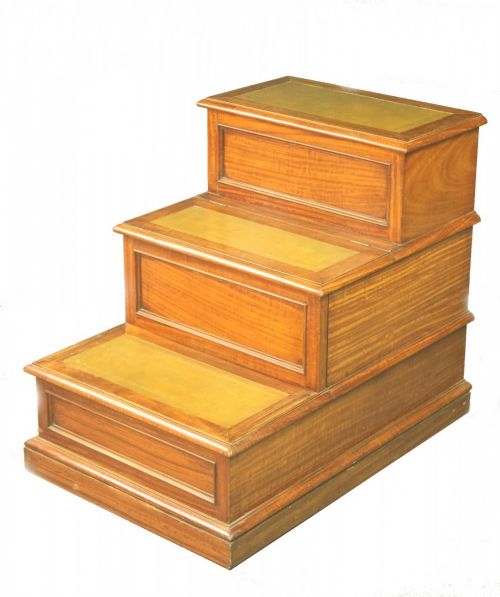
Most pieces you meet are constructed from dense timbers like mahogany or satinwood, reflecting the materials favoured by makers in the nineteenth century and subsequent decades. These structures usually comprise two or three tiers, occasionally incorporating hinged treads or inset leather panels.
While some listings present dedicated bed steps, you also find library steps functioning in the same multi-tier role alongside related bedroom furniture like beds and bedside tables. Each version offers a distinct piece of period utility suited for compact display.
Materials and construction
Cabinet makers utilised dense hardwoods such as mahogany, walnut, fruitwood, and satinwood to build these sturdy flights. These timbers were selected for their structural strength and capacity to take a fine polished finish.
Workshops frequently incorporated contrasting elements like brass hardware, timber banding, and inset leather panels onto the treads. These additions provided both decorative detail and practical grip for daily use.
Some nineteenth-century steps double as stealthy little hiding spots, featuring secret compartments tucked right beneath the hinged treads.
Judging the standard
Quality rests in the crispness of the timber joinery, the selection of figured veneers, and the integrity of the structural joints across each tier. Pieces exhibiting finely turned uprights or well-matched grain patterns stand apart from simpler utilitarian builds.
The presence of original surfaces, such as aged leather inserts and patinated mahogany, marks the distinction between untouched period examples and later restorations. Subtle details like stamped maker marks further elevate the standing of an individual set.
J Jarvis
The Wooden Bed Steps Glossary
- Tread
- The horizontal surface of a step upon which the foot rests. In bed steps, these treads are frequently inset with tooled leather.
- Regency
- A British design period spanning the early nineteenth century, characterised by classical restraint and rich mahogany timbers. Pieces from this era often display clean architectural lines.
- Satinwood
- A durable, lustrous timber originating from tropical trees, known for its pale golden colour and satin-like sheen. Cabinet makers utilised it for fine decorative banding and distinct smaller furniture.
- Library steps
- Multi-tiered wooden steps designed for reaching high bookshelves, sharing identical forms and construction methods with bed steps. They are frequently catalogued interchangeably in period listings.
Wooden Bed Steps: Frequently Asked Questions
What are wooden bed steps?
Wooden bed steps are small, multi-tiered sets of stairs designed to help people climb into high historical beds safely.
They combine practical utility with compact furniture design, often featuring hinged steps or storage compartments within the lower treads.
How were bed steps used historically?
Bedsteads in earlier centuries stood significantly higher off the floor than modern beds, necessitating dedicated steps for daily access.
Servants and homeowners positioned them beside the mattress, moving them away during the day to save space in the bedchamber.
How do I style bed steps at home?
These compact timber pieces work exceptionally well as bedside stands, plant holders, or display tiers for books and small objects.
Their small footprint allows them to fit easily into tight corners while adding distinct period character to a modern interior.
How do I tell bed steps from library steps?
Bed steps and library steps share very similar multi-tiered wooden construction, as both were built by cabinet makers to reach elevated surfaces.
Distinctions usually rely on historical attribution or context, as library steps often tended to be slightly taller or part of larger study suites.