

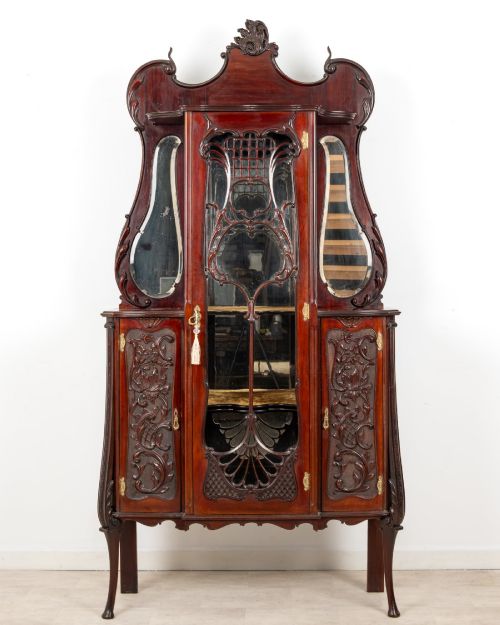


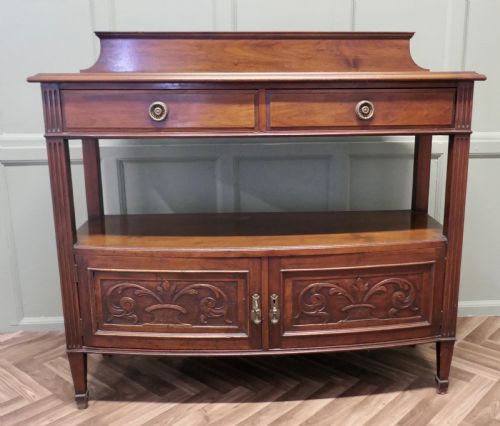


Wooden Art Nouveau Cabinet
A wooden art nouveau cabinet brings flowing natural forms into domestic storage, offering curved lines and organic ornamentation.
Wooden Art Nouveau Cabinet
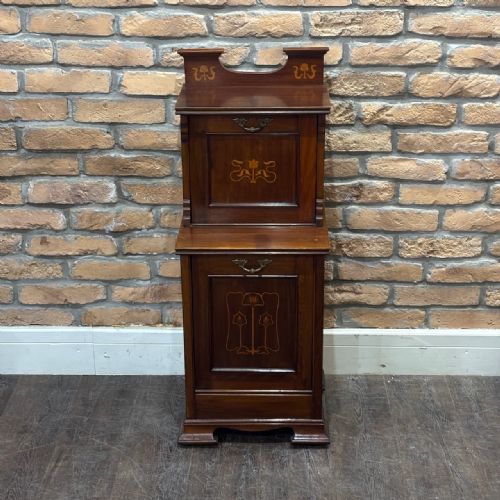
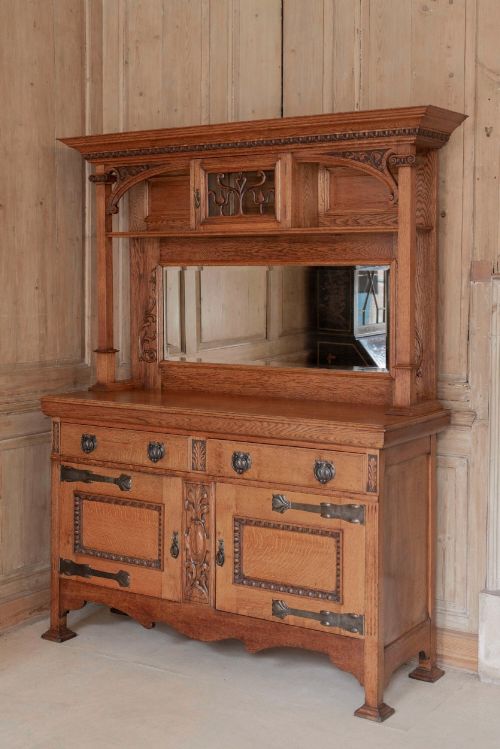
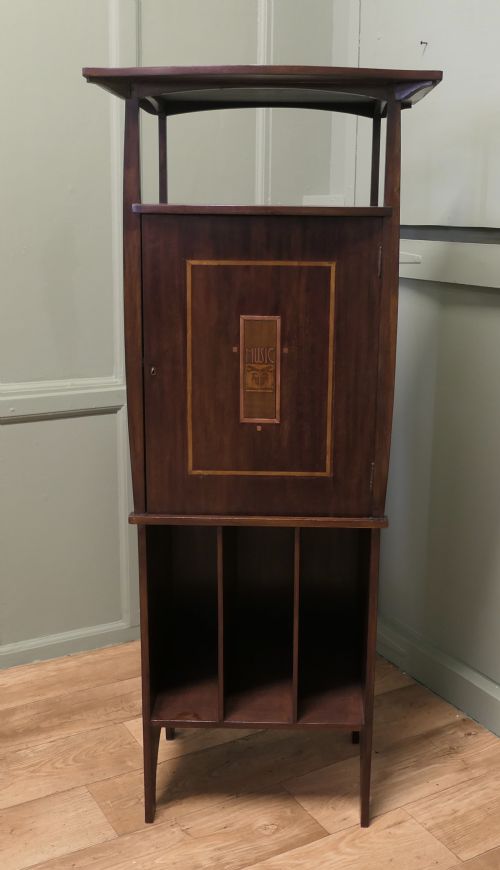
A wooden art nouveau cabinet combines functional storage with the characteristic flowing lines and natural motifs of the style. The selection includes music cabinets, display units, sideboards, bookcases, and wall-hanging cupboards.
The pieces on this page span several periods, including Victorian, Edwardian, and the early twentieth century. Makers and designers such as Shapland and Petter and GM Elwood for JS Henry appear alongside French and British regional examples.
Forms range from compact table-top boxes and wall cupboards to large sideboards and armoires. Woods such as mahogany, oak, walnut, and pine provide the primary structure for these items.
How they were made
Makers utilised solid timbers and veneers like mahogany, oak, and walnut, often enhanced with wood inlay. Structural elements rely on traditional cabinet-making joints suited to the period.
Surface decoration frequently includes carved organic motifs, mirror backs, and metal mounts in brass and copper. Waxing and polishing finished the wooden surfaces to highlight the grain.
Wooden Art Nouveau Cabinet Retail Price Guide 2026
Typical asking prices for wooden art nouveau cabinet among the pieces listed under this phrase on Sellingantiques today, from the lower quarter to the upper quarter. They describe what is for sale here now, not the wider market.
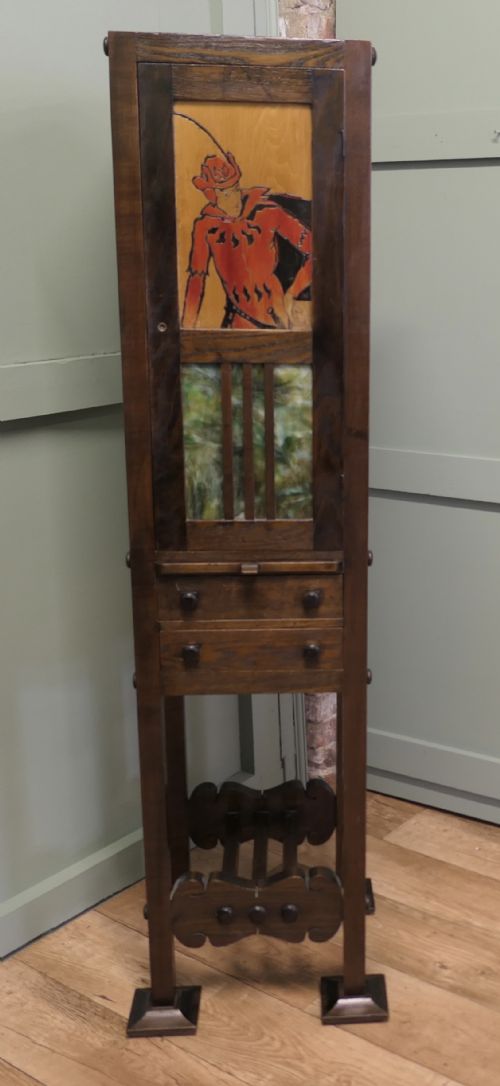
Robin Hood makes an appearance in the workshop credits, bringing a touch of woodland folklore to Edwardian storage.
What varies in quality
The standard of carving and the complexity of the inlay separate standard production from notable workshop pieces. Hand-worked brass or copper hardware and refined structural joinery indicate higher production values.
Attribution to recognised designers or makers elevates the standing of a piece compared to anonymous regional workshop output.
Shapland and Petter·GM Elwood·JS Henry
The Wooden Art Nouveau Cabinet Glossary
- Art Nouveau
- A style of decorative art characterised by fluid, organic lines and floral motifs. It emerged in the late nineteenth century as a rejection of historicism.
- Arts and Crafts
- A design movement advocating traditional craftsmanship and simple forms. It shares overlapping periods and philosophies with the art nouveau style.
- Inlay
- A technique where pieces of contrasting wood or other materials are embedded into the primary surface. This creates decorative patterns and pictures.
- Music Cabinet
- A specialised storage piece fitted with internal shelves or drawers designed to hold sheet music. These cabinets often feature glazed or panelled doors.
Wooden Art Nouveau Cabinet: Frequently Asked Questions
What rooms suit a wooden art nouveau cabinet?
These cabinets work well in living rooms, hallways, and dining spaces where their decorative fronts add visual interest. Smaller wall-hanging versions fit compactly into tighter spaces.
Their diverse forms allow them to function as storage cupboards, display units, or dedicated music cabinets depending on the interior layout.
How do I care for the wood and inlay?
Maintain the finish by applying appropriate waxes periodically and keeping the wood away from direct heat sources. Gentle dusting preserves the polished surfaces and delicate inlay work.
Avoid excessive moisture on the timber and metal mounts to protect the original patination.
Are these pieces Edwardian or Victorian?
The pieces span multiple decades from the late nineteenth century through the Edwardian era up to nineteen-ten. Stylistic overlap between late Victorian design and early Edwardian production is common in these items.
Construction methods and specific design motifs help indicate the manufacturing period.
How were music cabinets used originally?
Music cabinets served to store sheet music and scores neatly near pianos or drawing room instruments. Their internal shelving kept paper organised and protected.
Today, collectors utilise them as general storage cupboards or bedside units while retaining their period character.