

Wooden Armoire with Mirror
A wooden armoire with mirror brings depth and proportion to a bedroom, pairing substantial timber with functional glass.
Wooden Armoire with Mirror
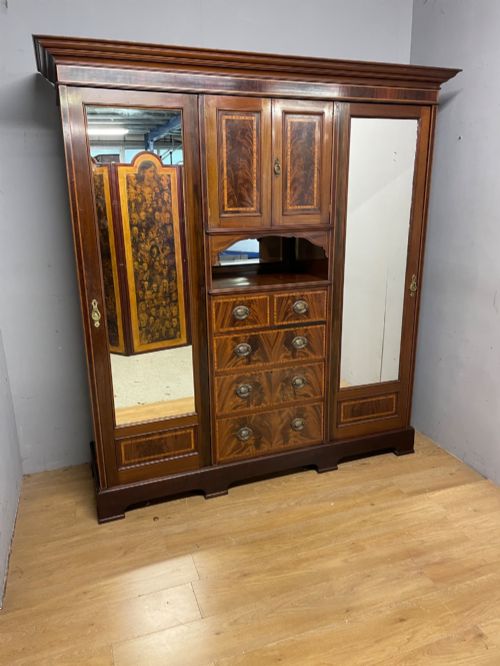
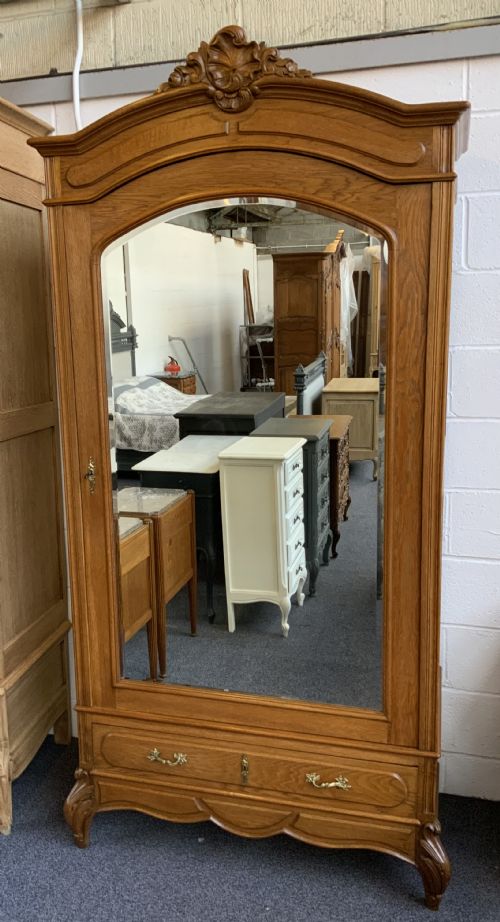
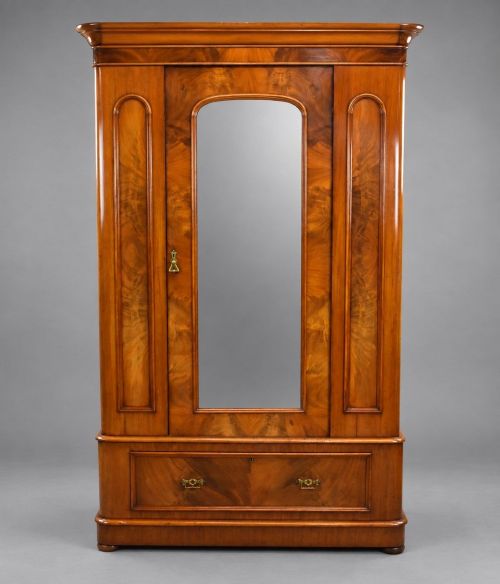
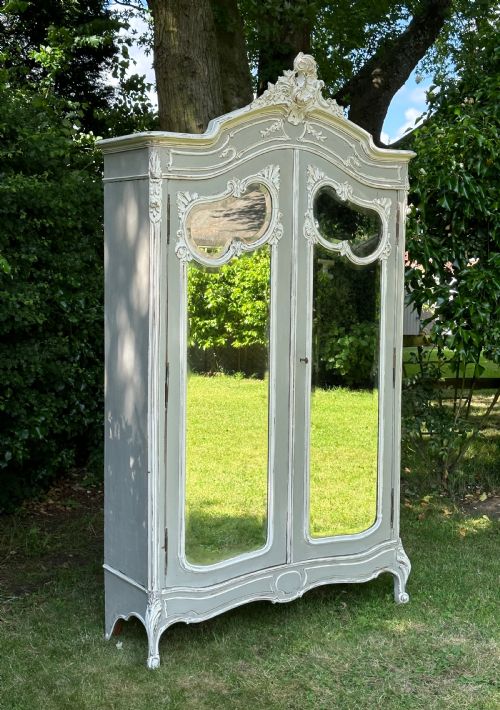
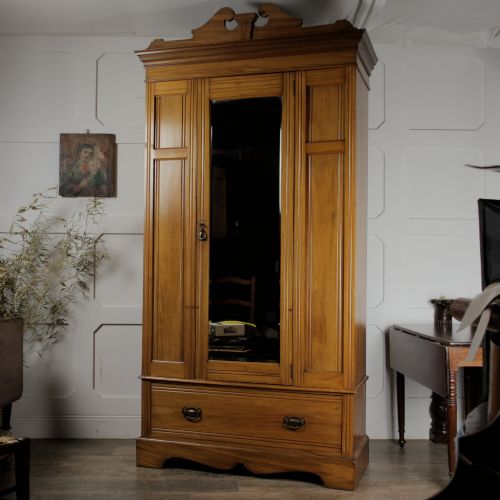
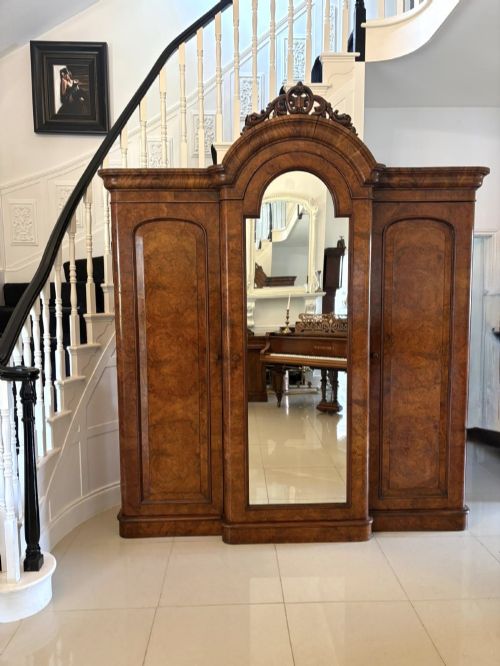
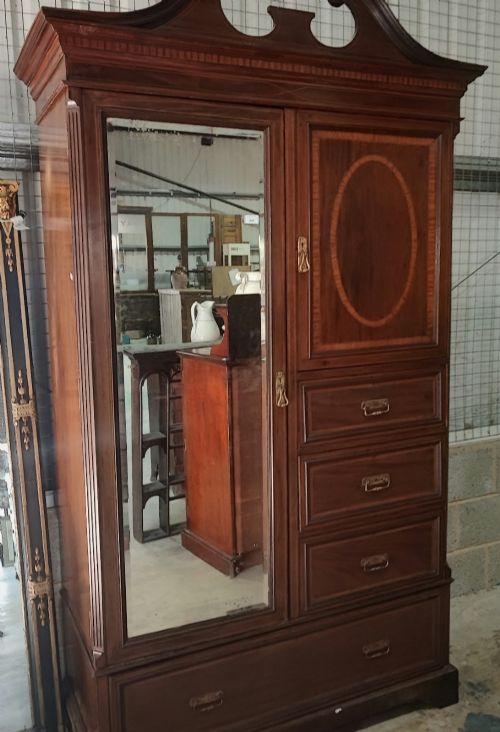
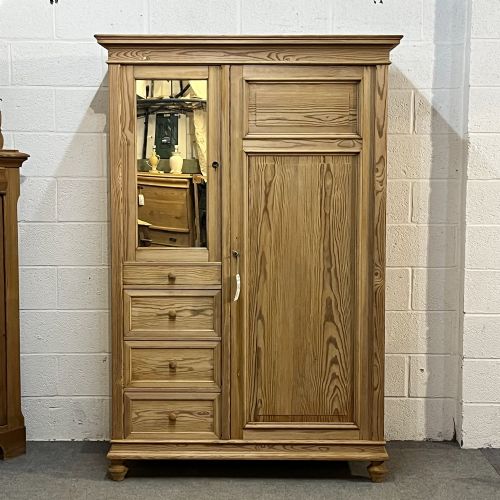
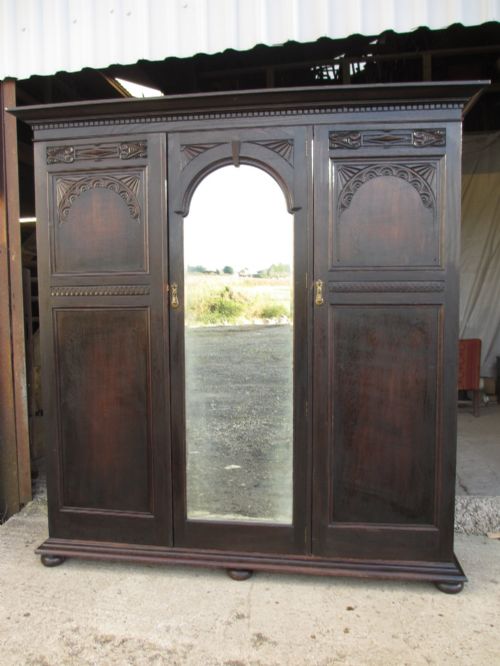
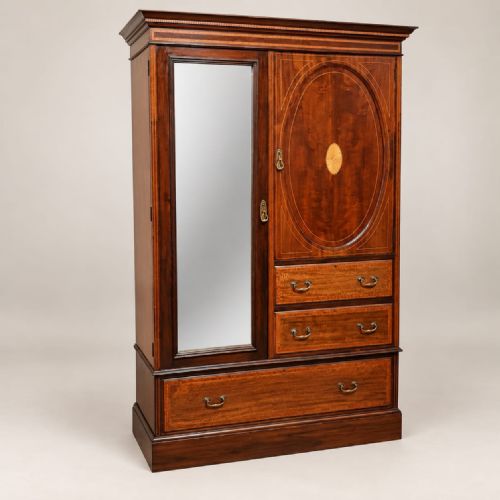
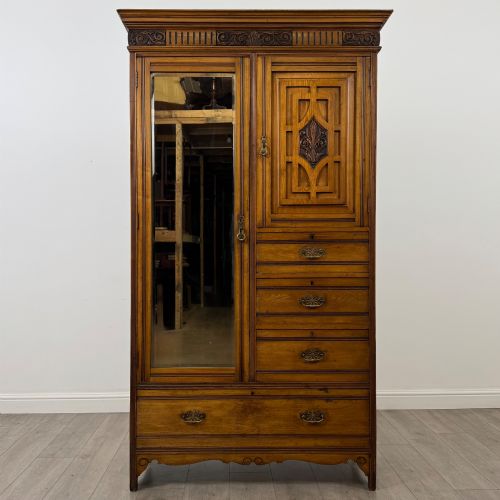
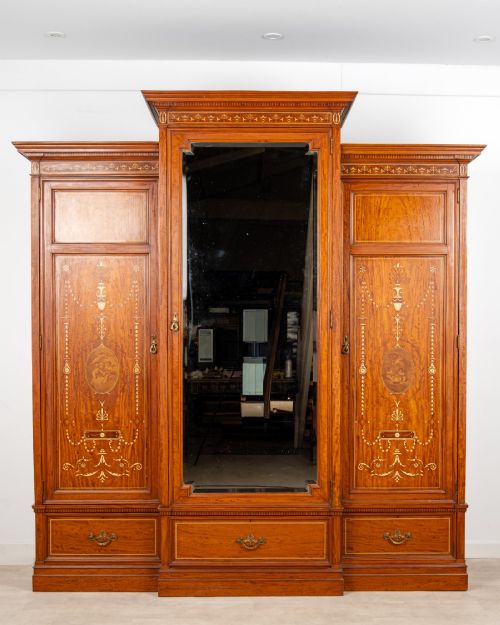
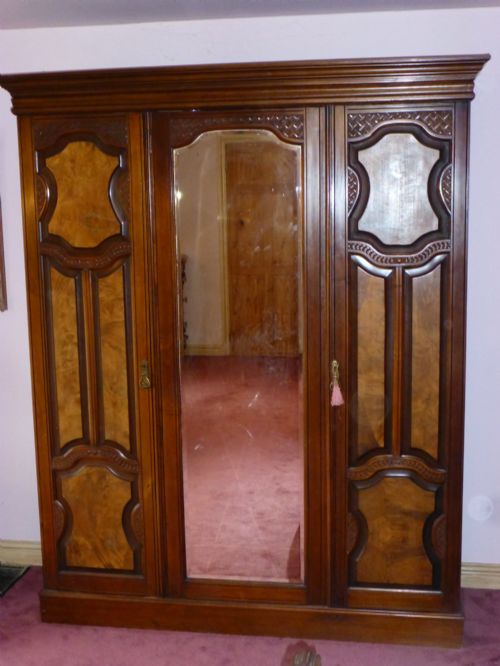
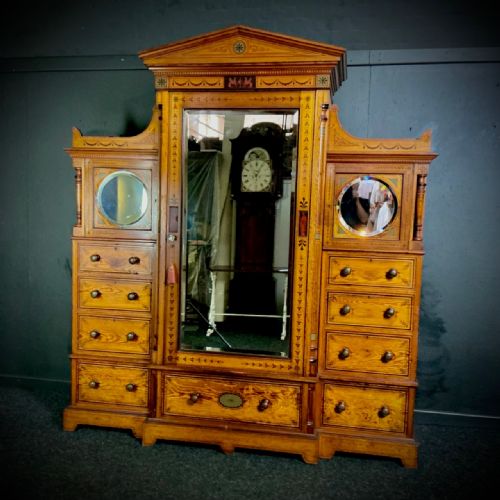
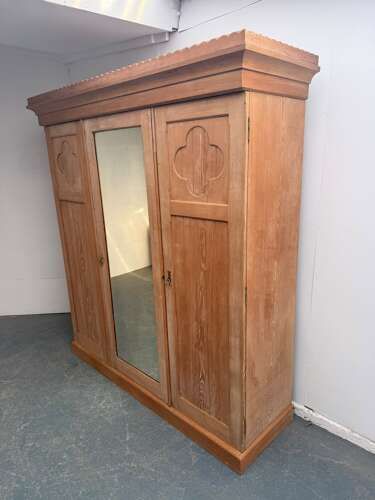
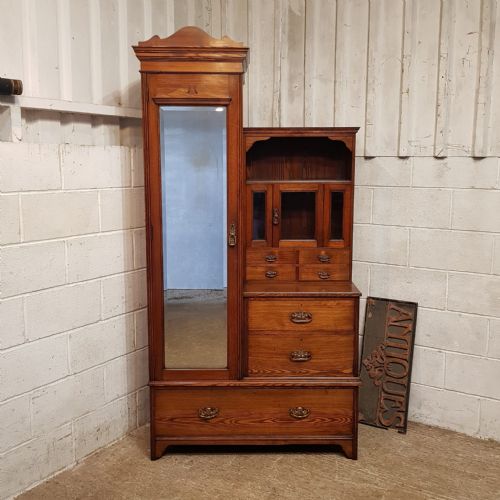
A wooden armoire with mirror takes many forms, appearing frequently as Edwardian and Victorian wardrobe pieces alongside French provincial designs. Buyers encounter robust oak, rich mahogany, satinwood, and pitch pine across these larger bedroom storage items.
The selection ranges from compact single doors and sentry box combinations to expansive triple wardrobes and painted finishes with brass detailing. Each piece reflects period craftsmanship from the nineteenth and early twentieth centuries, offering fitted interiors and hanging space.
Victorian and Edwardian examples dominate the offerings, spanning simple pine compactum units to large mahogany wardrobes fitted with drawers and mirrored doors. These large storage items serve the same practical function today as they did in period homes.
Construction and Materials
Carpenters built these wardrobes using solid timbers such as oak, mahogany, and pitch pine, often applying flame mahogany veneer or satinwood to primary display surfaces. Carved details and painted finishes appear alongside brass hardware to complete the construction.
Mirrored glass doors integrated into the woodwork required sturdy framing to support the weight of the glass panels safely within the heavy timber structure.
Wooden Armoire with Mirror Retail Price Guide 2026
Typical asking prices for wooden armoire with mirror among the pieces listed under this phrase on Sellingantiques today, from the lower quarter to the upper quarter. They describe what is for sale here now, not the wider market.
Compactum wardrobes prove that Victorians invented clever internal logistics long before modern flat-pack storage.
Assessing Quality
Quality rests in the selection of timbers, such as figured mahogany or detailed satinwood, and the precision of the joinery and carving. Superior pieces maintain structural integrity in large mirrored doors and complex fitted interiors.
The refinement of brass detailing and the condition of the glass distinguish finer examples from simpler utilitarian storage pieces.
Heals
The Wooden Armoire with Mirror Glossary
- Compactum
- A wardrobe that combines hanging space with multiple internal drawers and compartments. This configuration maximises storage within a single footprint.
- Sentry Box
- A narrow single wardrobe design created to fit tight spaces. These pieces maintain vertical proportions while offering compact internal storage.
- Satinwood
- A durable hardwood with a lustrous, golden appearance. Cabinetmakers utilised this timber for fine veneers and primary surfaces.
- Pitch Pine
- A dense, resinous softwood with pronounced grain patterns. Makers selected this material for sturdy Victorian and Edwardian furniture.
Wooden Armoire with Mirror: Frequently Asked Questions
How do I fit a large wardrobe?
Measure your ceiling height and floor space carefully before selecting an armoire or combination wardrobe. Many period pieces are tall and deep, requiring adequate clearance for doors to open fully.
Ensure stairways and doorways along your delivery route can accommodate the dimensions of these substantial wooden pieces.
Are the mirrors original?
Mirrors on Victorian and Edwardian pieces are often original, displaying slight foxing or age spots that reflect their history. Inspect the silvering behind the glass to understand its condition.
Original glass is held securely within wooden frames using traditional glazing methods.
How do I care for the wood?
Dust mahogany, oak, and satinwood surfaces regularly with a soft, dry cloth to prevent dirt accumulation. Avoid placing the wardrobe in direct sunlight or near heat sources to protect the timber and veneer.
Apply suitable beeswax polish sparingly to maintain the natural lustre of the wood without building up excess residue.
What is a combination wardrobe?
A combination wardrobe integrates hanging compartments with internal drawers, shelves, and sometimes mirrored doors. This multi-functional layout became popular during the Victorian and Edwardian periods.
These units offer diverse storage options within a single piece of bedroom furniture.