

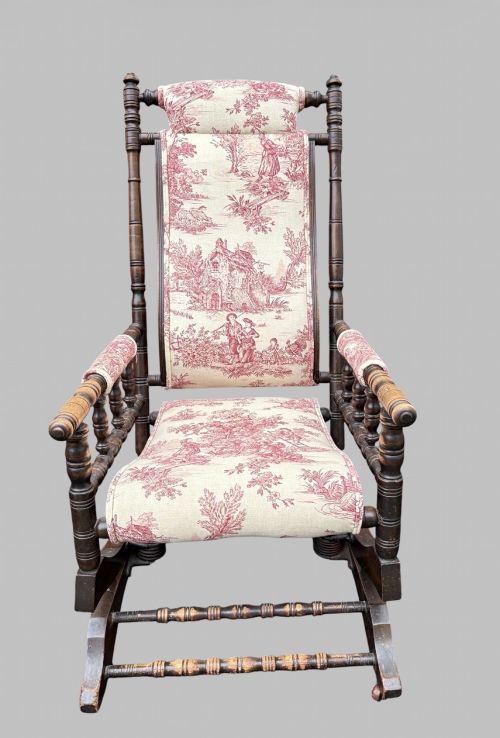

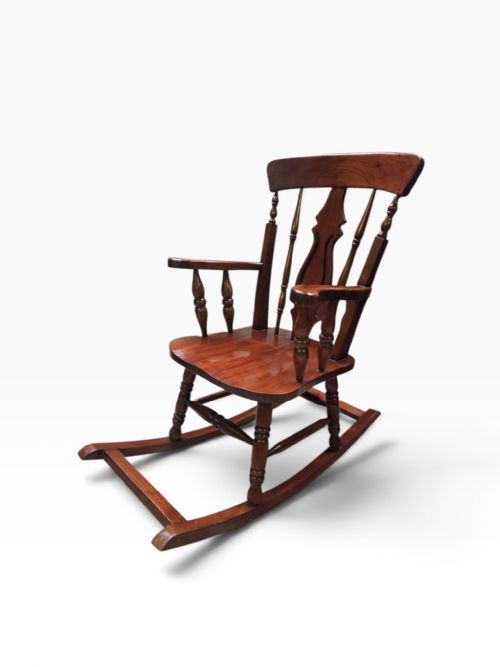
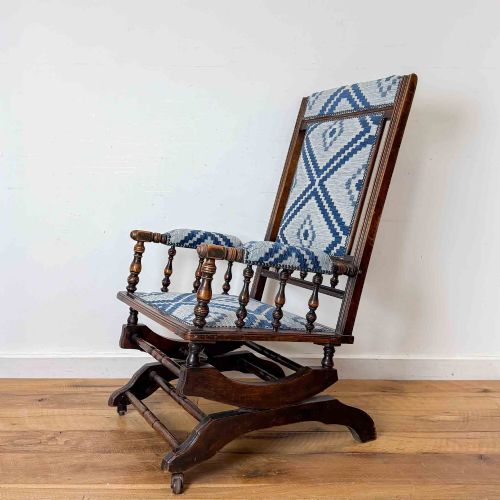
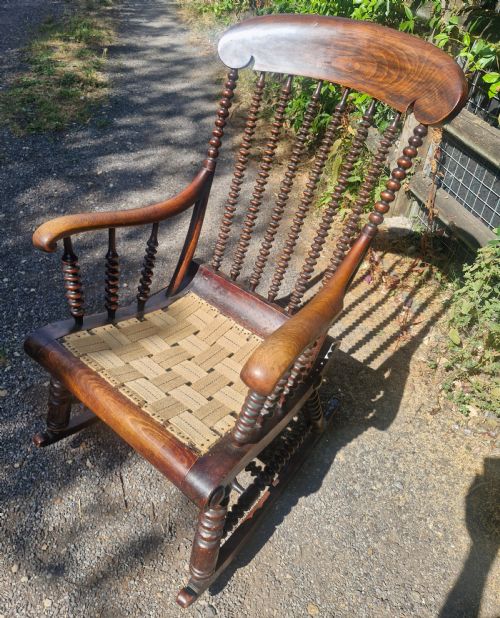




Wooden Armchair Rocker
A wooden armchair rocker is a seat built on curved runners to soothe the body, spanning sturdy country styles and elegant library designs.
Wooden Armchair Rocker
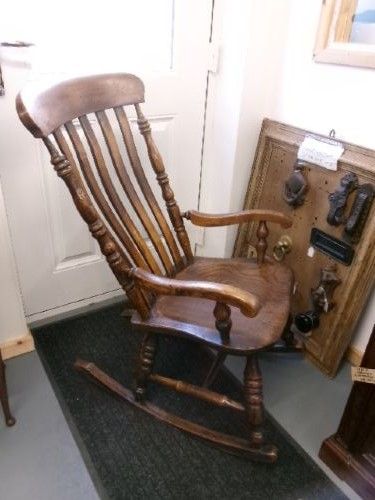
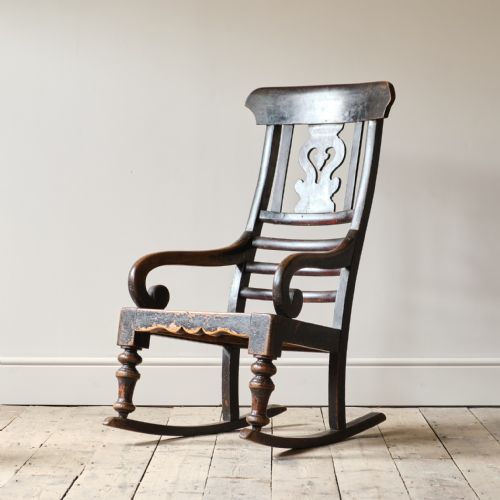
When you search for a wooden armchair rocker, you encounter seating built for gentle motion across multiple centuries. The selection ranges from robust regional vernacular chairs to lighter upholstered parlour models.
You meet heavy Windsor forms alongside slender bentwood shapes from the opening decades of the twentieth century. Examples stretch from the late eighteenth century through the Edwardian period and into the nineteen-thirties.
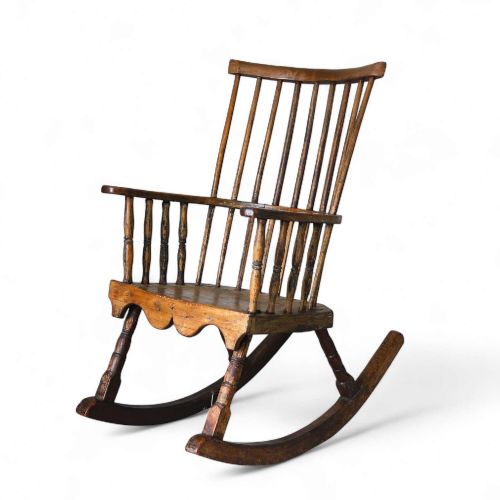
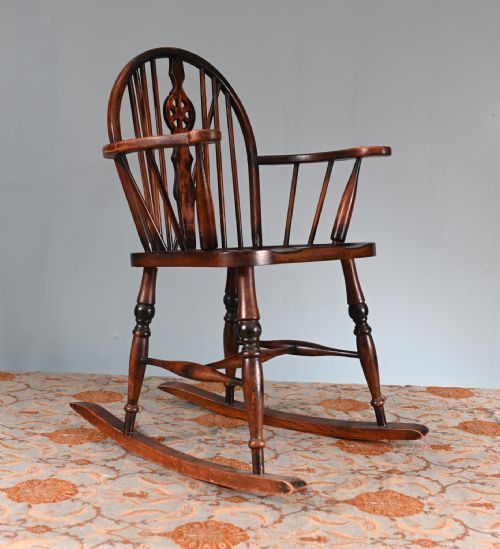
Country workshops produced sturdy elm and ash comb-back and wheelback variants, while urban makers utilised mahogany, beech, and walnut. Smaller children's models appear alongside full-sized adult seating.
How they were made
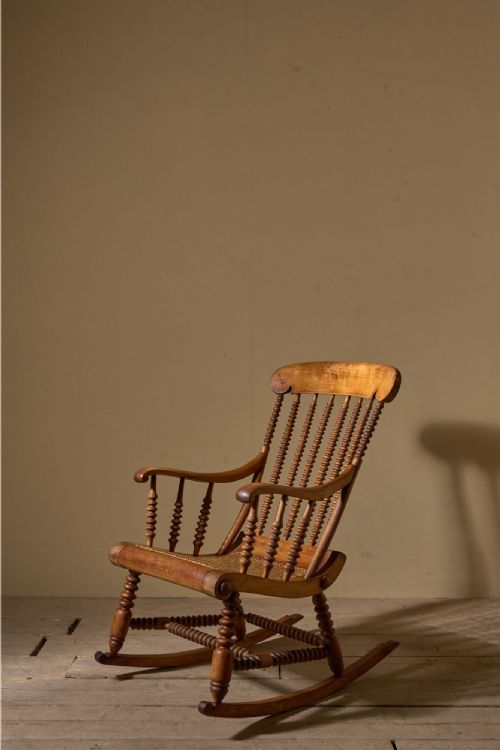
Cabinet makers and bodgers constructed these frames using domestic timbers such as oak, elm, beech, ash, and mahogany. Turned components like spindles and bobbin frames required specialist lathe work to shape the dense hardwoods.
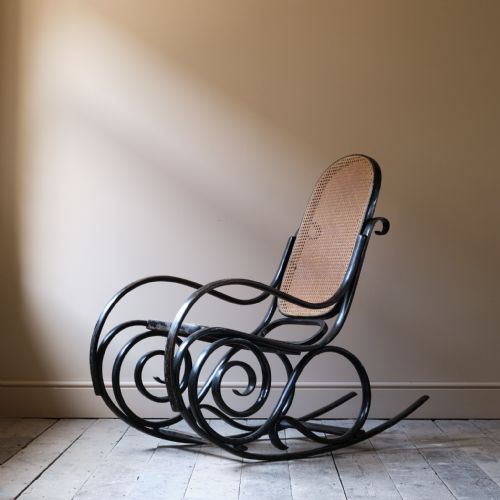
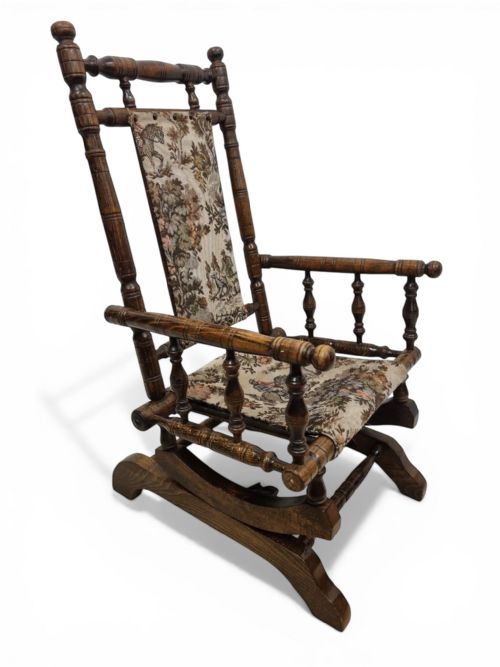
Makers integrated flexible seating materials including cane, sea grass, leather, tapestry, and fabric upholstery. Bentwood examples utilised steam-heated timber forced into sweeping circular curves, secured with brass fixings where appropriate.
Wooden Armchair Rocker Retail Price Guide 2026
Typical asking prices for wooden armchair rocker among the pieces listed under this phrase on Sellingantiques today, from the lower quarter to the upper quarter. They describe what is for sale here now, not the wider market.
Listings span the nineteenth and twentieth centuries, incorporating materials such as beech, elm, oak, mahogany, ash, fabric, cane, and brass.
What varies in quality
The integrity of the structural joinery dictates the distinction between robust seating and fragile frames. Hand-turned spindles and properly wedged through-joints demonstrate higher standards of regional or workshop carpentry.
The choice of primary timber and secondary framing materials establishes the original tier of production. Rich mahogany inlays and intact original painted surfaces elevate specific specimens above plain utilitarian equivalents.
Jacob and Josef Kohn
The Wooden Armchair Rocker Glossary
- Windsor
- A traditional chair type featuring a solid wooden saddle-seat into which the legs and back spindles are directly wedged. These sturdy forms often incorporate steam-bent back bows and armrests.
- Bentwood
- Wood softened by steam pressure and bent into curved structural forms. This technique created the characteristic flowing frameworks seen in Vienna Secession designs.
- Comb-back
- A traditional chair back design where vertical spindles rise through a horizontal arm bow to support a top rail resembling a traditional hair comb. This construction provides robust support in vernacular country seating.
- Bobbin turned
- A style of furniture leg and stretcher decoration shaped on a lathe to resemble a series of wooden reels or bobbins. It is frequently found on nineteenth-century vernacular seating.
- Wheelback
- A Windsor chair variation featuring a pierced splat carved or shaped in the outline of a spoked carriage wheel. This decorative motif became common during the nineteenth century.
Wooden Armchair Rocker: Frequently Asked Questions
What is a wooden armchair rocker?
A wooden armchair rocker is a seat mounted on curved wooden rockers designed for rhythmic motion. These chairs combine standard armchair support with a movable base.
They appear in diverse regional styles, from heavy farmhouse Windsors to light bentwood library chairs.
How do I identify an older rocker?
Dating relies on timber selection, construction methods, and stylistic cues present in the frame. Nineteenth-century examples often feature turned spindles, ash timbers, or heavy elm seats.
Later Edwardian and twentieth-century versions utilise lighter mahogany frames, cane panels, or factory-bentwood components.
Where were these chairs used?
These chairs served primarily as fireside seats in domestic parlours, farmhouses, and nurseries. Their soothing motion made them practical for resting or nursing infants.
Different iterations suited various rooms, from rustic country kitchens to formal Victorian drawing rooms.
Are children's versions common?
Small-scale children's rocking chairs appear frequently alongside full-sized adult seating. These miniature pieces mirror the construction methods and styles of larger workshop output.
They utilise similar timbers like beech, elm, and ash, sometimes featuring upholstered pads or tapestry seats.