



Wooden Afternoon Tea Stand
A wooden afternoon tea stand offers a practical and charming way to display cakes and side items during afternoon gatherings.
Wooden Afternoon Tea Stand
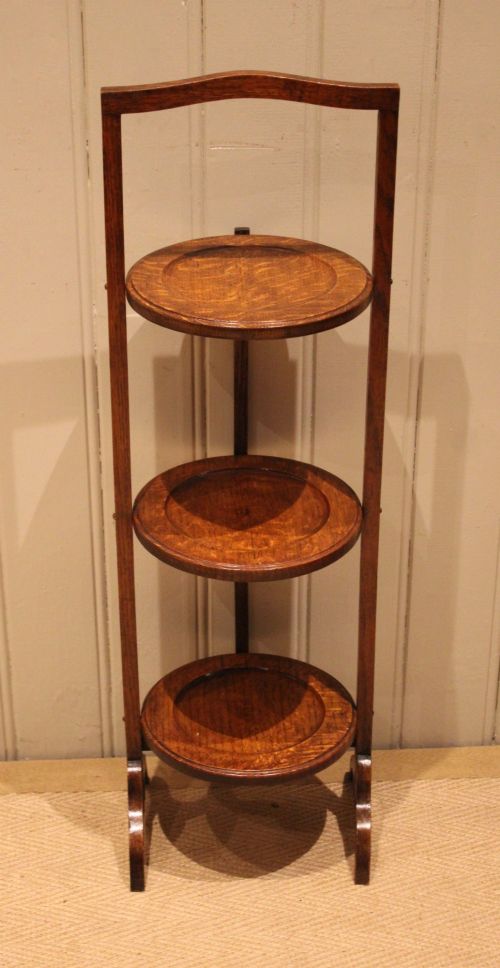
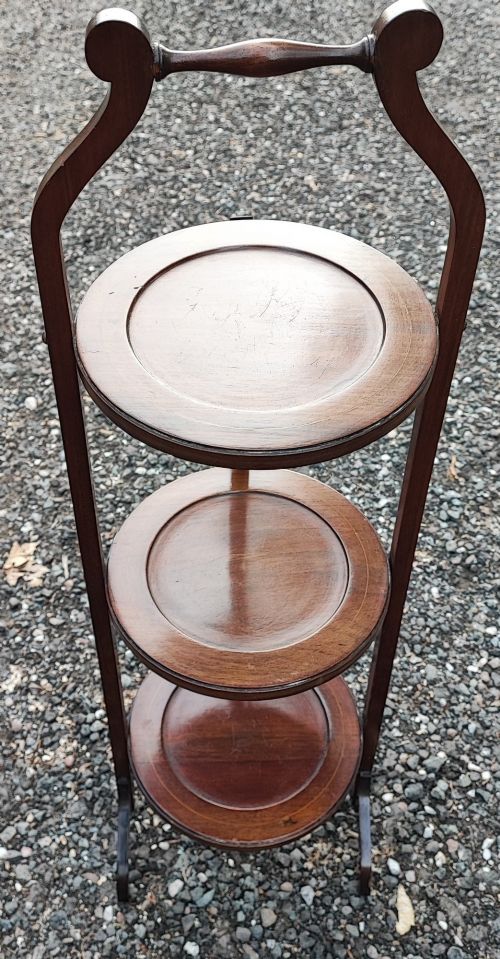
A wooden afternoon tea stand brings traditional tiered display to the table, taking the form of cake stands, side tables, and tiered stands. These items primarily appear from the Victorian and Edwardian eras, spanning into the early twentieth century around nineteen twenty.
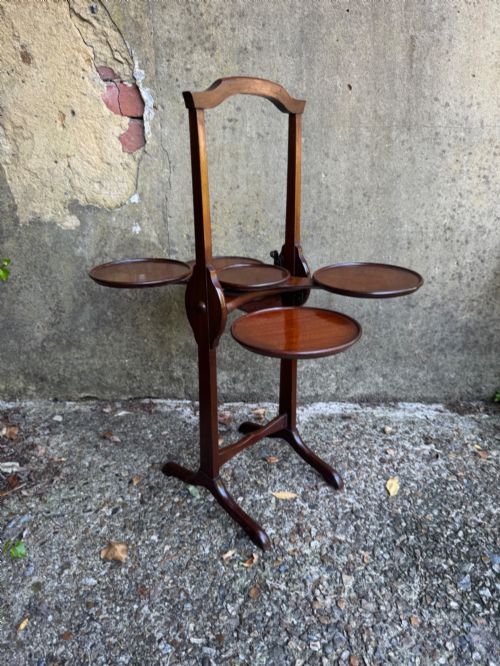
Most examples found here are folding cake stands designed for convenience, utilising multiple tiers to hold plates of cakes or afternoon treats. They serve as functional furniture that collapses easily when not in use, combining utility with period charm.
Makers drew on established styles such as Sheraton Revival alongside simpler Edwardian designs to create domestic items that suited polite society. The pieces reflect the social habits of their time, offering tiered platforms to present afternoon refreshments gracefully.
How they were made
Makers relied on timbers like mahogany and oak as the structural foundation for these stands, occasionally incorporating satinwood for visual contrast. Construction often included folding mechanisms that allowed the tiered stands to collapse flat.
Surface decoration frequently featured boxwood inlay, adding delicate geometric or floral patterns to the mahogany framework. Brass hardware and iron components sometimes appeared to secure joints, while felt protected contact points on folding sections.
Wooden Afternoon Tea Stand Retail Price Guide 2026
Typical asking prices for wooden afternoon tea stand among the pieces listed under this phrase on Sellingantiques today, from the lower quarter to the upper quarter. They describe what is for sale here now, not the wider market.
Listings span the Victorian and Edwardian periods up to nineteen twenty, featuring mahogany, oak, satinwood, and boxwood inlay.
What varies in quality
Construction methods set finer examples apart, particularly in the precision of the folding hinges and the stability of the tiers. Superior stands maintain strict alignment when opened, whereas lesser items suffer from looseness in the joints over time.
The choice of timber and the execution of boxwood inlay distinguish standard production from finer craftsmanship. Grain selection in the mahogany or oak and crispness in the inlaid details indicate the level of care invested by the maker.
The Wooden Afternoon Tea Stand Glossary
- Tiered stand
- Furniture featuring multiple horizontal platforms arranged vertically to display items such as cakes.
- Sheraton Revival
- A late nineteenth and early twentieth century design style drawing on eighteenth century neoclassical motifs.
- Boxwood inlay
- Contrasting light wood inserted into recesses on a darker timber surface to create decorative patterns.
- Folding mechanism
- The hinged or pivoting hardware that allows a piece of furniture to collapse for storage.
Wooden Afternoon Tea Stand: Frequently Asked Questions
What is a wooden afternoon tea stand used for?
These stands were traditionally used to hold cakes, pastries, and sandwiches during afternoon tea gatherings in the Victorian and Edwardian periods.
Today, they serve a similar display purpose in the home or function as decorative side tables for small objects and lamps.
How do I identify an Edwardian tea stand?
Edwardian stands often feature lighter timbers such as mahogany or satinwood, sometimes decorated with boxwood inlay.
They commonly appear as folding three-tier structures designed for easy storage between social occasions.
Are these stands foldable?
Many of the pieces recorded in the listings are folding cake stands engineered to collapse flat when not in use.
This clever mechanism made them practical for domestic service where space-saving furniture was valued.
What materials are used in these stands?
The primary woods seen are mahogany and oak, occasionally complemented by satinwood and boxwood inlay for decorative contrast.
Metal components such as brass and iron appear in the hinges and folding hardware.