




Wooden Aesthetic Chair
A wooden aesthetic chair brings late-nineteenth-century reform design into a room through honest joinery and considered ornamentation.
Wooden Aesthetic Chair
A wooden aesthetic chair is a piece of seating furniture produced during the late nineteenth century under the influence of the Aesthetic Movement, Arts and Crafts ideas, and related Victorian revivals. These pieces encompass various forms including side chairs, armchairs, rocking chairs, desk chairs, and nursing chairs designed for both formal and intimate domestic spaces.
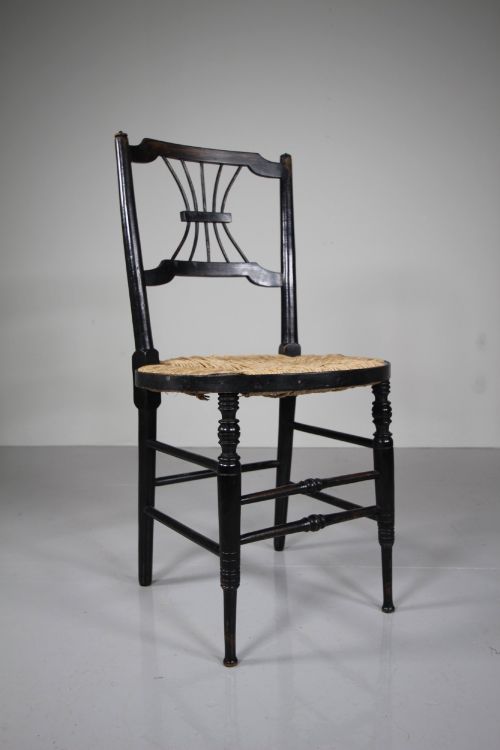
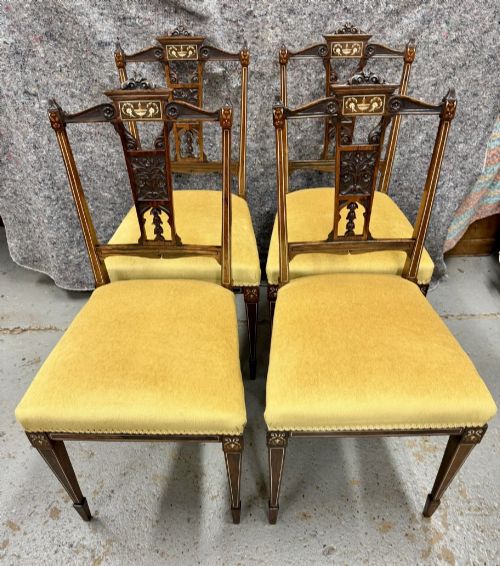
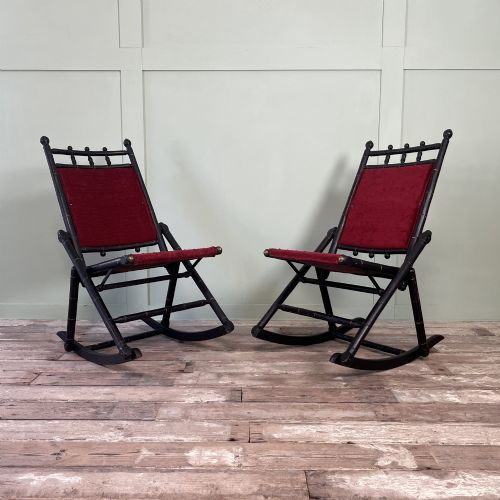
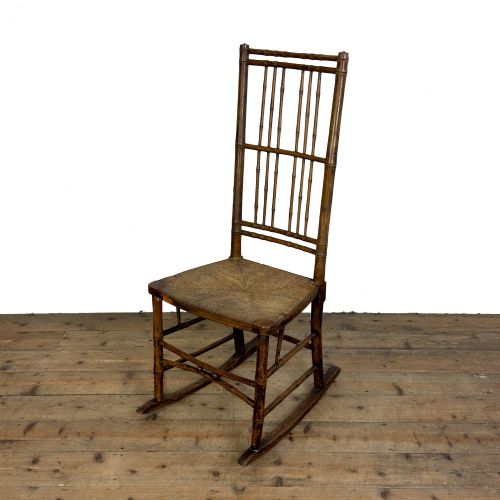
The most common versions met on this page include ebonised or mahogany hall chairs, rush-seated Sussex chairs, and faux bamboo rocking chairs dating from the eighteen-seventies to nineteen-hundred. Makers adopted diverse styles ranging from Anglo-Moorish corner chairs with Mashrabiya panels to Sheraton Revival salon chairs and Gothic Revival library seating.
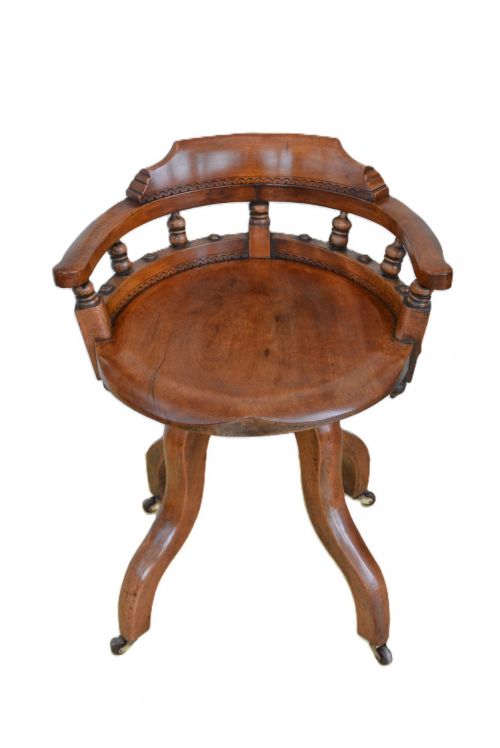
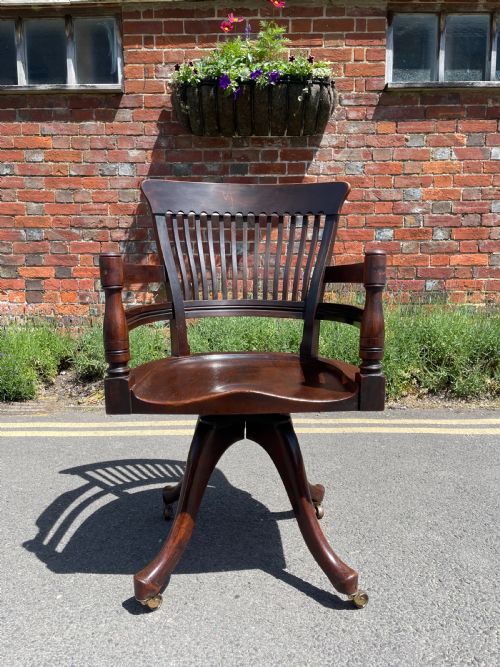
Buyers encounter forms tailored to specific domestic rooms, such as low bathroom chairs, bedroom chairs, and swivelling office or desk chairs. The overarching design ethos prioritises artistic expression and utility over heavy Victorian ornamentation, reflecting a shift towards lighter, more purposeful furniture.
How they were made
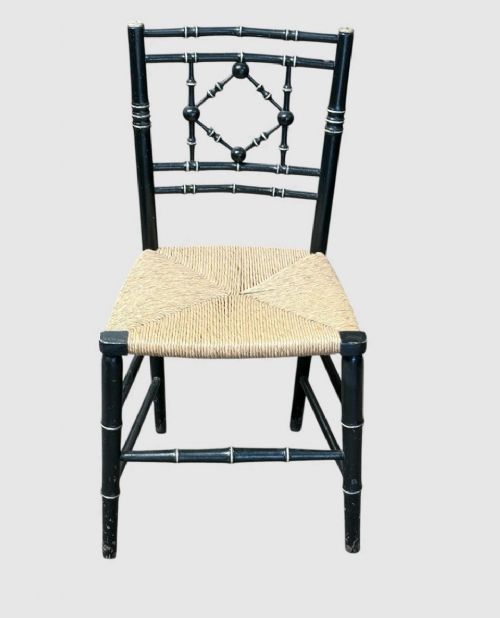
Workshops utilised hardwoods such as mahogany, walnut, oak, and rosewood, alongside ebonised wood and turned bamboo or faux bamboo. Ebonising created a distinct black surface that imitated Japanese lacquer, a finish popular among progressive designers of the period.
Seating surfaces incorporated rush, woven fabric, ceramic tiles, or inlaid wood panels to provide texture and pattern. Joinery relied on traditional techniques, while decorative elements featured carved wooden details, brass fittings, and gilt highlights.
Wooden Aesthetic Chair Retail Price Guide 2026
Typical asking prices for wooden aesthetic chair among the pieces listed under this phrase on Sellingantiques today, from the lower quarter to the upper quarter. They describe what is for sale here now, not the wider market.
Listings feature periods from the Victorian era alongside materials such as brass, ceramic, rush, and ebonised wood.
What varies in quality
The distinction between standard commercial production and superior pieces lies in the refinement of the carving, the integrity of the joinery, and the sophistication of the inlay or surface finish. Exemplary items display precise turning, careful wood selection, and integrated design details by known designers or prominent cabinet-making firms.
Provenance and attribution to specific workshops or influential figures elevate certain examples above standard nineteenth-century output. The preservation of original surfaces, rush seats, and period upholstery also defines the relative standing of individual chairs.
William Morris·Rossetti·E W Godwin·Liberty and Co·Lamb of Manchester·Bruce J Talbert·Maple and Co·James Shoolbread·Ellen E Houghton of Minton
The Wooden Aesthetic Chair Glossary
- Aesthetic Movement
- A late-nineteenth-century design reform movement that promoted art for art's sake and drew inspiration from Japanese art, Gothic forms, and simplicity. It rejected heavy Victorian academic styles in favour of lighter, more artistic domestic interiors.
- Ebonised Wood
- Timber treated with a dark stain or chemical process to imitate ebony. This finish was widely utilised on Victorian furniture to achieve the striking black surfaces favoured by progressive designers.
- Mashrabiya Panels
- Intricate wooden lattice screens traditionally used in Islamic architecture. They appeared on Anglo-Moorish aesthetic furniture imported or manufactured by late-nineteenth-century firms.
- Sussex Chair
- A simplified vernacular chair design with a rush seat and turned wooden members, produced in quantity after traditional models. William Morris and the firm Morris & Co popularised this form.
- Faux Bamboo
- Wood turned and carved to resemble natural bamboo stalks. This technique reflects the nineteenth-century fascination with Japanese and East Asian decorative arts.
Wooden Aesthetic Chair: Frequently Asked Questions
What is an aesthetic movement chair?
An aesthetic movement chair is a nineteenth-century seat designed to prioritise artistic appearance and simplicity over traditional Victorian heaviness. These pieces often feature ebonised finishes, turned wood, or references to Japanese and Gothic design.
They reflect a broader cultural shift towards art for art's sake in domestic interiors, moving away from ornate, upholstered revival styles.
How do I identify a Sussex chair?
A Sussex chair is typically characterised by lightweight turned wooden uprights, slender spindles, and a woven rush seat. The design draws on traditional vernacular seating found in English cottages.
William Morris and other designers associated with the Arts and Crafts movement produced these chairs for everyday domestic use.
What woods were used for these chairs?
Cabinet makers utilised a variety of timbers including mahogany, walnut, oak, and rosewood. Ebonised wood was also common, creating a dark, uniform surface that mimicked expensive oriental hardwoods.
Turned beech or ash frequently served for faux bamboo frames and vernacular seating forms.
Were these chairs used in offices?
Yes, progressive workshops produced specialist seating for workspaces, including swivelling office chairs and desk chairs. These combined the functional requirements of adjustable height or mobility with aesthetic movement design principles.
Such pieces incorporated sturdy woods like oak or walnut alongside ergonomic swivel mechanisms suited to nineteenth-century libraries and studies.