

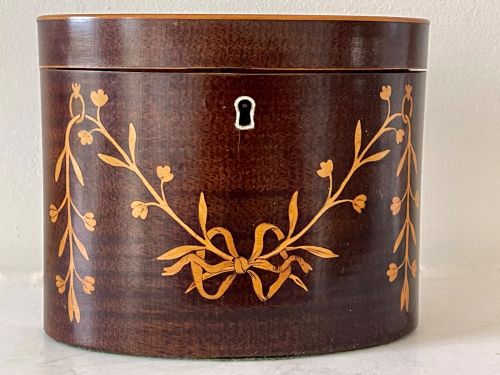
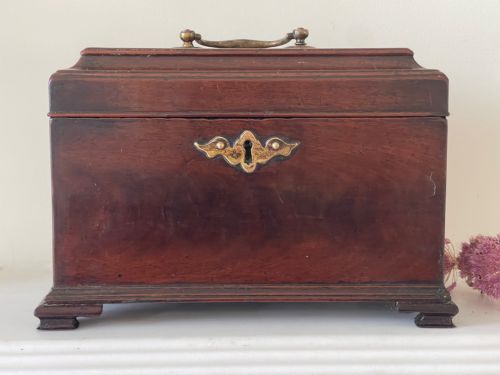
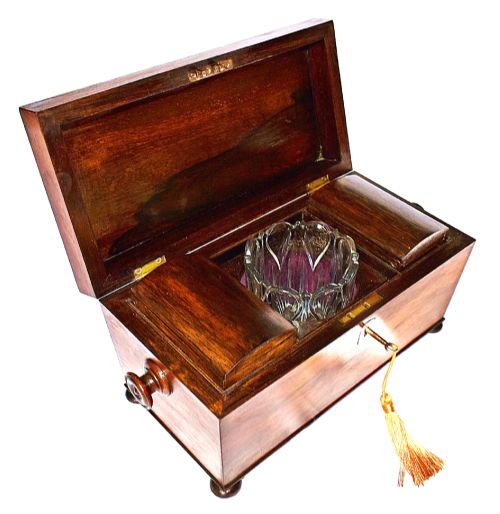
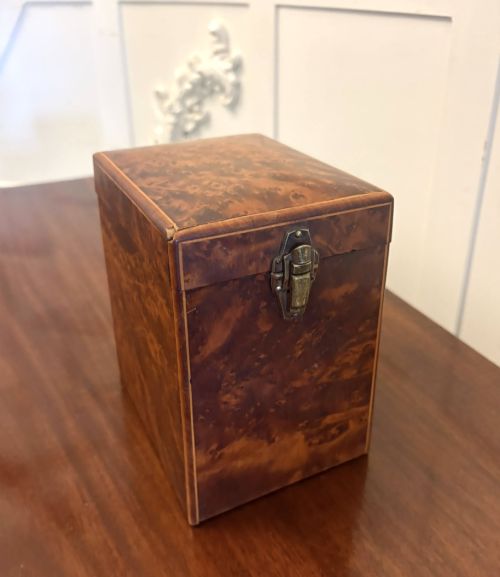






Wood Tea Canister
These wood tea canister pieces are timber chests and caddies built to hold dry leaves securely, offering collectors tactile pieces of domestic history.
Wood Tea Canister
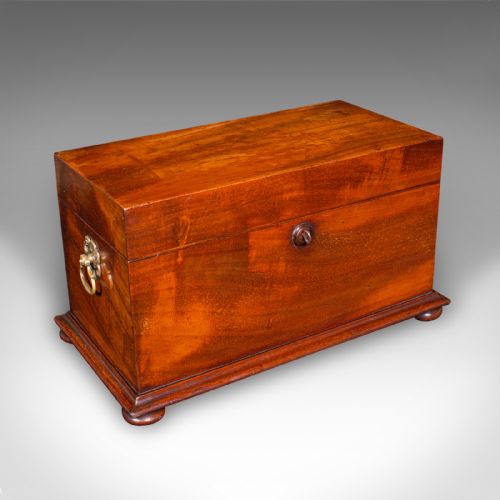
When you search for wood tea canister, you encounter a variety of timber containers spanning the Georgian, Regency and Victorian eras. These range from simple rectangular boxes to elaborate sarcophagus forms and cube designs.
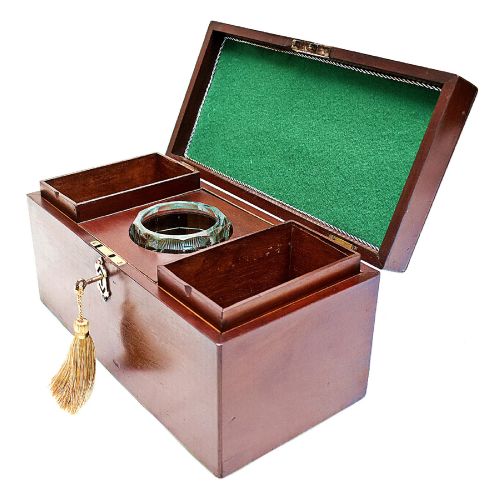
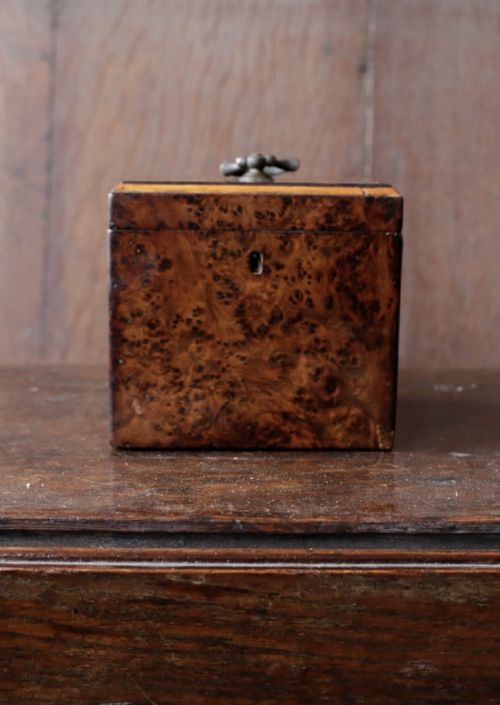
The selection includes specimens fashioned from mahogany, rosewood, burr yew, satinwood and padouk. Many examples retain internal compartments or glass mixing bowls from their period of active domestic use.
How they were made
Cabinet makers utilised dense exotic and native hardwoods such as rosewood, mahogany and burr yew to construct these vessels. Surfaces frequently display intricate parquetry, shell inlays and contrasting satinwood banding.
Hardware such as brass handles, escutcheons and bound corners provided structural reinforcement and secure closure. Internal divisions often separated different leaf varieties within the main body of the chest.
Wood Tea Canister Retail Price Guide 2026
Typical asking prices for wood tea canister among the pieces listed under this phrase on Sellingantiques today, from the lower quarter to the upper quarter. They describe what is for sale here now, not the wider market.
The current selection spans from the eighteenth century through to the early twentieth century, featuring materials like brass, glass, mahogany, rosewood, satinwood and burr yew.
What varies in quality
Distinction in quality rests upon the selection of timber grain, such as heavily figured burr maple or burr yew, paired with precise parquetry and inlay work. Superior examples demonstrate careful alignment of veneers and intact internal fittings like glass bowls.
The complexity of the form influences the character of the piece, moving from straightforward rectangular boxes to architectural sarcophagus shapes and cube silhouettes. Original working locks and secret drawers further elevate the construction standard.
The Wood Tea Canister Glossary
- Sarcophagus form
- A distinct casket shape featuring a domed or peaked lid tapering downwards, popular during the Regency period. This architectural style mimics classical monumental tombs.
- Teapoy
- A pedestal table fitted with a tea container or box on top, designed to stand beside a chair in the drawing room. These substantial pieces often incorporate internal compartments for multiple leaf varieties.
- Parquetry
- Geometric mosaic woodwork formed by fitting small veneer pieces together to create decorative patterns on the surface. Makers utilised contrasting timbers like satinwood to enhance the visual effect.
- Escutcheon
- A flat plate of brass surrounding a keyhole, serving both a decorative and protective function on the timber lid or front panel. These mounts were shaped to complement the overall aesthetic of the period.
Wood Tea Canister: Frequently Asked Questions
What is a wood tea canister?
A wood tea canister is a period timber box or chest created to store loose leaves safely away from light and moisture.
These containers date predominantly from the eighteenth and nineteenth centuries, reflecting changing domestic habits around the consumption of tea.
How were tea caddies used?
Tea was an expensive commodity, so the containers remained locked by the head of the household until brewing time.
Servants or hosts measured the leaves using internal compartments and mixed infusions inside accompanying glass bowls within the box.
How do I date a tea caddy?
Dating relies upon observing the prevailing architectural styles, such as Georgian rectangular proportions, Regency sarcophagus shapes or later Victorian embellishments.
Materials also provide clues, as early pieces utilised walnut and mahogany while later nineteenth-century examples often featured exotic coromandel, amboyna or burr maple.
Did all tea caddies have mixing bowls?
Many nineteenth-century examples include glass mixing bowls alongside dual compartments for different leaf varieties.
Simpler or earlier boxes often concentrated purely on storage without supplementary glassware.