

Wood Revolving Bookcase
A wood revolving bookcase serves as a rotating library for immediate study, offering functional utility within Victorian and Edwardian interiors.
Wood Revolving Bookcase
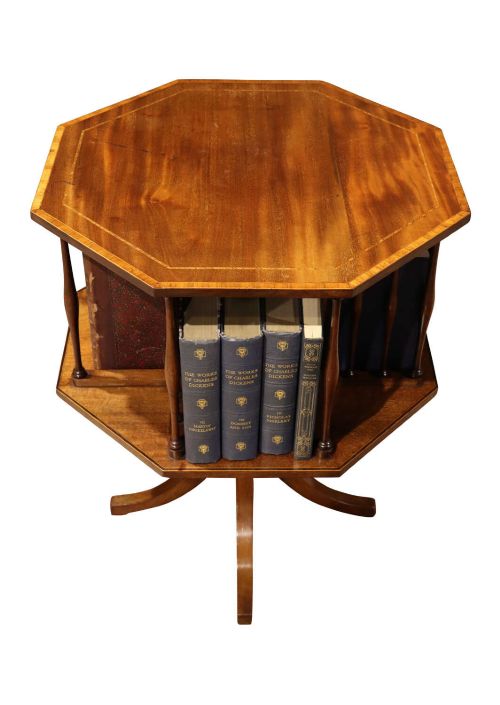
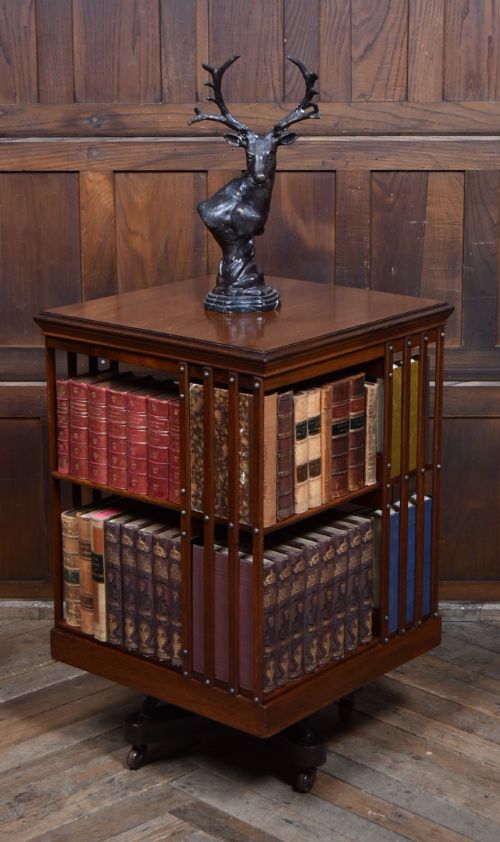
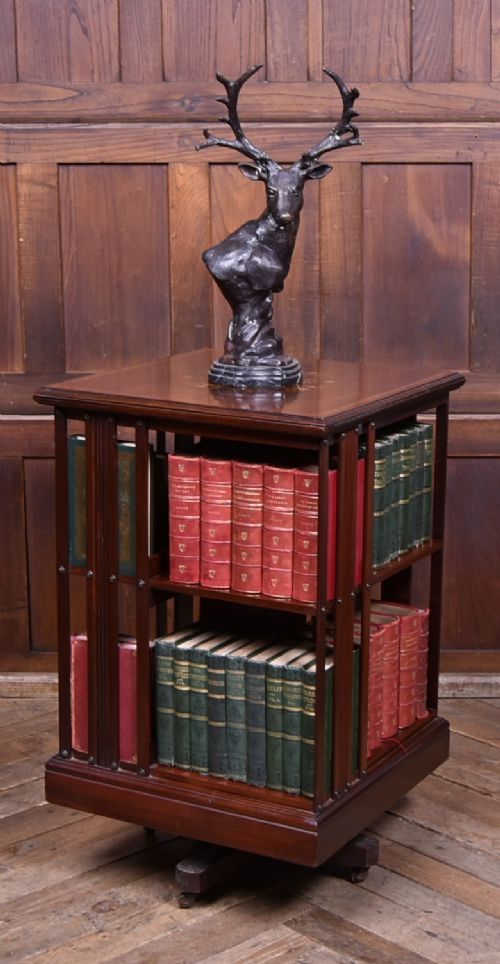
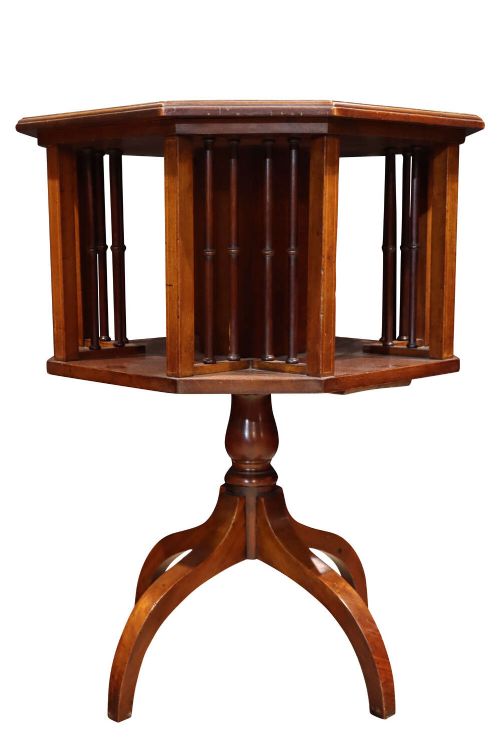
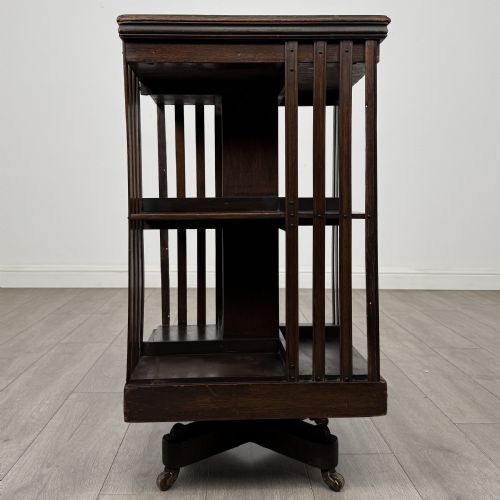
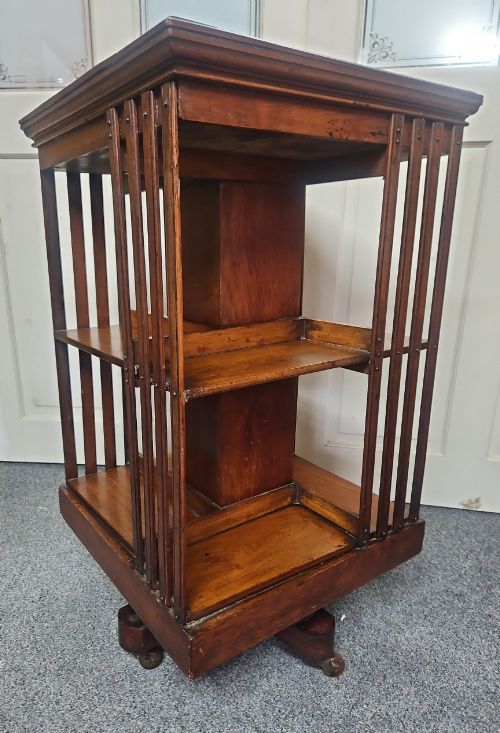
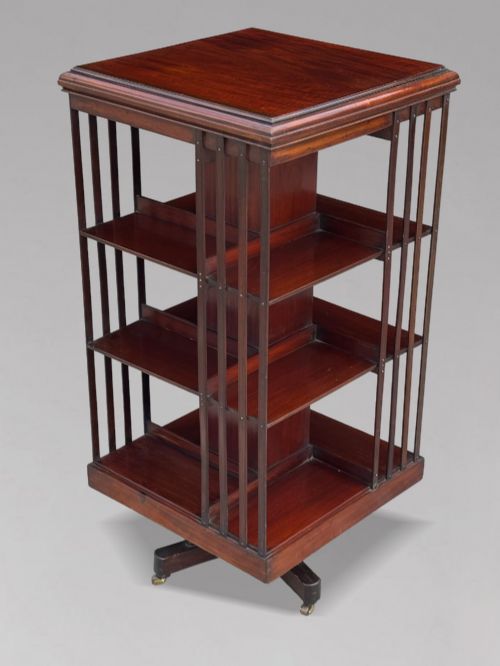
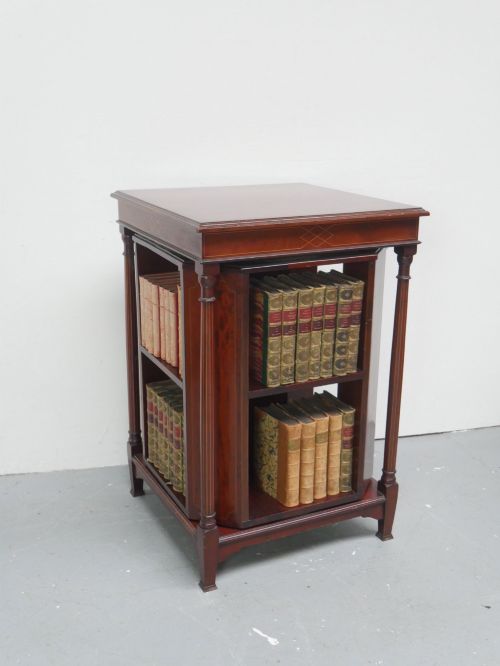
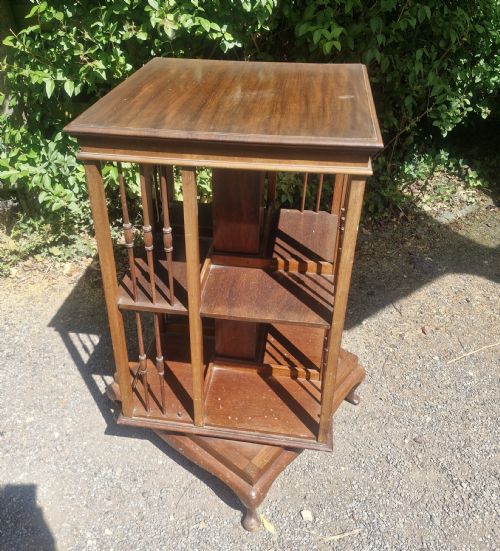
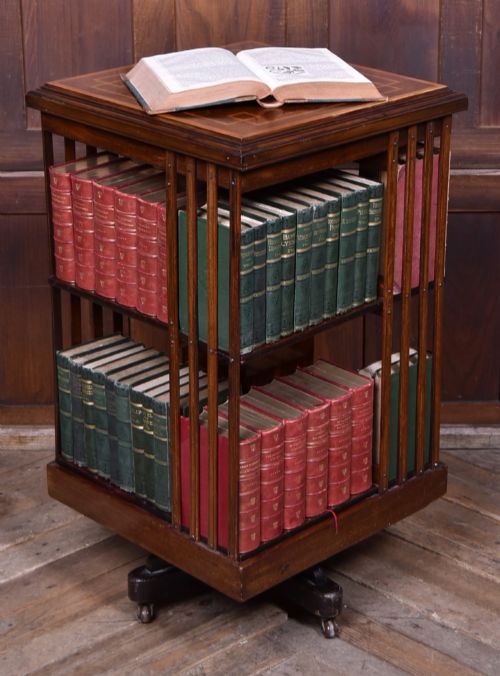
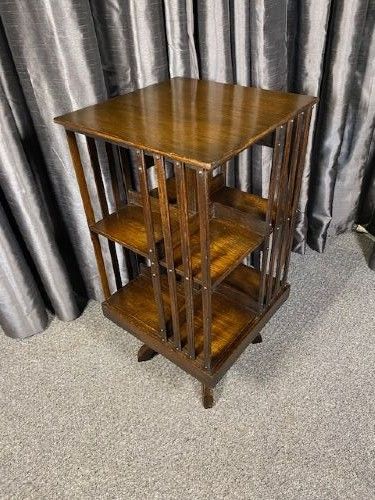
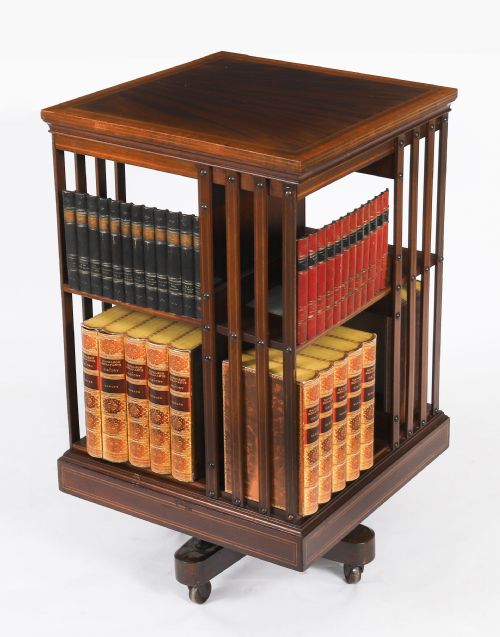
A wood revolving bookcase is a rotating furniture piece designed to hold volumes within easy reach in a library, study or parlour. These items vary from compact desktop bookstands to tall tiered structures built to spin on a concealed mechanism.
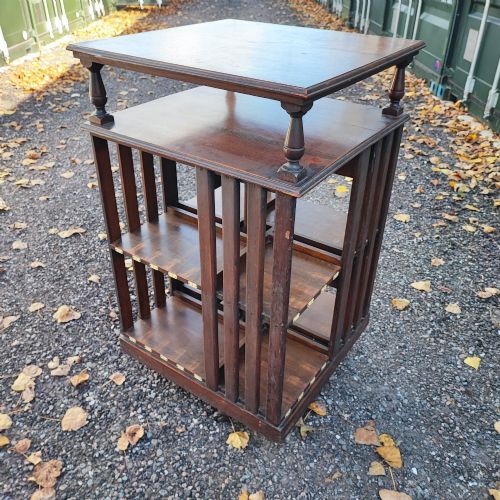
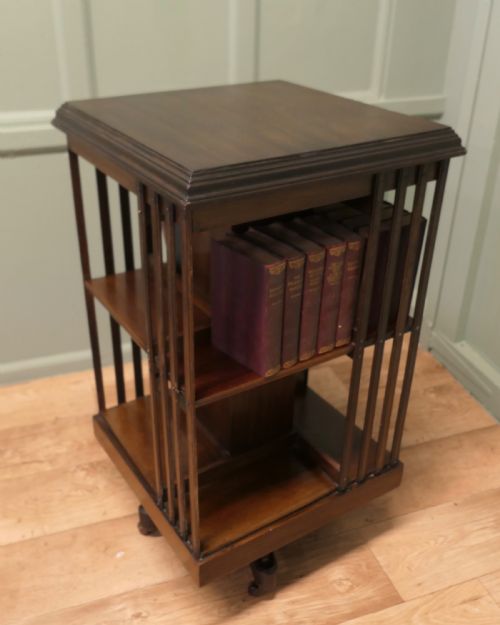
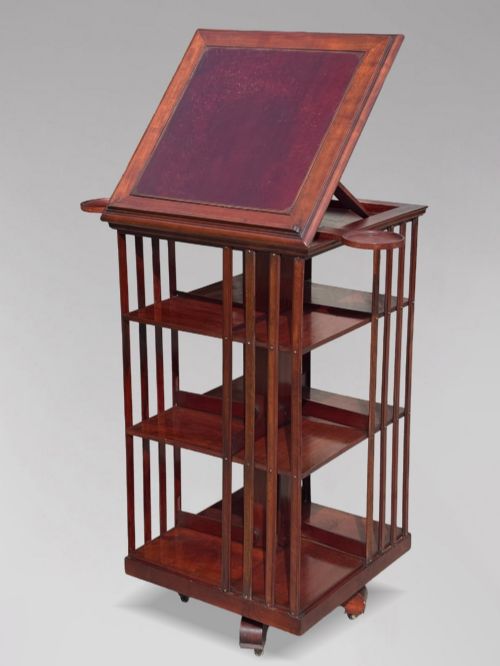
The versions most commonly met on this page date from the late nineteenth century and the Edwardian period, constructed chiefly in mahogany or oak. Many examples feature slatted sides, inlaid details or integrated reading stands designed for daily reference.
How they were made
Cabinet makers utilised dense hardwoods such as mahogany, walnut and oak to build the tier frames and shelves of each revolving bookcase. Selected pieces incorporate satinwood inlay, brass fittings and cast iron internal mechanisms to support smooth rotation under a heavy weight of books.
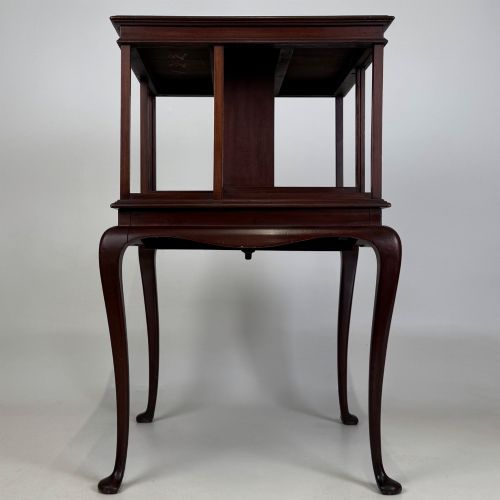
Joinery methods involved traditional framing to ensure structural stability during constant turning. Surfaces were polished to highlight the natural grain of the timber, whilst specific variants included cabriole legs or slatted partitions.
Wood Revolving Bookcase Retail Price Guide 2026
Typical asking prices for wood revolving bookcase among the pieces listed under this phrase on Sellingantiques today, from the lower quarter to the upper quarter. They describe what is for sale here now, not the wider market.
Formats range from compact desktop bookstands to tall French revolving bookcases and three-tiered skyscraper structures.
What varies in quality
The standard of a wood revolving bookcase depends heavily on the precision of the internal turning mechanism and the choice of timber figure. Solid flame mahogany or quarter-sawn oak with crisp inlay sits above simpler utility items produced in standard softwoods or plain veneers.
Maple & Co·Heals
The Wood Revolving Bookcase Glossary
- Revolving bookcase
- A rotating shelving unit designed to spin on a central pivot for easy book selection. These pieces appear in tabletop formats and floor-standing models.
- Slatted sides
- Vertical wooden bars forming the outer walls of the bookcase tiers. This construction reduces weight whilst keeping volumes visible from any angle.
- Reading stand
- An adjustable bookrest mounted to the top surface of the bookcase. It holds a volume at an angle for convenient consultation.
- Cabriole leg
- A furniture leg that curves outward and then tapers inward, finishing in a pad or foot. This stylistic element appears on certain Edwardian examples.
- Inlay
- Ornamental work consisting of contrasting materials set into the surface of the wood. Satinwood lines are frequently utilised for this decorative effect.
Wood Revolving Bookcase: Frequently Asked Questions
How do these bookcases spin?
A concealed iron or metal bearing mechanism sits beneath the central column, allowing the tiers to rotate smoothly in either direction.
This ball-bearing or pivot system supports the weight of heavy volumes while maintaining balance during use.
Where were they used?
These revolving stands were placed beside desks, armchairs or in the centre of studies for quick access to frequently consulted books.
Tabletop variants sat upon larger pieces of furniture, whilst floor models stood independently in libraries and drawing rooms.
How do I date an example?
Dating relies on the prevailing style, timber choices and construction methods visible in the piece. Edwardian items often display satinwood inlay and slatted sides, whereas Victorian versions tend to feature heavier mahogany framing.
Examining the internal ironwork and secondary woods also helps establish the era of manufacture.
Can they hold heavy books?
Solid hardwood construction and sturdy internal pivots allow these bookcases to bear the weight of standard library volumes.
Larger floor-standing editions distribute the load across multiple tiers designed specifically for heavy reference books.