



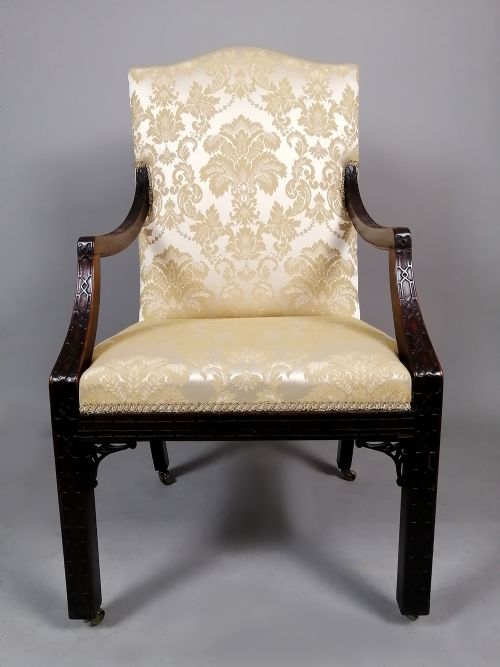
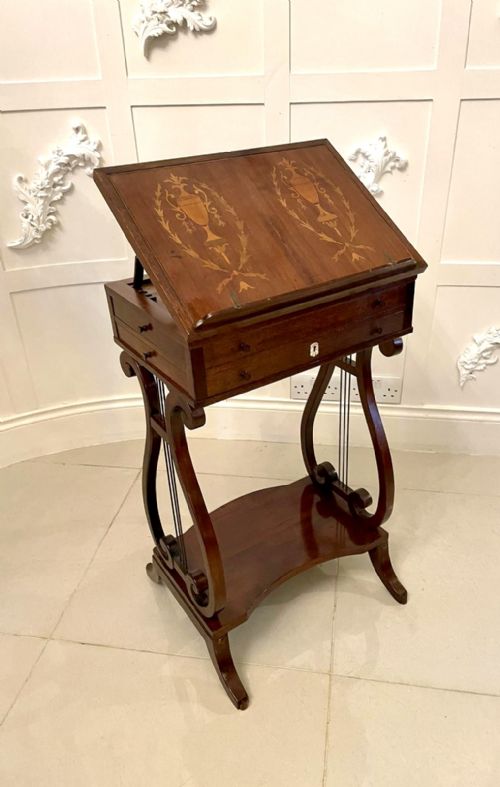
Wood Reading Desk
A wood reading desk offers a dedicated surface for texts, emerging in forms from adjustable tables to tabletop book stands across the Georgian, Regency, and Victorian periods.
Wood Reading Desk
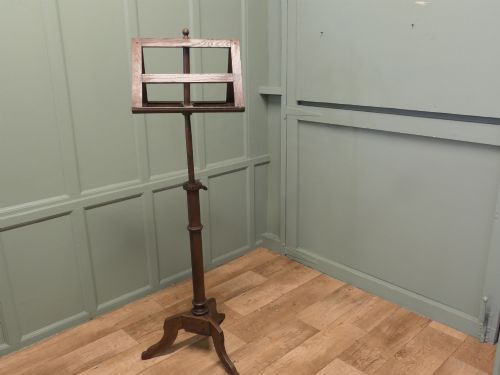
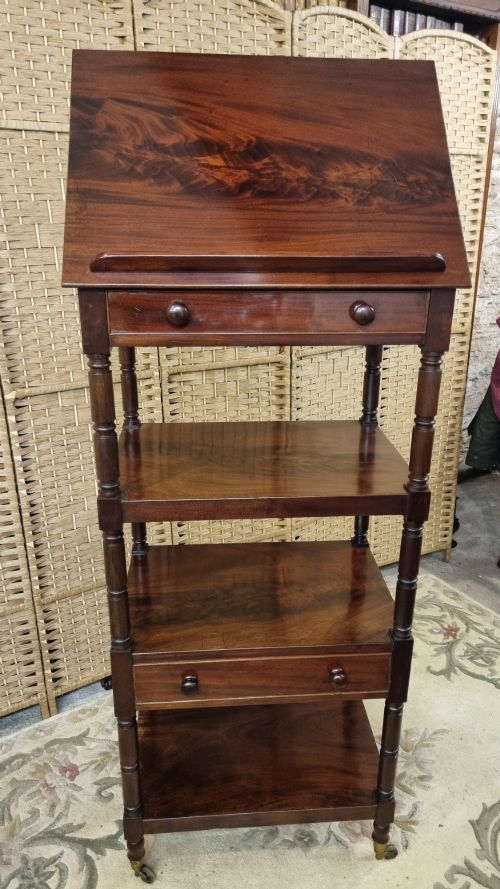
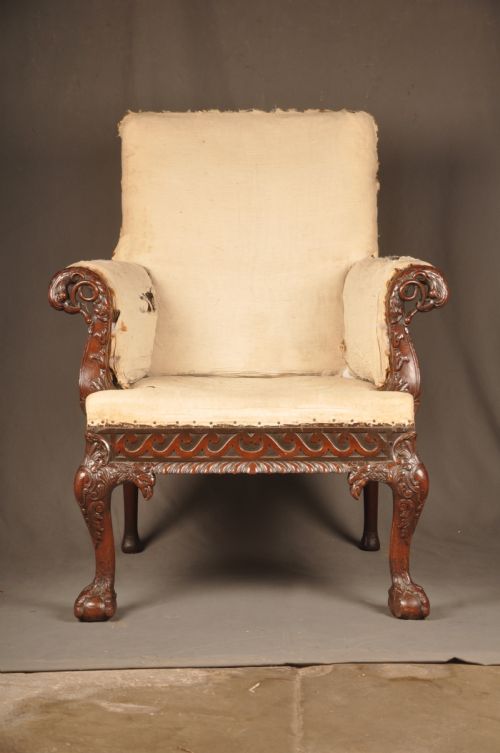
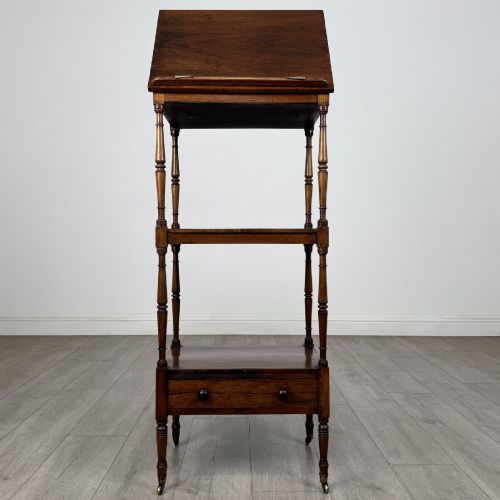
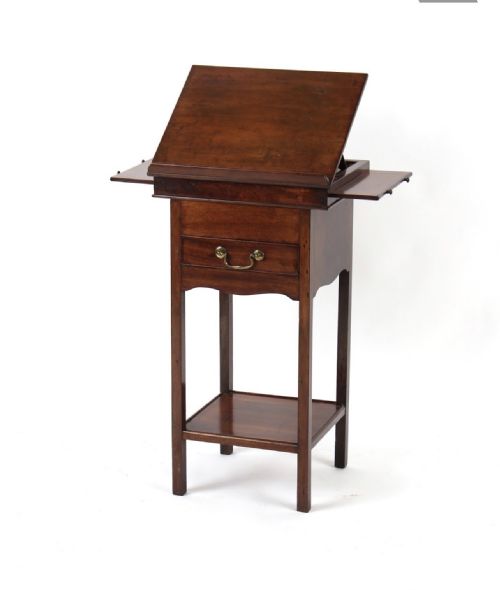
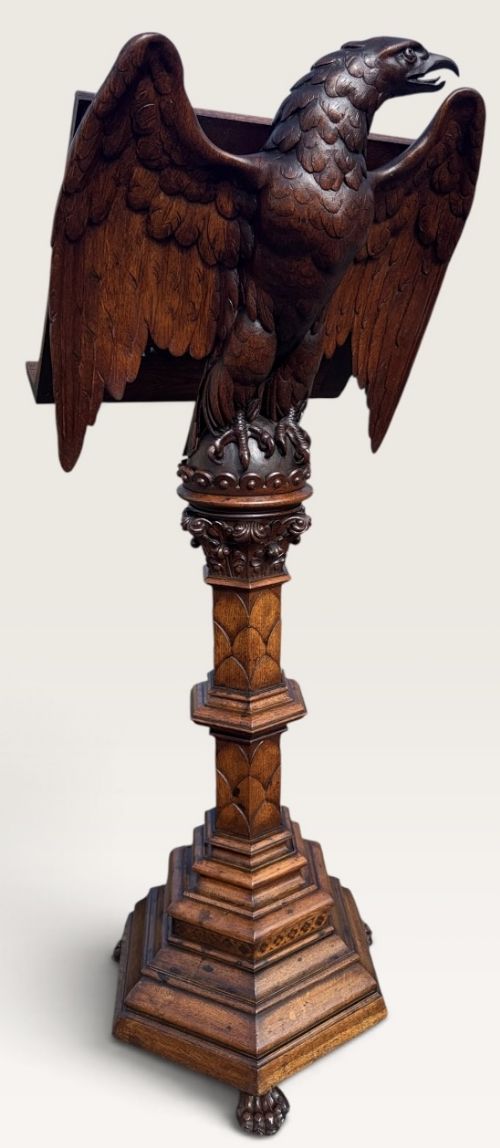
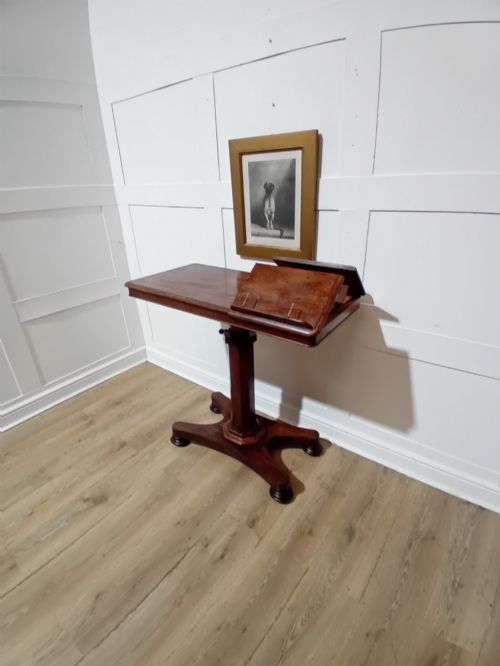
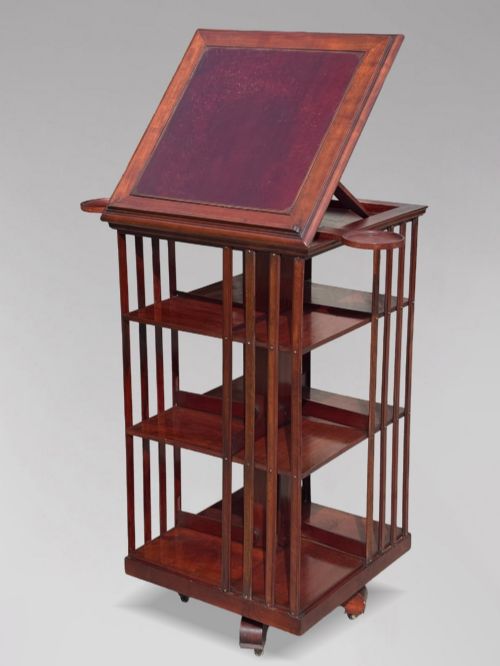
When you search for a wood reading desk, you encounter a varied group of functional furniture designed to hold books, manuscripts, and music. These pieces range from adjustable reading tables and tabletop book rests to elaborate lecterns and music stands created to support study and performance.
The pieces on this page span the 18th century, the Georgian and Regency eras, through to the Victorian and Edwardian periods. Mahogany and rosewood frequently appear alongside oak, reflecting the domestic and institutional settings for which these items were originally made.
You are most likely to meet mahogany reading tables and adjustable stands from the 19th century, alongside oak lecterns and occasional specialist forms. These survivals demonstrate the enduring utility of timber furniture engineered for reading and writing.
How they were made
Cabinet makers utilised dense hardwoods such as mahogany, rosewood, and oak to construct stable frames capable of supporting heavy volumes. These timbers were often selected for their rich grain patterns and finished with polished surfaces that highlighted the natural material.
Functional mechanics are central to many examples, incorporating brass ratchets, hinges, and screws to allow height and angle adjustment. These metal components were integrated directly into the wooden framework to enable smooth mechanical movement for the user.
Wood Reading Desk Retail Price Guide 2026
Typical asking prices for wood reading desk among the pieces listed under this phrase on Sellingantiques today, from the lower quarter to the upper quarter. They describe what is for sale here now, not the wider market.
Listings feature timber reading furniture spanning the Georgian, Regency, and Victorian eras, constructed primarily in mahogany, rosewood, and oak.
What varies in quality
The standard of a wood reading desk is determined by the precision of its adjustable mechanisms and the integrity of the timber used in its construction. Superior examples feature robust brass ratchets and smoothly operating hinges that function securely without slipping under the weight of a book.
Craftsmanship is further evident in the refinement of the joinery and the selection of figured mahogany or rosewood veneers. Pieces executed with careful attention to structural proportion and clean carving demonstrate the superior skill of the workshop that produced them.
C. Hindley & Sons
The Wood Reading Desk Glossary
- Lectern
- A tall stand with a sloping top designed to hold a book or notes for a speaker or reader. These pieces often appear in oak and occasionally feature carved ornamentation.
- Ratchet mechanism
- A notched metal adjusting device fitted beneath a reading surface to control the angle of the desk. This allows the user to alter the slope of the book rest securely.
- Gonçalo Alves
- A dense exotic hardwood sometimes utilised for nineteenth-century stands and furniture. Its distinctive figuring makes it notable among cabinet timbers.
- Table-top easel
- A portable wooden support placed upon a larger surface to hold books or documents upright. These compact versions offer versatility for desk use.
Wood Reading Desk: Frequently Asked Questions
What is a wood reading desk used for?
A wood reading desk provides an angled or flat surface specifically designed to hold books, manuscripts, and papers at a comfortable viewing height. These pieces supported scholarly study, letter writing, and musical performance in domestic and institutional interiors.
Historically, they allowed readers to consult large volumes without holding the weight in their hands. Today, they continue to function as practical furniture for displaying open books or supporting modern reading habits.
How do I identify a Regency reading desk?
Regency pieces typically display classical restraint, often constructed from rich mahogany with precise geometric lines and subtle brass detailing. Their design draws inspiration from classical antiquity, favouring clean silhouettes over heavy ornamentation.
Adjustable mechanisms from this period are integrated discreetly into the timber framework. The combination of dark wood, restrained brass fittings, and functional elegance points toward the early nineteenth century.
Are these desks fully adjustable?
Many examples feature adjustable mechanisms that allow the user to alter both the height and the angle of the reading surface. These alterations are usually controlled by brass ratchets, screws, or sliding book-stops.
Not every piece has adjustable parts, as simpler tabletop book rests and static reading tables remain common. Checking the mechanical components reveals whether a specific model permits movement.
How do I care for antique wood furniture?
Maintaining antique timber requires keeping pieces away from direct heat sources and fluctuating humidity to prevent the wood from splitting. Regular dusting with a soft, dry cloth preserves the polished surface without applying harsh chemical residues.
Applying occasional specialist wax feeds the timber and maintains its natural lustre. Gentle care ensures the mechanical brass parts and wooden joints remain stable over time.