





Wood Pie Crust Table
A wood pie crust table brings carved raised edges and pillar supports to any room, offering traditional charm and practical small-scale surfaces.
Wood Pie Crust Table
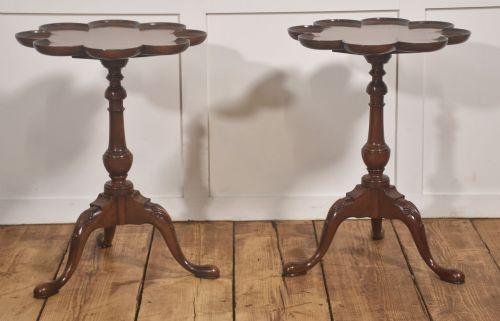
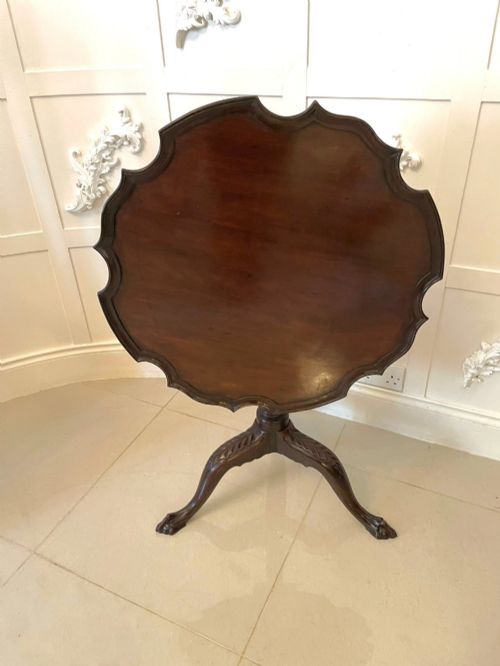
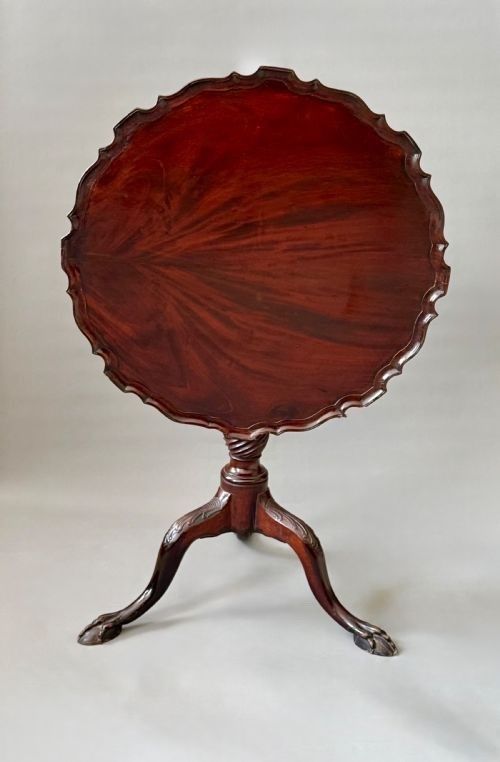
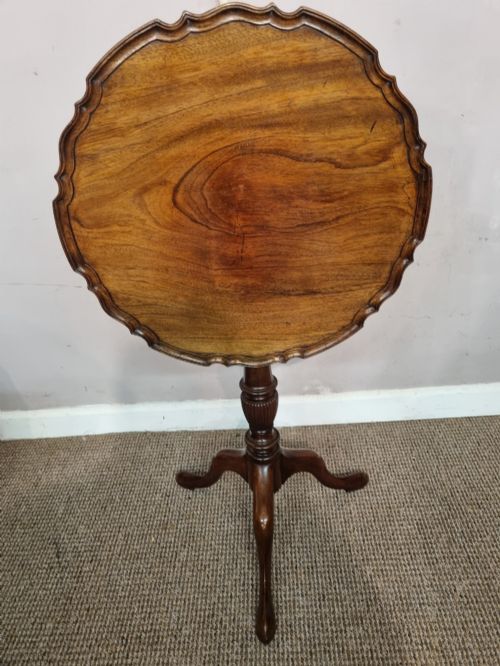
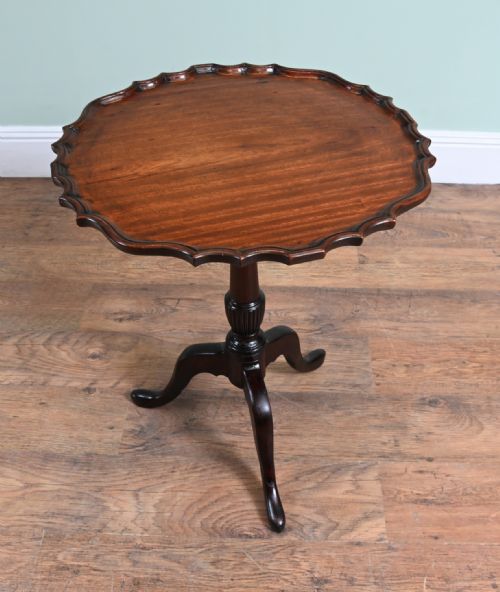
A wood pie crust table is a compact occasional piece defined by its distinctive raised, scalloped rim resembling pastry work. These items appear across several centuries and revivals, taking the form of tripod wine tables, supper tables, and tilt-top designs.
Most examples found here date from the Georgian era through to early twentieth-century revivals. The form typically stands on a slender pillar with tripod legs, serving as a versatile stand for lamps or drinks.
Makers fashioned these surfaces in various timbers, most commonly mahogany and walnut, with occasional use of oak and goncalo alves. The tops frequently feature tipping or snap mechanisms, allowing the surface to fold away flat when not in use.
How they were made
Cabinetmakers constructed the characteristic raised rims by carving the scalloped profile directly from a solid timber plank or by shaping applied mouldings. Solid mahogany and walnut predominate, chosen for their grain stability and capacity to hold crisp carved details.
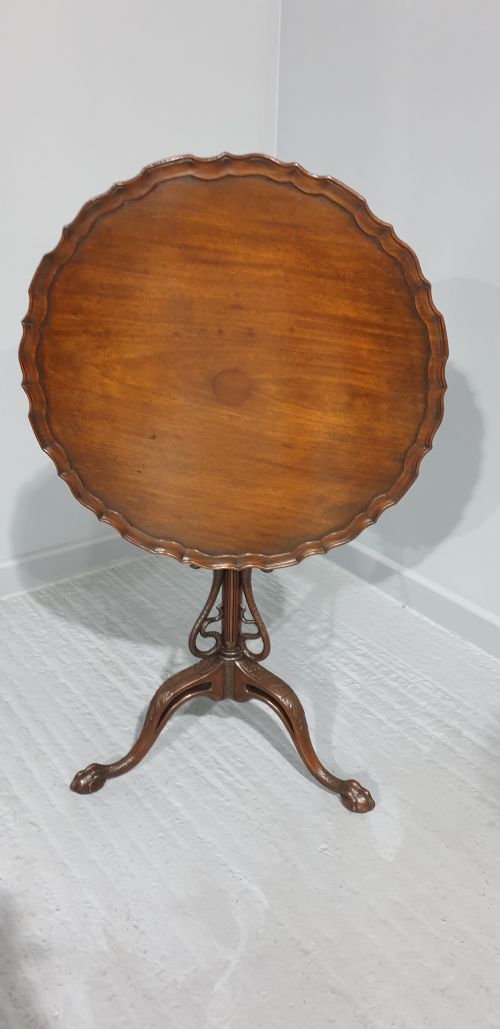
The central columns often feature turned baluster stems supported by three cabriole legs, frequently terminating in pad or claw-and-ball feet. Joinery relies on traditional pegging and tenons to secure the pillar to the tripod base.
Tipping mechanisms utilise a birdcage or brass catch arrangement beneath the top, allowing the surface to pivot and lock vertically. This clever engineering saved floor space in historical drawing rooms.
Wood Pie Crust Table Retail Price Guide 2026
Typical asking prices for wood pie crust table among the pieces listed under this phrase on Sellingantiques today, from the lower quarter to the upper quarter. They describe what is for sale here now, not the wider market.
Some tilt-top tables double as impromptu game boards, ready to fold away vertically when supper was served.
What varies in quality
The crispness and depth of the carved rim separate standard examples from superior ones, as hand-carved scalloping demands considerable skill from the artisan. Crisp, well-defined lobes reflect superior workshop execution.
Timber selection dictates visual appeal, with figured mahogany and burr walnut commanding greater attention than plain woods. The choice of dense, richly grained timber enhances the overall presence of the piece.
Proportion and stability in the tripod base matter greatly, ensuring the table stands firmly without wobble on its central pillar. Well-balanced legs and smooth, original tipping mechanisms indicate careful historical construction.
Gillows
The Wood Pie Crust Table Glossary
- Pie-crust edge
- A raised, carved moulding around the perimeter of a tabletop resembling pastry crimping. This decorative border prevents items from sliding off.
- Tilt-top
- A hinged tabletop that pivots to a vertical position when not in use. This mechanism allowed tables to be stored against walls to save space.
- Tripod base
- A support structure comprising three legs radiating from a central pillar. It provides stable placement on uneven historical floors.
- Birdcage
- A timber framework beneath the tabletop that enables both rotation and tilting. It represents a more complex mechanism found on finer examples.
- Snap top
- A spring-loaded or latched mechanism that secures a tipping tabletop in the horizontal position. It prevents accidental movement during use.
Wood Pie Crust Table: Frequently Asked Questions
What is a wood pie crust table used for?
Historically, these small tables served as supper tables, wine stands, or lamp tables in principal rooms. Today, they function well as compact coffee tables or side tables in sitting rooms.
Their small footprint allows them to fit easily beside armchairs or in tight corners while adding traditional character to an interior.
How do I distinguish eighteenth-century from revival pieces?
Eighteenth-century examples typically display hand-carved patination, older timber shrinkage, and simpler internal pegging beneath the top. Revival pieces from the Victorian or Edwardian periods often show different tool marks and more uniform factory turning.
Examining the underside and the wear around the tripod feet reveals clues about the age and working history of the piece.
Are these tables stable enough for daily use?
Tripod tables are remarkably stable on firm floors, though their three-legged design means they can rock if placed on thick carpets. The central pillar distributes weight evenly down the three legs.
Placing them away from heavy foot traffic ensures they remain secure while holding everyday items like lamps or cups.