




William IV Tier Table
A william iv tier table delivers the tiered utility and rich timbers of the 19th century.
William IV Tier Table
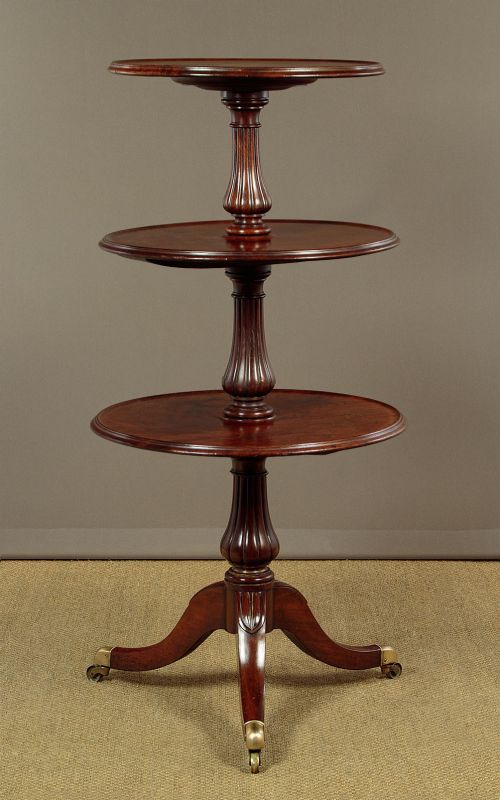
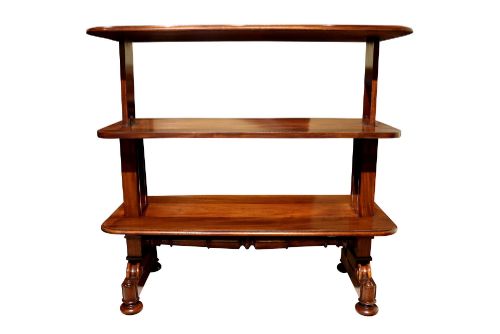
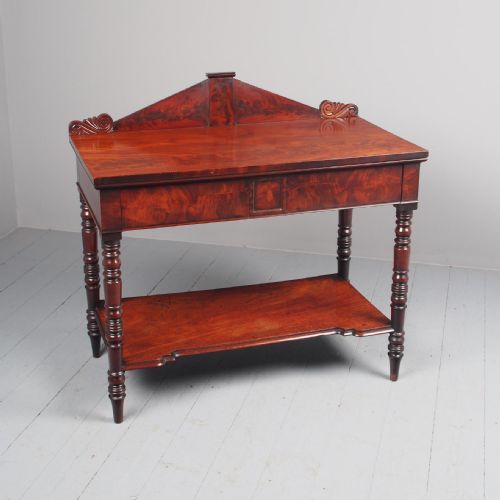
A william iv tier table brings multiple levels of surface space into a room, commonly taking the form of a dumb waiter, buffet, or whatnot. These pieces serve dining rooms and drawing rooms with practical tiered shelving for food, books, or ornaments.
The versions most commonly met on this page belong to the 19th century and carry the characteristic heavy proportions of the era. Makers utilised rich timbers to give these multi-level surfaces a commanding presence in the interior.
Meticulous tiered construction defines the category, moving from simple three-tier dumb waiters to adjustable buffets and etageres. Each level offers distinct utility while maintaining a cohesive architectural silhouette.
How they were made
Cabinet makers constructed these tiered pieces primarily from solid mahogany and rosewood, often applying flame mahogany veneer to prominent surfaces. Exotic woods such as pollard oak and birdseye maple also appear in the evidence, providing striking grain patterns.
Brass fittings, castors, and adjustable mechanisms frequently accompany the timber construction, allowing sections to rise and fall. Joinery techniques of the period ensured that multiple heavy shelves remained stable upon central pillars or corner supports.
William IV Tier Table Retail Price Guide 2026
Typical asking prices for william iv tier table among the pieces listed under this phrase on Sellingantiques today, from the lower quarter to the upper quarter. They describe what is for sale here now, not the wider market.
What varies in quality
The selection of timber grain largely dictates the visual merit of each piece, with figured veneers and rich flame mahogany distinguishing finer examples from plain stock. Timber choice reflects the original cost and the ambition of the workshop.
Sophistication of movement in adjustable tiers and the crispness of carved details separate standard utility pieces from exceptional items. Well-executed turning on columns and robust internal mechanisms ensure enduring structural integrity across the shelves.
Gillows of Lancaster and London
The William IV Tier Table Glossary
- Dumb waiter
- A tiered freestanding piece of furniture used for holding dishes or serving food without the aid of servants. Multiple circular or rectangular shelves are supported by a central turned column.
- Whatnot
- An open-shelved piece of furniture designed for displaying ornaments, books, or knick-knacks. The structure consists of three or more tiers held by slender vertical posts.
- Buffet
- A sideboard or serving table equipped with tiers or shelves for displaying and serving food. These pieces anchor the dining room with substantial storage and surface area.
- Flame mahogany veneer
- A thin slice of mahogany timber cut from the point where a branch joins the main trunk, creating a characteristic rippled flame effect. Cabinet makers applied this to prominent surfaces for decorative impact.
- Pollard oak
- Timber taken from an oak tree that has been pollarded, resulting in a dense cluster of branches and a highly figured, knotted grain pattern. It provides a distinctive textured surface on 19th-century furniture.
William IV Tier Table: Frequently Asked Questions
What is a william iv tier table?
A william iv tier table is a multi-level piece of 19th-century furniture designed to hold food, books, or decorative objects. These items typically appear as dumb waiters, buffets, or whatnots.
Characterised by heavy proportions and rich timbers like mahogany and rosewood, they offer both practical surface space and architectural presence.
How were tier tables used?
Dining rooms utilised these tiered pieces to hold extra dishes, wine bottles, and tableware during meals. They allowed diners to help themselves without constant servant attendance.
Drawing rooms and libraries also employed them as whatnots or etageres for displaying books and ornaments within easy reach.
How do I identify the period?
Identifying the period involves looking at timber selection, turning styles, and structural weight. Pieces from this era often feature heavy mahogany construction, flame veneers, and robust central pillars.
Adjustable mechanisms and brass fittings also point towards the 19th-century manufacturing methods recorded in these listings.
Are these pieces adjustable?
Certain examples include rise-and-fall mechanisms that allow specific tiers to adjust in height. These adjustable buffets provide functional flexibility for serving.
Not all tier tables possess this feature, as many traditional dumb waiters and whatnots feature fixed shelves secured to permanent columns.