


William IV Bookshelf
A william iv bookshelf brings architectural presence and rich timber grains into a room, offering sturdy open storage for a working library.
William IV Bookshelf
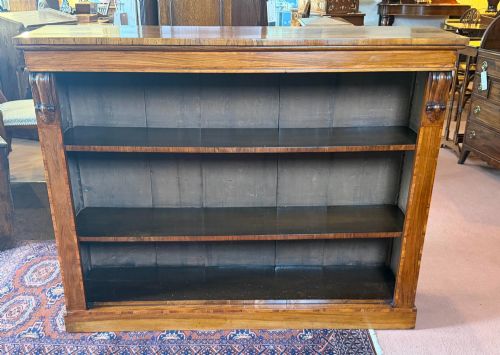
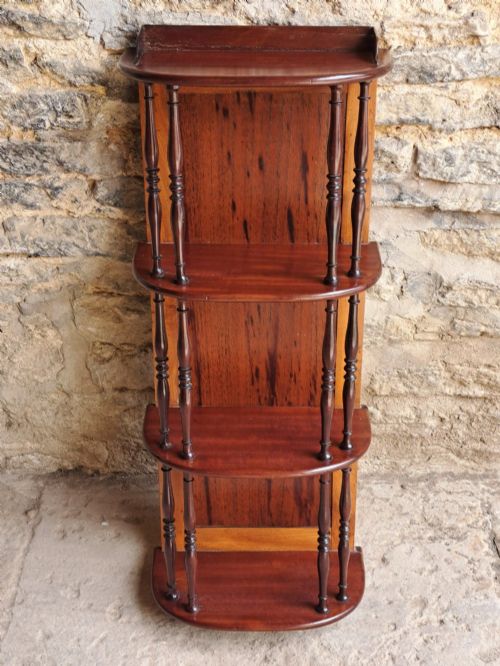
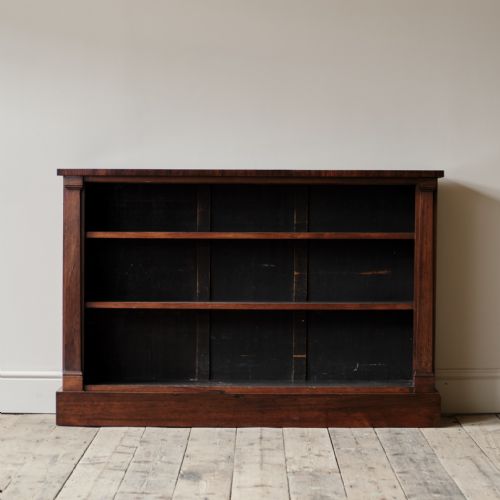
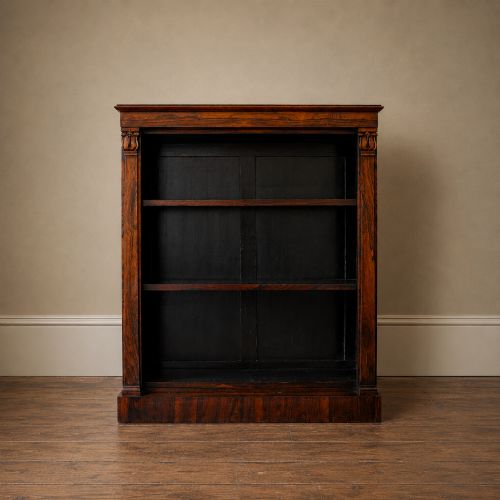
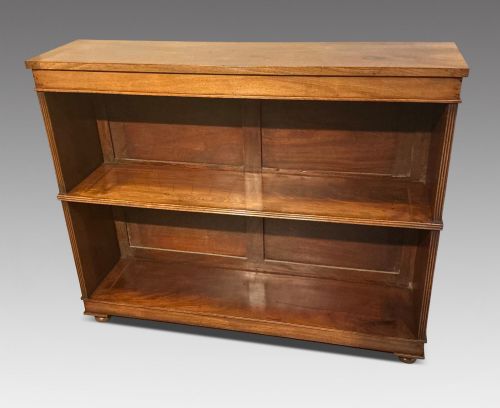
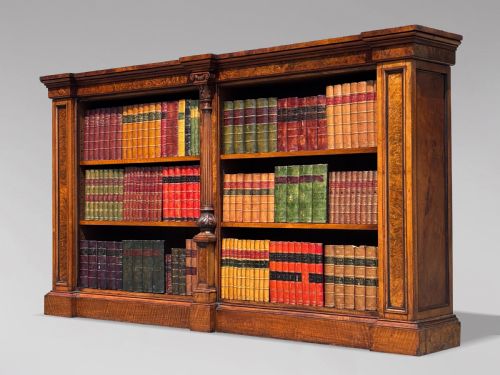
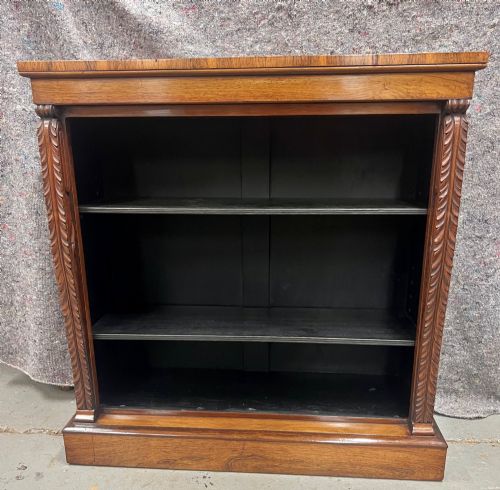
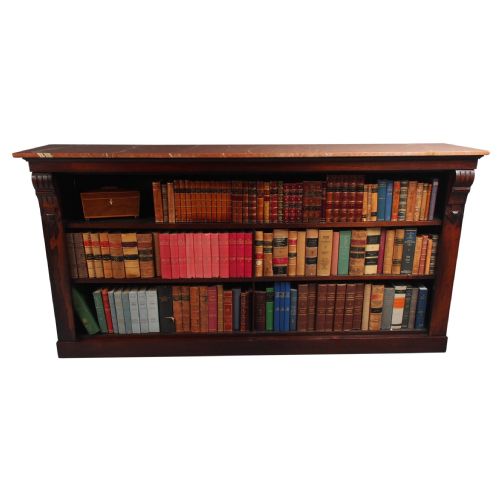
A william iv bookshelf typically takes the form of a low open bookcase, wall shelves, or a waterfall bookcase designed to house volumes at a convenient height. These pieces emerge from the nineteenth century, bridging Regency elegance and early Victorian practicality through architectural lines and generous proportions.
The aesthetic leans heavily on classicism combined with heavier timber framing, creating a solid piece of furniture that anchors a room. Whether standing low against a wall or mounted as hanging shelves, these items serve as both functional storage and decorative centrepieces.
How they were made
Cabinet makers relied primarily on dense hardwoods like mahogany and rosewood, sometimes employing burr walnut or goncalo alves for distinctive grain patterns. Simulated rosewood surfaces also appear, alongside specialised additions such as pink marble tops and brass detailing.
Construction techniques focus on open framework with sturdy uprights and adjustable shelving mechanisms to support heavy volumes. Joinery is concealed and robust, designed to withstand the weight of a substantial private library over generations of use.
Listings span multiple nineteenth-century styles including Regency, William IV, and early Victorian periods.
What varies in quality
The distinction between standard examples and top quality pieces lies in the selection of timber veneers and the richness of the grain. Dense, highly figured rosewood or burr walnut elevates a piece far above simpler stained timber or plain mahogany variants.
Refinement of proportion and decorative elements such as brass mounts, carved pilasters, or integrated marble tops separate ordinary storage from exceptional cabinet work. The inclusion of clever mechanics like adjustable shelf ratchets also signals superior workshop origin.
The William IV Bookshelf Glossary
- Waterfall bookcase
- A tiered shelving unit where each successive shelf is narrower than the one below, creating a cascading silhouette popular in the nineteenth century.
- Whatnot
- A multi-tiered open piece of furniture used for displaying books, ornaments, and small objects.
- Goncalo alves
- A dense exotic hardwood known for its striking contrasting grain patterns, sometimes utilised in high-status nineteenth-century furniture.
- Simulated rosewood
- A painted or stained finish applied to a secondary timber to imitate the rich dark grain of genuine rosewood.
- Open bookcase
- A bookcase lacking doors, allowing immediate access to the volumes stored within.
William IV Bookshelf: Frequently Asked Questions
Where should I place a william iv bookshelf?
These pieces suit studies, living rooms, and libraries where their open shelves can display books within easy reach. Low bookcases also provide a useful surface on top for lamps or decorative objects.
Ensure the room maintains stable humidity to protect nineteenth-century timbers from drying out or warping near heat sources.
How do I adjust the shelves?
Many period bookcases use brass pins, slotted pilasters, or wooden ratchets to hold shelves at different heights. You simply lift the shelf slightly to disengage it from the support mechanism and reposition it.
Take care when moving heavy timber shelves within older cabinets to avoid damaging the interior lining.
How do I distinguish william iv from regency?
William iv furniture generally displays heavier proportions, bolder carving, and a sturdier architectural presence than earlier Regency pieces. The transition often blends refined classical lines with the robust weight characteristic of the early Victorian era.
Look at the turning of the legs and the heft of the cornice mouldings to read these stylistic shifts.
What maintenance do these timbers need?
Regular dusting with a soft, dry cloth keeps the surface clean without building up residue. Occasional application of appropriate wax feeds the timber and maintains the lustre of rosewood or mahogany.
Keep the furniture away from direct sunlight and radiators to prevent the wood from splitting or fading over time.