



Wide Low Bookshelves
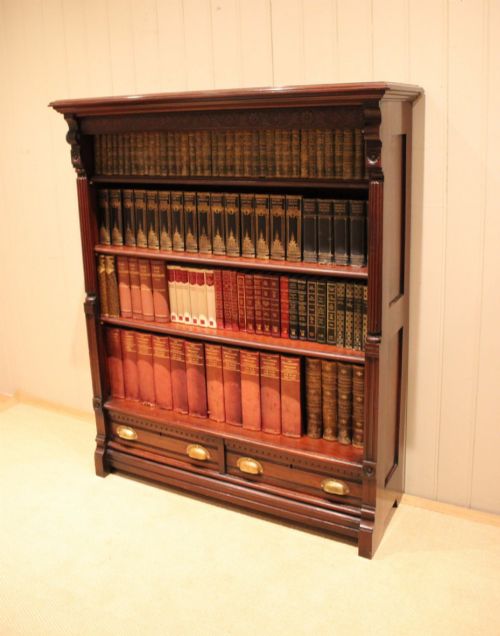
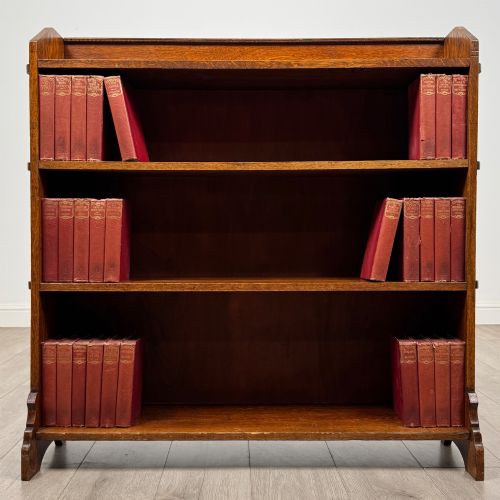
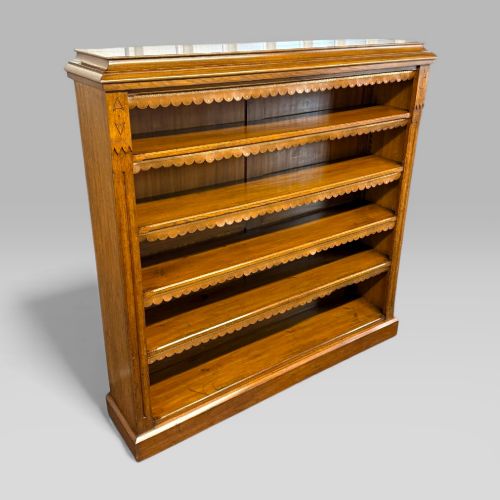
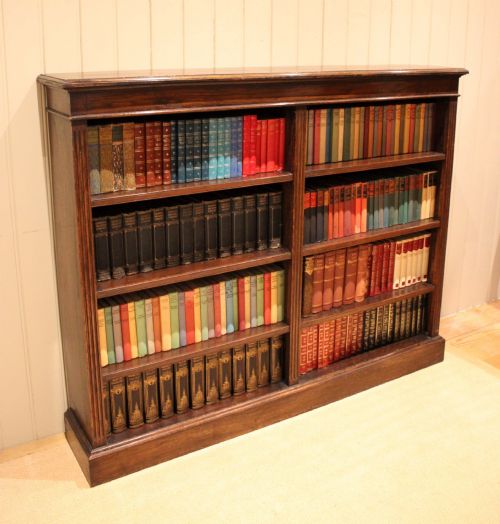
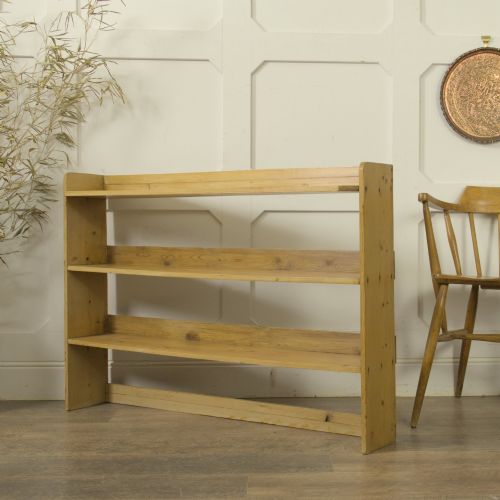
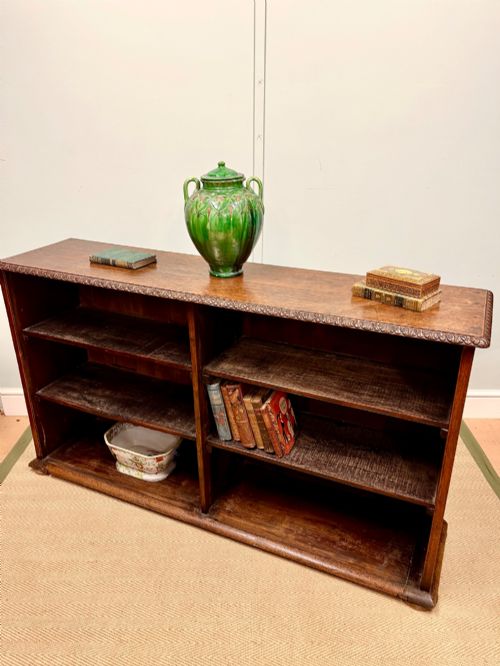
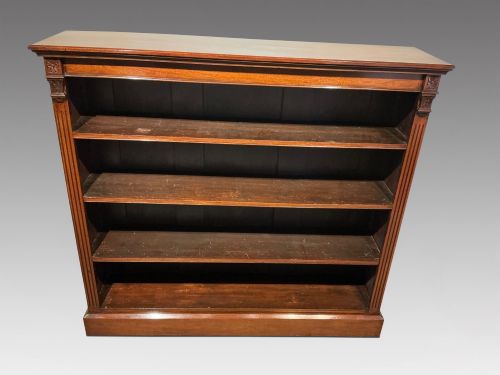
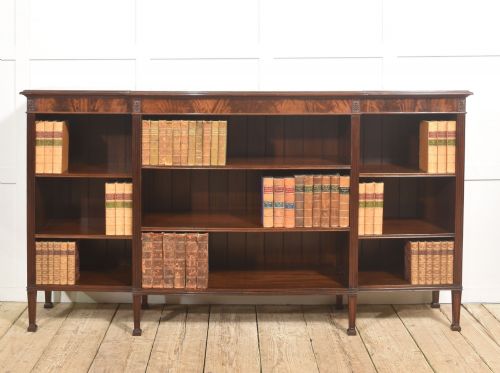
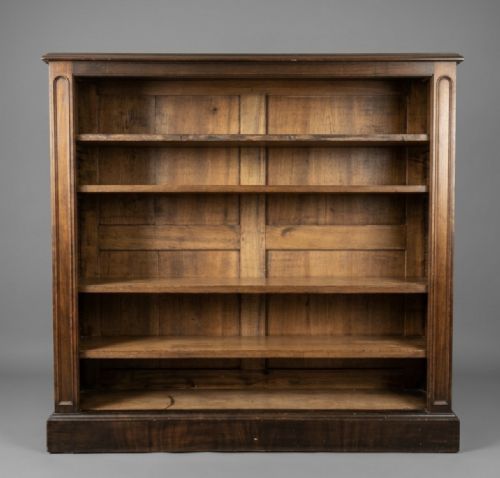
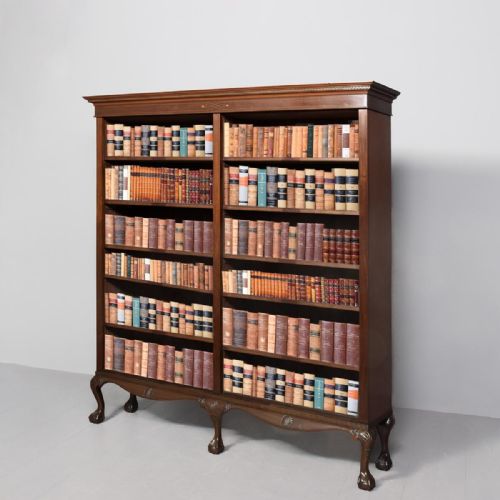
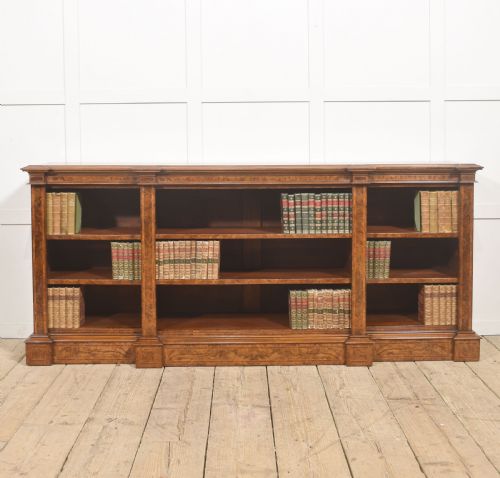
Wide low bookshelves provide accessible tiering for libraries, appearing here in Victorian and Edwardian timber.
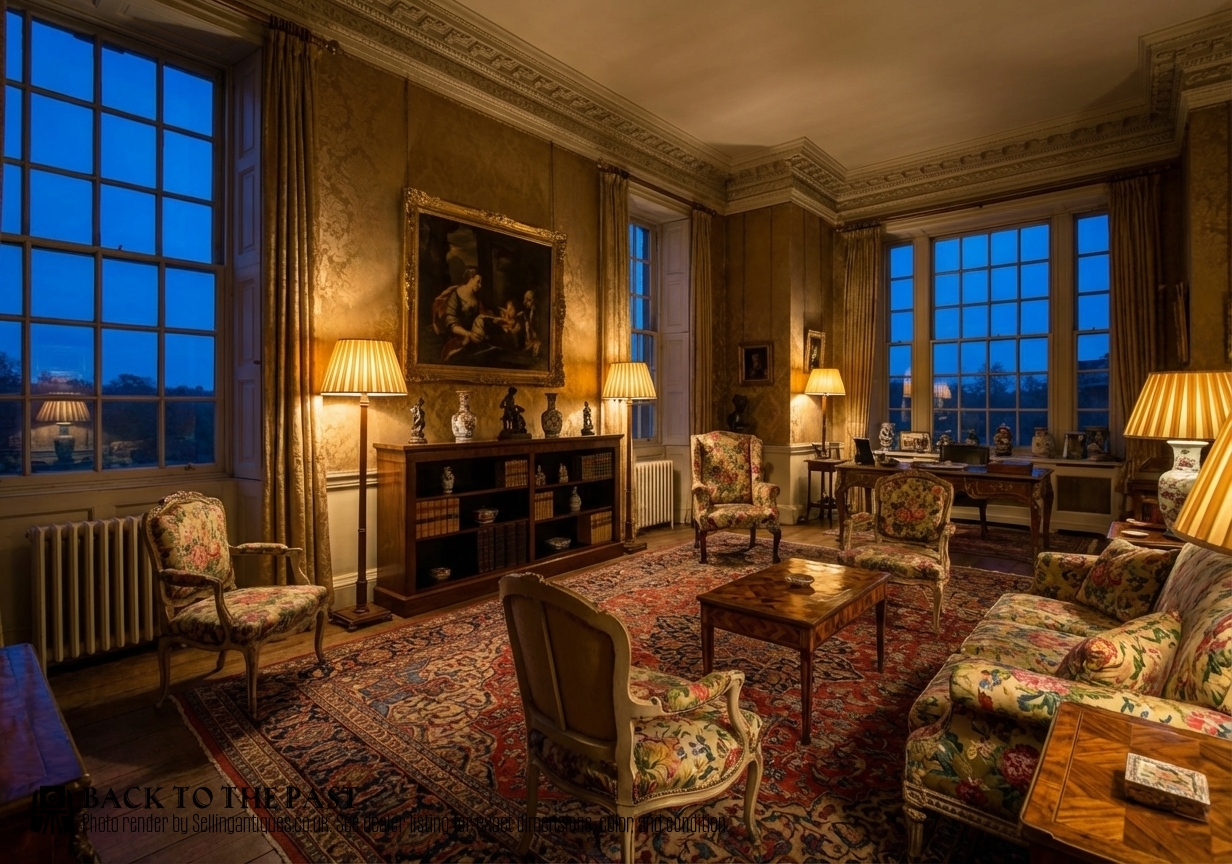
Wide Low Bookshelves
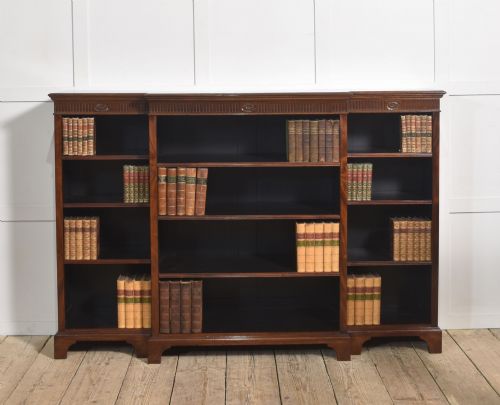
Wide low bookshelves offer open-front storage designed to hold substantial volumes while keeping ceilings feeling uncrowded. Buyers searching for wide low bookshelves will find substantial open library bookcases and breakfront forms spanning the nineteenth century through the early twentieth century.
The pieces on this page draw upon Victorian, Edwardian, Regency, and Arts and Crafts traditions, bringing horizontal emphasis to domestic rooms. Most examples rely on adjustable shelving to accommodate varying folio sizes, maintaining practicality alongside period character.
How they were made
Cabinet makers utilised dense hardwoods such as mahogany, oak, burr walnut, and teak, often selecting figured grains like flame mahogany to face breakfront facades. Pine, elm, and rosewood also appear, sometimes treated with ebonising or detailed with wood inlay and brass fittings.
Construction methods focus on sturdy open framing, occasionally enhanced by architectural carving, Gothic revival motifs, or waterfall tiers. Adjustable shelf mechanisms rely on traditional wooden ratchets or brass strip supports set into the interior uprights.
The listings show pieces spanning the nineteenth century into the 1930s, built in mahogany, oak, pine, teak, and burr walnut.
What varies in quality
Quality reveals itself in the selection of timber veneers and the crispness of any applied carving or inlay. Breakfront proportions and the integration of substantial plinths distinguish more ambitious library pieces from simpler utility shelving.
Internal engineering matters significantly, particularly the smooth operation of adjustable shelf brackets and the stability of wide open spans without timber sag. The joinery of the outer carcase dictates longevity under heavy book loads.
Lamb of Manchester
The Wide Low Bookshelves Glossary
- Breakfront
- A cabinet design where the central section projects forward from the flanking wings. This configuration breaks the linear monotony of long walls.
- Flame mahogany
- A veneer cut from the fork of the mahogany tree where branches meet the trunk. It creates a distinctive flamy, light-reflecting pattern.
- Ebonised
- Wood treated with a chemical stain or black finish to imitate ebony. This technique gained popularity during the Victorian and aesthetic periods.
- Waterfall
- A style of shelving where each tier steps back progressively from the one below. It creates a cascading profile suited to smaller formats.
Wide Low Bookshelves: Frequently Asked Questions
Are these shelves adjustable?
Most examples feature adjustable shelving supported by internal wooden tracks or brass strips. This allows owners to rearrange tiers for folio volumes or smaller octavos.
Original mechanisms remain intact on many nineteenth and early twentieth-century pieces, preserving the utility designed by the original cabinet makers.
How do I style a low bookcase?
Wide low bookshelves sit comfortably beneath windows or art collections without obstructing wall space. Their upper surfaces provide a convenient stage for decorative objects, clocks, or table lamps.
Organising books by height or colour helps balance the visual weight across the open bays, while leaving some breathing room prevents a cluttered appearance.
What woods were commonly used?
Mahogany and oak dominate the selection, ranging from deep brown Victorian tones to lighter Edwardian golden oak. More decorative variants feature burr walnut or flame mahogany veneers.
Secondary timbers such as pine and elm appear in country or utilitarian pieces, whilst exotic additions like teak and rosewood reflect broader global trade.
How to date a bookcase?
Dating relies on combining period styles, timber characteristics, and construction hardware. Victorian Gothic revival and aesthetic movement pieces show distinct ornamentation compared to cleaner Edwardian lines.
Shelf support systems and backboard construction also offer clues, transitioning from hand-planed boards to machine-sawn elements across the decades.