


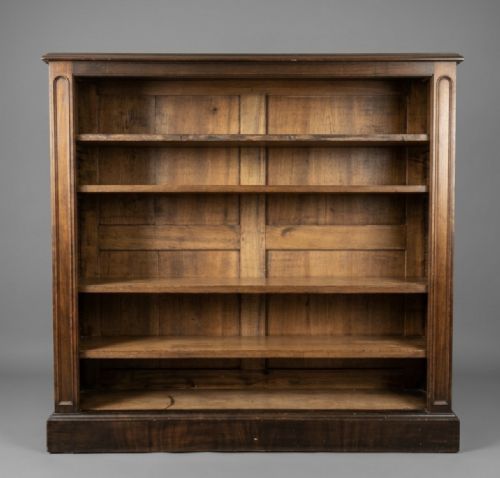

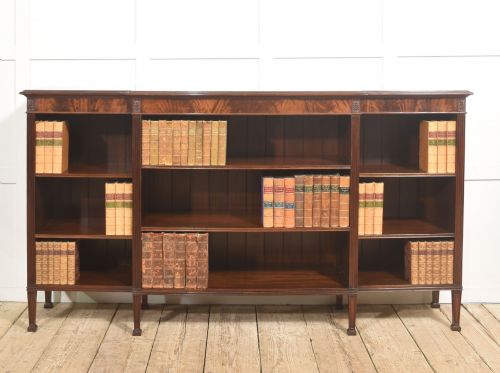
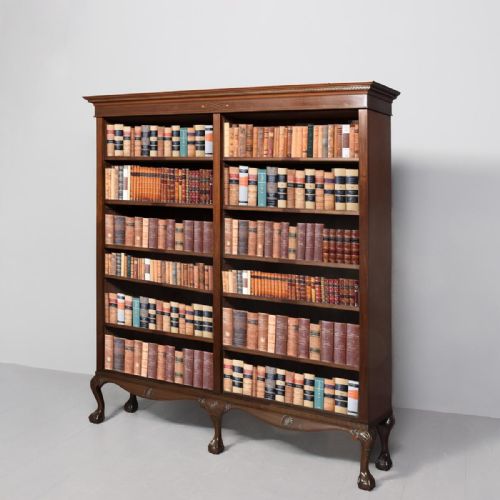


Wide Low Bookshelf
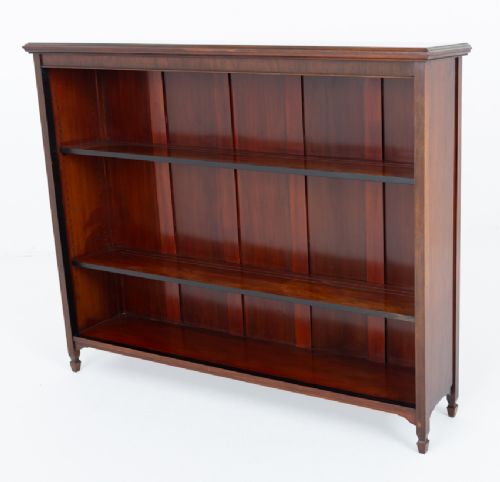
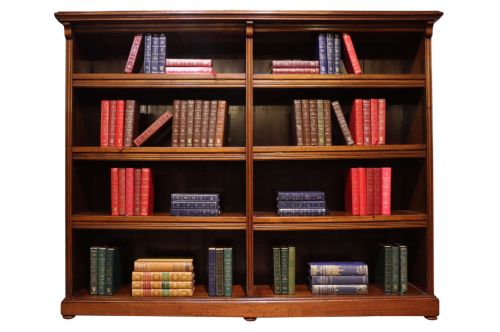
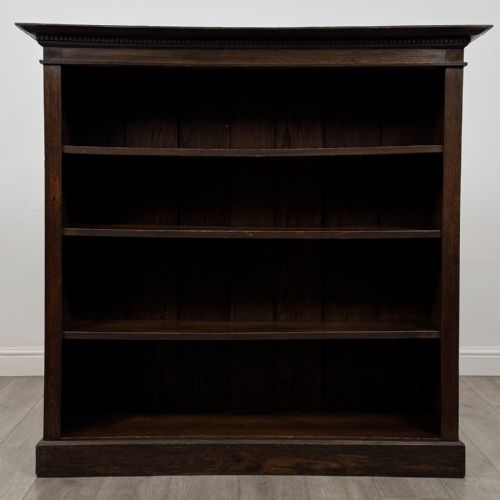
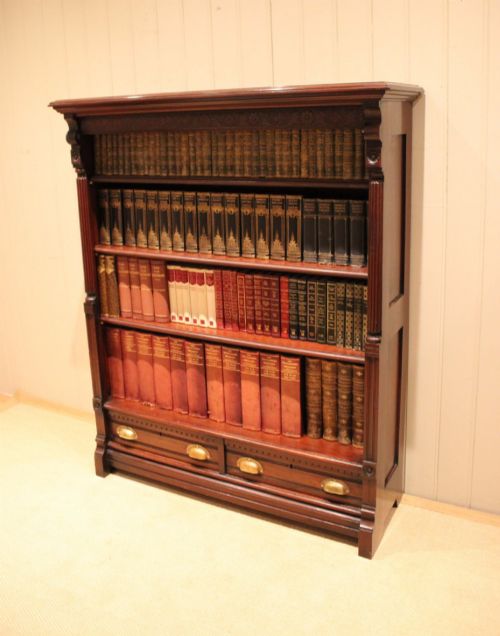
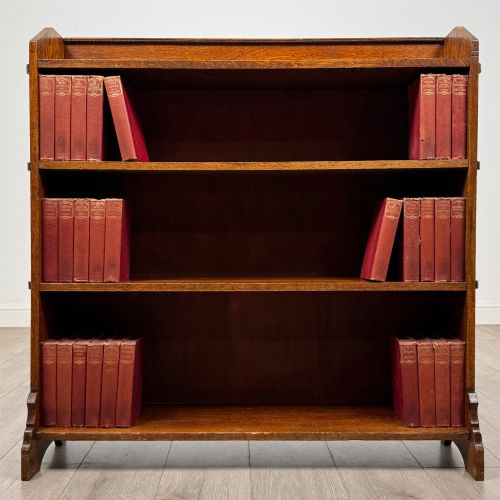
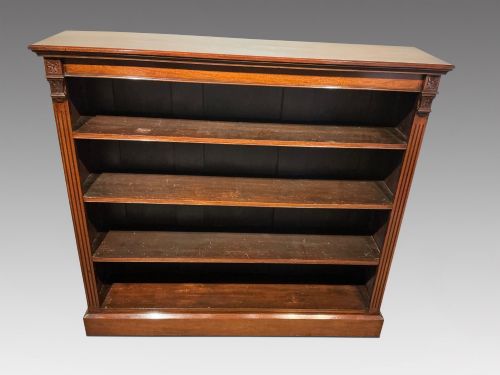
A wide low bookshelf provides accessible open storage for a room, combining substantial horizontal span with a modest height suited to traditional interiors.
Wide Low Bookshelf
A wide low bookshelf serves domestic spaces by keeping volumes within easy reach while maintaining open wall lines. These pieces typically present an open front configuration designed for everyday library use.
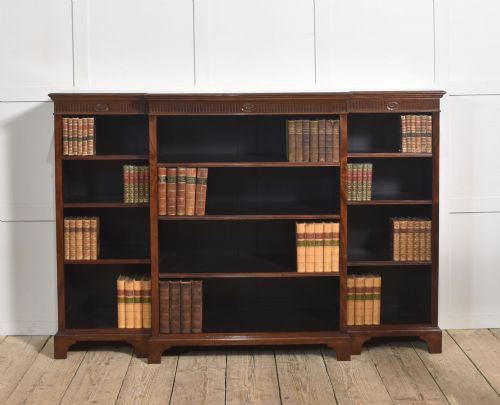
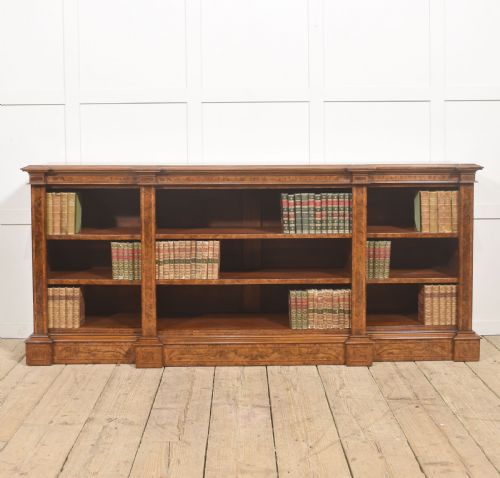
The selections encountered here span the Victorian, Edwardian, and early twentieth century periods. Common forms include breakfront arrangements, waterfall shelving, and straightforward rectangular open cases.
Makers and workshops utilised robust timbers to construct these substantial units. Examples range from simple pine and elm formats to refined flame mahogany and burr walnut iterations.
How they were made
Craftsmen built these bookcases using solid hardwoods and veneers such as mahogany, oak, teak, and rosewood. Structural integrity relied on traditional joinery methods appropriate for large furniture.
Surface treatment often involved fine polishing to accentuate natural grain patterns like flame mahogany and burr walnut. Details such as brass hardware, carved elements, and wood inlay frequently adorned the better examples.
Wide Low Bookshelf Retail Price Guide 2026
Typical asking prices for wide low bookshelf among the pieces listed under this phrase on Sellingantiques today, from the lower quarter to the upper quarter. They describe what is for sale here now, not the wider market.
Some Edwardian shelves cascade downwards like water, proving that even timber can learn to tumble with grace.
What varies in quality
Quality rests primarily on timber selection and decorative execution. Cases finished in figured veneers like flame mahogany or burr walnut stand apart from utility pine or plain oak versions.
Construction refinement also dictates standard, visible in the handling of carved details, ebonised finishes, and adjustable shelving mechanisms. Finer workshops invested greater labour in proportion and surface finish.
Lamb of Manchester
The Wide Low Bookshelf Glossary
- Breakfront
- A cabinet design where the central section projects forward from the flanking wings. This architectural arrangement adds depth and visual interest to large library cases.
- Waterfall
- A shelving format where shelves recede in depth progressively from bottom to top. This creates a stepped profile characteristic of Edwardian pieces.
- Ebonised
- Wood treated with a dark finish to imitate expensive ebony. The technique gained popularity during the nineteenth century for formal or aesthetic movement furniture.
- Burr Walnut
- Timber taken from a walnut tree growth showing swirling grain patterns. It commands attention for its highly decorative and unique appearance on cabinet fronts.
Wide Low Bookshelf: Frequently Asked Questions
What periods do these bookcases represent?
The available pieces span the nineteenth and early twentieth centuries. This includes Victorian, Edwardian, and later iterations up to the nineteen thirties.
Craftsmen across these decades produced open shelving using regional timbers and prevailing stylistic influences like the Arts and Crafts movement or Gothic Revival.
Are the shelves adjustable?
Many of the larger library and open bookcases feature adjustable shelving to accommodate volumes of varying heights. This practical design allows owners to customise the internal layout.
Makers incorporated modular supports to ensure utility without sacrificing the aesthetic balance of the piece.
What timbers were commonly utilised?
Mahogany and oak form the backbone of the selection, appearing in numerous nineteenth and early twentieth century examples. Walnut, teak, rosewood, pine, and elm also feature.
Finer pieces often display decorative veneers like flame mahogany or burr walnut across their primary surfaces.
How do I style a low bookcase?
The low profile allows the top surface to function as a display area for decorative objects, lamps, or artwork. Placing the case against a wall keeps walkways clear while anchoring the room.
Open shelving encourages organised book storage that remains accessible and visually engaging within a living space.