
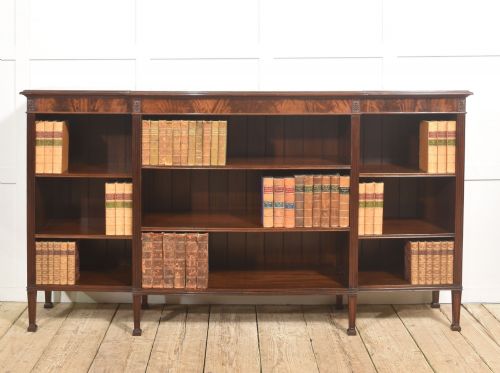

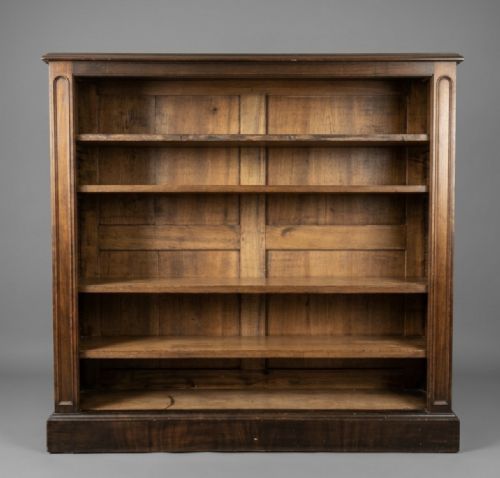
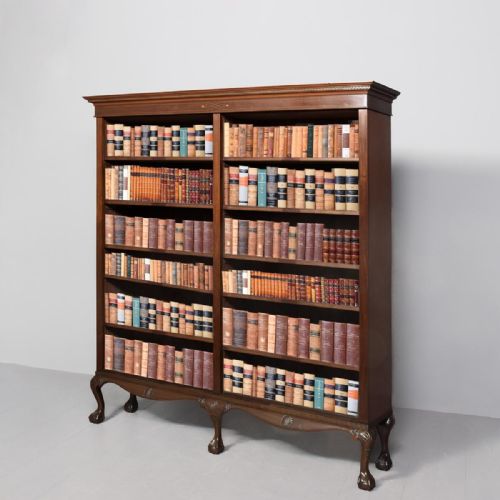
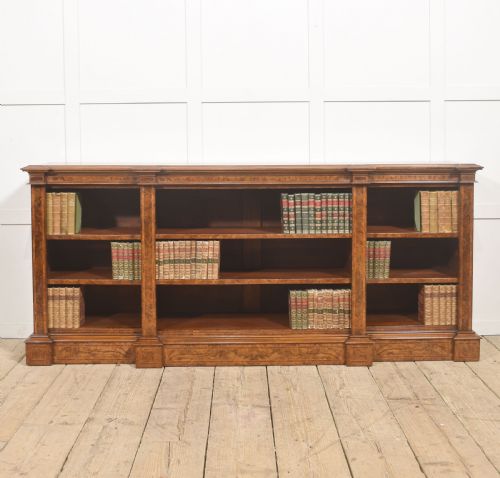


Wide Library Bookcase
A wide library bookcase brings architectural scale to a room, offering generous proportions and open shelving designed to hold substantial collections.
Wide Library Bookcase
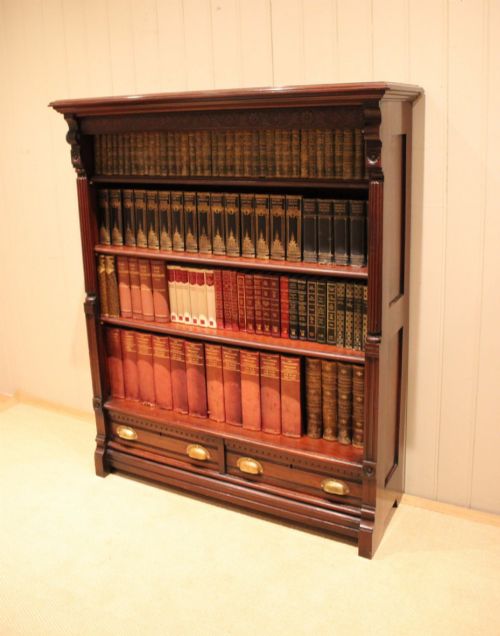
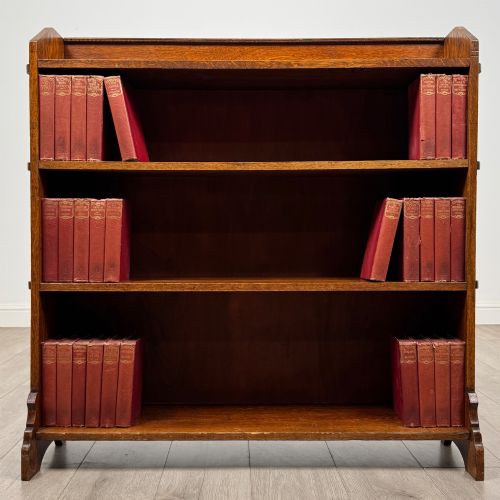
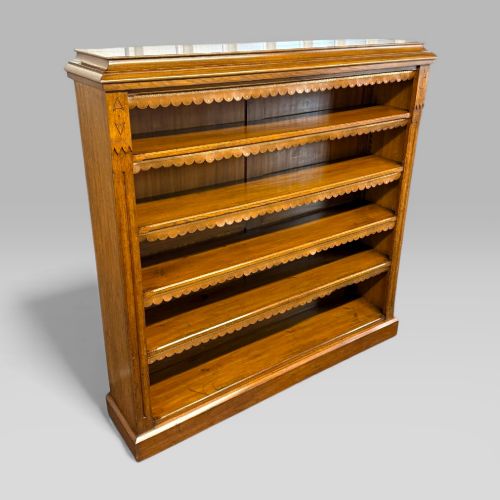
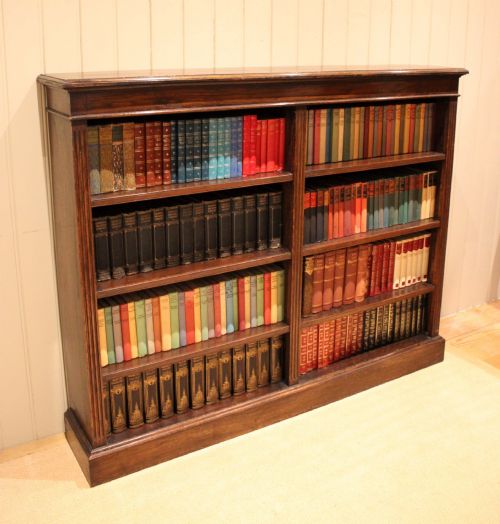
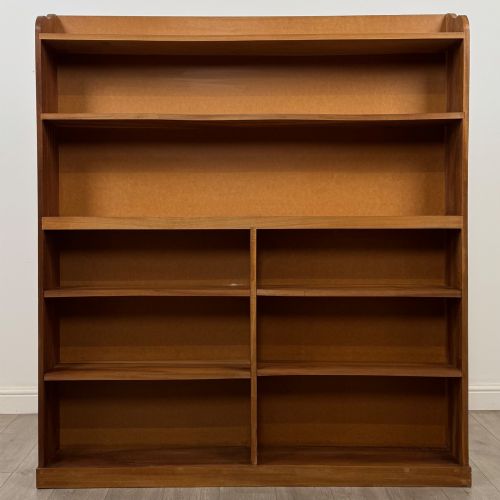
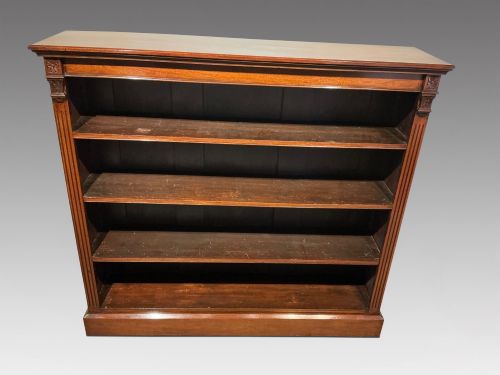
A wide library bookcase gives you serious wall presence, built to hold large collections of books across broad expanses. When you search for a wide library bookcase, you will most commonly encounter large open designs in mahogany or oak dating from the Victorian and Edwardian eras.
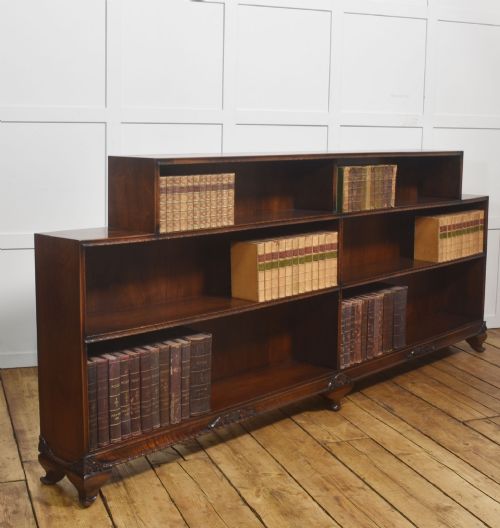
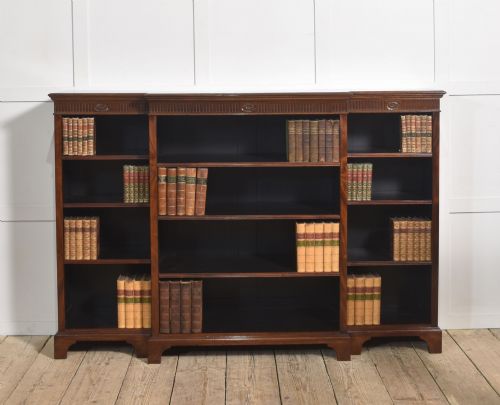
The pieces on offer span the nineteenth and twentieth centuries, taking forms such as breakfront bookcases, stepped configurations, and tall two-part setups. Styles range from plain Victorian utility to Gothic Revival, Aesthetic Movement, and Georgian revivalism.
Makers and designers of the period utilised substantial timbers to construct these robust pieces for domestic and institutional libraries. You find both simple open front shelving and breakfront forms fitted with adjustable shelves for practical storage.
How they were made
Makers built these substantial carcasses primarily from solid mahogany, oak, and walnut, often selecting figured timber such as flame mahogany or burr walnut for prominent display surfaces. Secondary timbers like pine provided internal framing and shelving support.
Construction relied on traditional joinery techniques suited to heavy loads, incorporating robust tongue and groove backs and strong vertical supports. Metal elements such as brass mounts added structural detailing or decorative accents to select pieces.
The documented periods span from the Victorian era and the nineteenth century through Edwardian times up to nineteen thirty.
What varies in quality
Quality shows in the selection and matching of timber veneers on breakfront facades, where superior cabinets display continuous grain across wide expanses. Plain utility pieces rely on solid timber construction rather than decorative figure.
The sophistication of the internal shelving system distinguishes better examples, particularly those featuring finely cut adjustable rackwork rather than fixed partitions. Cabinetmakers who incorporated thoughtful proportions and restrained stylistic details produced the most enduring furniture.
Lamb of Manchester
The Wide Library Bookcase Glossary
- Breakfront
- A cabinet design where the central section projects forward from the flanking wings. This configuration breaks up the flat facade of a large piece.
- Adjustable shelves
- Shelving that can be moved to different heights using wooden ratchets, metal pins, or side grooves. This system accommodates books of varying sizes.
- Ebonised
- Wood treated with a dark finish to imitate expensive ebony. This technique gained popularity during the nineteenth century for stylistic contrast.
- Brass mounted
- Furniture decorated with cast or stamped brass fittings, handles, or gallery rails. These metal elements provide functional reinforcement and visual contrast.
Wide Library Bookcase: Frequently Asked Questions
How do I adjust the shelves?
Most period bookcases use either a wooden rackwork strip or metal shelf supports set into the interior sides. You simply lift the shelf and reposition the supports into the desired slots.
Take care when moving heavy timber shelves to avoid damaging the interior veneer or the upright supports.
Where should I place a wide bookcase?
These large pieces require a substantial wall with enough clearance to accommodate their width and height safely. Position them away from direct sunlight and heat sources to protect the timber.
Ensure the floor level can support the considerable combined weight of the timber carcass and a full collection of books.
How do I tell Victorian from Edwardian pieces?
Victorian bookcases often feature denser timbers like dark mahogany with heavier architectural mouldings and Gothic or Classical revival motifs. Edwardian examples frequently utilise lighter golden oak or walnut with simpler lines.
Construction details also help distinguish the eras, as later pieces sometimes incorporate standardised metal internal fittings.
Are these bookcases suitable for modern homes?
Their generous proportions make them ideal for living rooms, studies, or hallways with high ceilings and adequate wall space. They provide practical storage while adding traditional character to an interior.
Measure your ceiling height and access routes carefully before purchasing, as many of these large pieces are heavy and arrive in fixed sections.