



White Stone Lighting
White stone lighting encompasses alabaster lamps and marble fixtures that bring a warm, diffused glow to any room.
White Stone Lighting
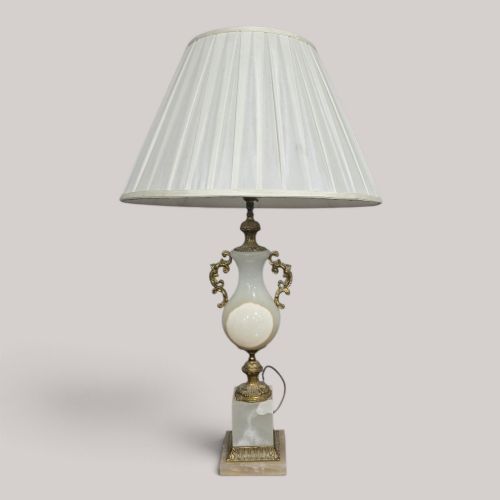
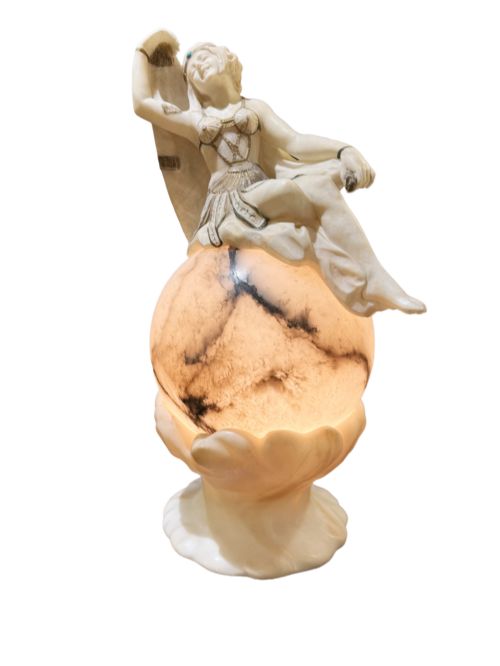
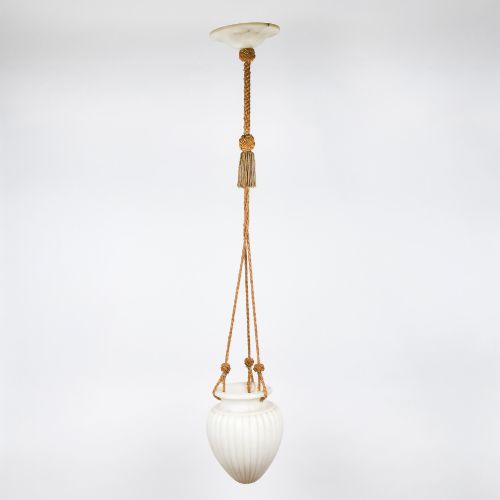
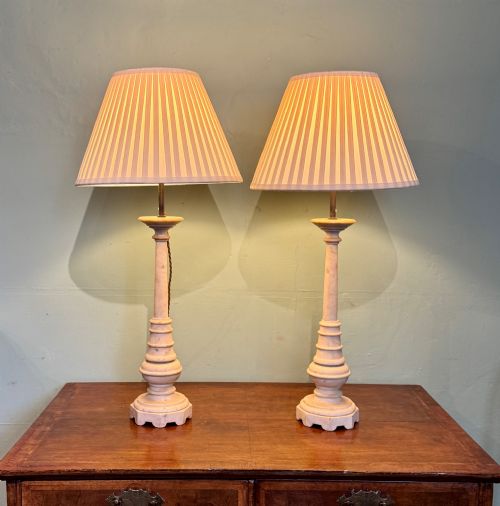
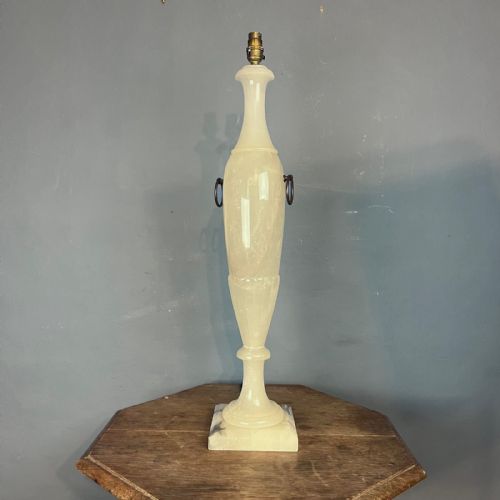
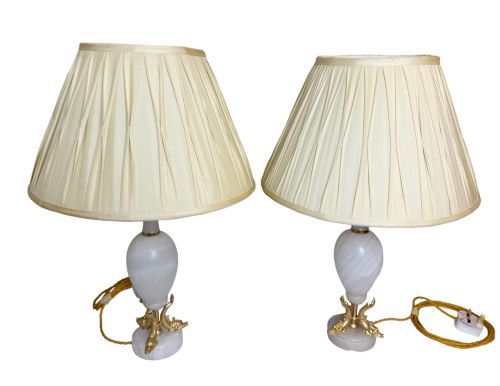
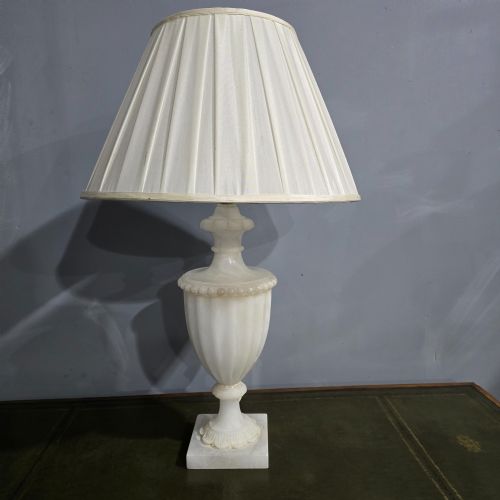
White stone lighting brings together carved alabaster and marble pieces designed to illuminate interior spaces with soft, ambient brilliance. When exploring white stone lighting, you encounter table lamps, floor standing lamps, and hanging pendant lights from the early twentieth century and the nineteenth century. These objects make use of natural translucent minerals to temper the glare of a bulb, casting an even luminescence across a room.
The selection ranges from neoclassical revival floor lamps to streamlined Art Deco hanging lights and sculptural table lamps. Many items originate from European workshops, including Italian and French makers, utilising the natural veining of the stone for decorative effect. Such fixtures function both as practical illumination sources and as sculptural focal points within a room.
How they were made
Craftsmen shaped these pieces from natural blocks of alabaster, marble, or onyx, turning and carving the mineral to achieve the desired thickness for light transmission. Metal elements such as brass, gilt bronze, and gilt metal mountings were then added to secure the stone components and provide structural support.
Surface treatment relied on careful polishing to accentuate the natural grain and opacity of the material without adding synthetic colour. Electrical fittings were subsequently integrated into the hollowed centres of lamps and pendants, while early candlesticks retained simple metal sockets for wax candles.
White Stone Lighting Retail Price Guide 2026
Typical asking prices for white stone lighting among the pieces listed under this phrase on Sellingantiques today, from the lower quarter to the upper quarter. They describe what is for sale here now, not the wider market.
Listings for white stone lighting heavily concentrate in the 1920s and 1930s, utilising alabaster, marble, and onyx alongside brass and gilt metal.
What varies in quality
Quality in these pieces depends upon the purity and visual consistency of the stone block selected by the carver. Finer examples display subtle, even veining and precise turning that allows light to pass uniformly through the material.
The execution of metal mounts, such as gilt bronze trim or cast paw feet, further separates standard production from superior work. Heavier gauge metalwork and more intricate sculptural carving on the stone body indicate a higher tier of manufacture.
The White Stone Lighting Glossary
- Alabaster
- A fine-grained, translucent stone frequently utilised for lighting because it diffuses light softly. It is softer than marble and takes a smooth polish.
- Neoclassical Revival
- A style drawing inspiration from classical Greek and Roman architecture, visible in columns, urn shapes, and symmetrical motifs. Pieces in this style often employ marble or alabaster.
- Art Deco
- A design movement from the interwar period favouring geometric forms, stylised figures, and streamlined silhouettes. In lighting, this style appears in clean-lined pendants and figural lamp bases.
- Gilt Bronze
- Bronze metal that has been coated with a thin layer of gold or a gold-coloured alloy. It provides decorative mounts and trim on stone bases.
White Stone Lighting: Frequently Asked Questions
How do I clean an alabaster lamp?
Dust the surface regularly with a dry, soft cloth to prevent grime accumulation in the natural pores of the stone.
Avoid using water or chemical cleaners, as moisture can damage the unsealed surface of antique alabaster.
Can I use modern LED bulbs in these lamps?
Modern low-heat LED bulbs work well inside translucent stone shades because they emit minimal thermal energy.
Lower heat output protects the antique material from drying out or cracking over prolonged use.
Where should I place a heavy marble floor lamp?
Position the lamp on a stable, level floor away from high-traffic areas where it might be accidentally knocked.
Because these fixtures are exceptionally heavy due to the stone base, ensure the flooring can support the concentrated weight.
How do I identify an Art Deco alabaster light?
Look for geometric suspension bowls, stepped mounting brackets, and stylized figural motifs typical of the 1930s.
The hardware and wiring configurations often correspond to early twentieth-century manufacturing techniques.