







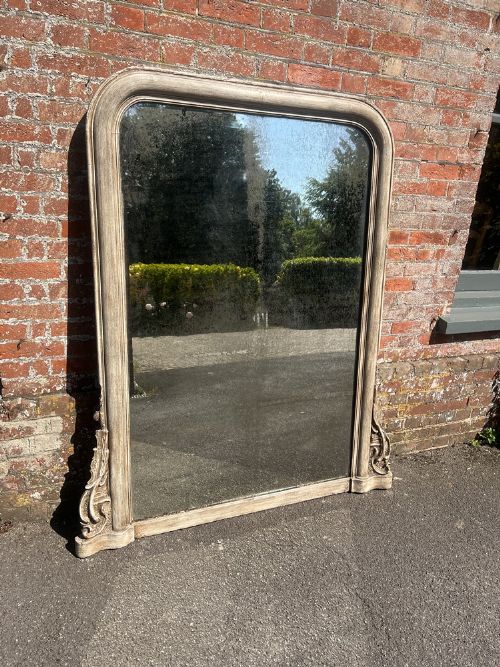


White Arched Mirror
A white arched mirror brings light and proportion to a room, drawing on nineteenth-century French and English overmantel designs.
White Arched Mirror
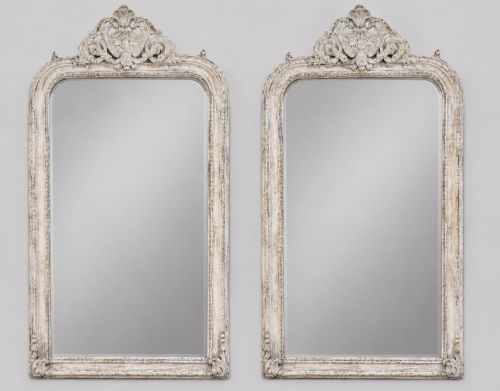
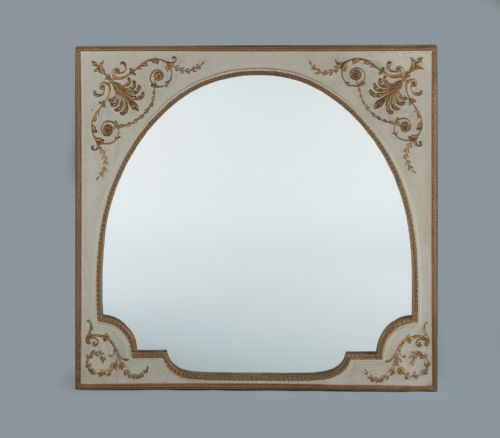
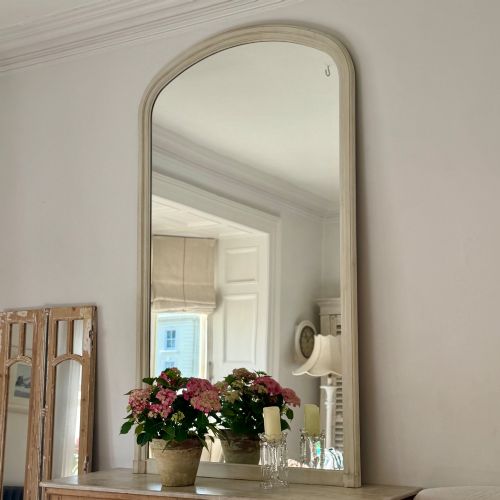
A white arched mirror takes several nineteenth-century forms, most commonly large overmantel mirrors designed to sit above fireplaces or substantial wall mirrors intended for halls and principal rooms. Buyers seeking a white arched mirror encounter pieces originating from Victorian England and provincial France, spanning the middle and late decades of the nineteenth century. These forms include shaped tops, arched crests, and window-style frames that reflect domestic architecture of the period.
The aesthetic bridges several nineteenth-century styles, appearing in French chateau, neoclassical, Louis Philippe, and English country house traditions. Makers built these objects on a large scale, framing them to dominate a wall and bounce natural light deep into the interior. Surviving examples show the influence of industrial and traditional workshops that adapted architectural arches for domestic spaces.
Materials and construction
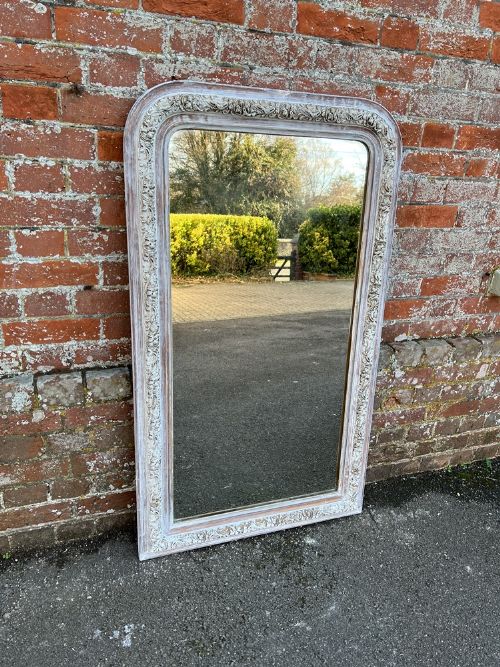
Makers constructed the structural frames from carved wood, applying layers of gesso to build up decorative mouldings and relief details around the arch. Gilding, gold leaf, and partial gilt accents often lie beneath or peek through the subsequent layers of paint. Overpainting is a common characteristic of these finishes, where white or pale pigments cover earlier gold or dark surfaces.
The glazing relies on heavy mirror glass fitted into shaped rebates within the timber frame. Workshops combined carved wooden elements with moulded gesso to achieve crisp architectural lines along the curved top. Paint finishes range from distressed surfaces to solid coats applied across nineteenth-century frames.
White Arched Mirror Retail Price Guide 2026
Typical asking prices for white arched mirror among the pieces listed under this phrase on Sellingantiques today, from the lower quarter to the upper quarter. They describe what is for sale here now, not the wider market.
Several mirrors carry layers of historical overpainting, concealing hints of nineteenth-century gold leaf beneath decades of white pigment.
Distinctions in quality
Quality rests upon the depth and precision of the carved wooden ornament and the crispness of the gesso mouldings beneath the paint. Superior examples display fluid curves along the arched top and well-balanced proportions that relate correctly to the scale of the glass. The relationship between the carved frame and the original mirror plate determines the integrity of the piece.
The treatment of the surface finish separates standard production from finer decorative pieces. Skilled application of paint over original gilt layers creates depth, whereas flat, uniform modern painting obscures the historical texture of the gesso. The presence of original backboards and undisturbed mirror glass indicates a better-preserved survivor.
The White Arched Mirror Glossary
- Overmantel mirror
- A large mirror specifically proportioned to hang on the wall directly above a fireplace mantelpiece. These pieces often feature horizontal or vertical rectangular formats with arched or shaped tops.
- Gesso
- A plaster-like mixture applied to wood frames to create a smooth surface for gilding or painting. Artisans carved intricate relief decorations directly into this material.
- Louis Philippe
- A mid-nineteenth-century French style characterised by restrained classical lines and gentle curves. Mirrors from this period typically feature simple arched tops with minimal ornamentation.
- Parcel gilt
- A decorative technique where only specific parts of an object receive gold leaf or gilt treatment, leaving the surrounding areas painted or exposed. This method highlights carved details on the frame.
- Window mirror
- A mirror frame divided into multiple glazed panes that mimic the appearance of a multi-pane casement window. These items were often adapted from nineteenth-century architectural elements.
White Arched Mirror: Frequently Asked Questions
Where should I hang an overmantel mirror?
An overmantel mirror traditionally rests above a fireplace mantelpiece, anchored securely to the wall to support its substantial weight. Placing it at this focal point reflects light across the room and balances the height of the hearth.
Alternatively, position the mirror on a blank living room or hallway wall to create the illusion of expanded space and architectural depth. Ensure the fixings engage directly with structural wall supports due to the heavy timber and glass construction.
How do I clean nineteenth century mirror glass?
Clean the glass surface gently using a soft cloth and a mild, ammonia-free glass cleaner applied to the cloth rather than sprayed directly onto the mirror. This prevents moisture from seeping behind the antique silvering or into the wooden frame.
Avoid harsh chemical solvents that can damage both the historic mirror plate and the surrounding painted gesso finish. Regular dusting with a dry microfiber cloth maintains the surface without risking abrasion.
How can I tell French and English mirrors apart?
French mirrors from the nineteenth century frequently exhibit Louis Philippe styling or chateau influences with softer, more rounded crests and delicate gesso work. English equivalents tend to follow country house aesthetics with heavier carved wood frames and robust proportions.
Examination of the construction techniques, timber types used in the hidden backboards, and mounting systems often reveals the regional workshop origins. Both traditions utilised similar paint and gilt finishing techniques during the period.