





White Alabaster Bust Figure
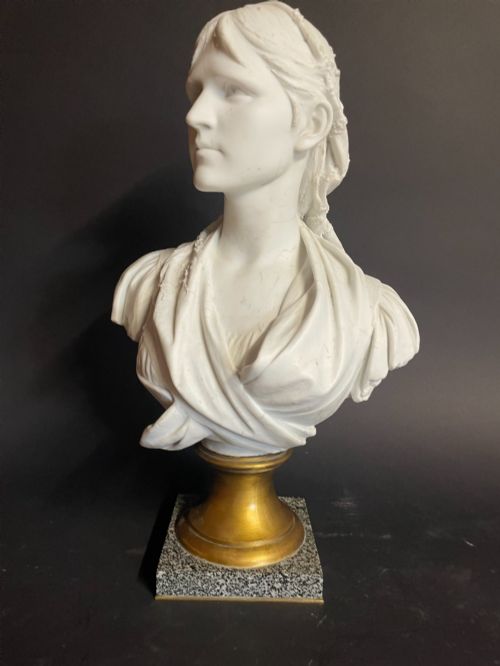
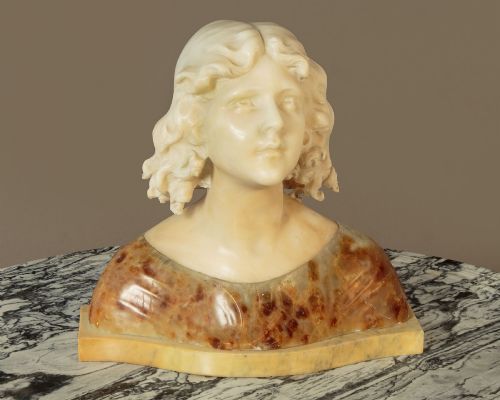
A white alabaster bust figure brings nineteenth-century portraiture and classical poise into a room, offering tactile presence and subtle carved detail.
White Alabaster Bust Figure
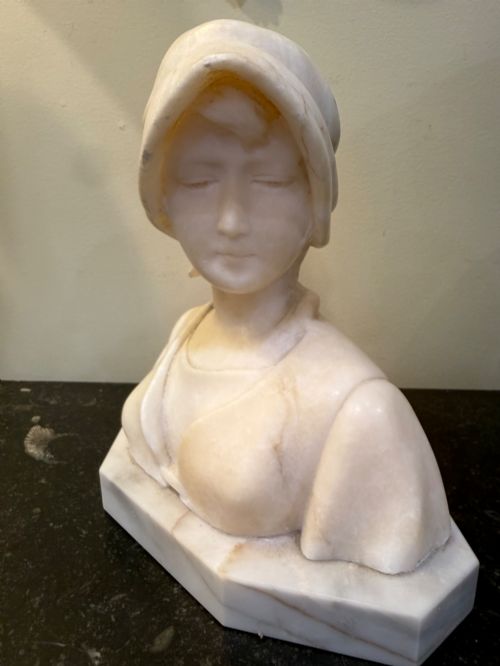
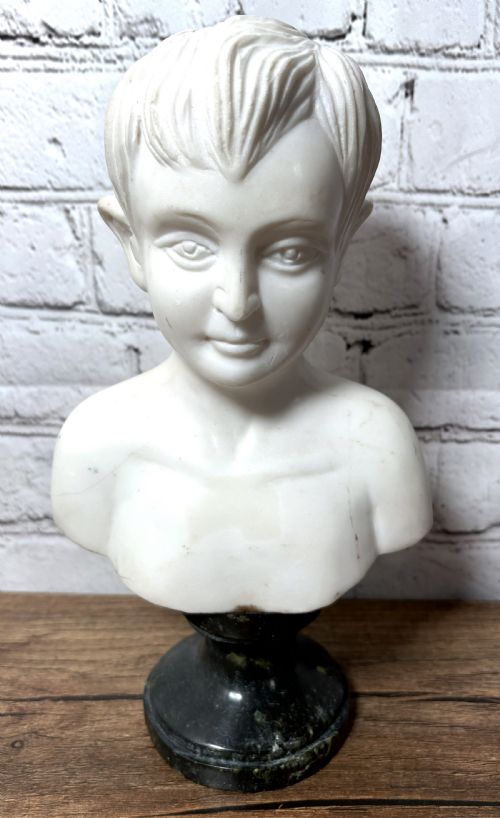
A white alabaster bust figure captures female and male subjects, young girls, and gentlemen, often rendered with detailed drapery and expression. These pieces emerge predominantly from nineteenth-century workshops, spanning Victorian, Edwardian, and Art Nouveau aesthetics.
The most common forms on this page include young women and girls, alongside portrait busts of gentlemen and children. Sculptures originate from Italian and French studios, reflecting Neoclassical, Orientalist, and Arts & Crafts influences.
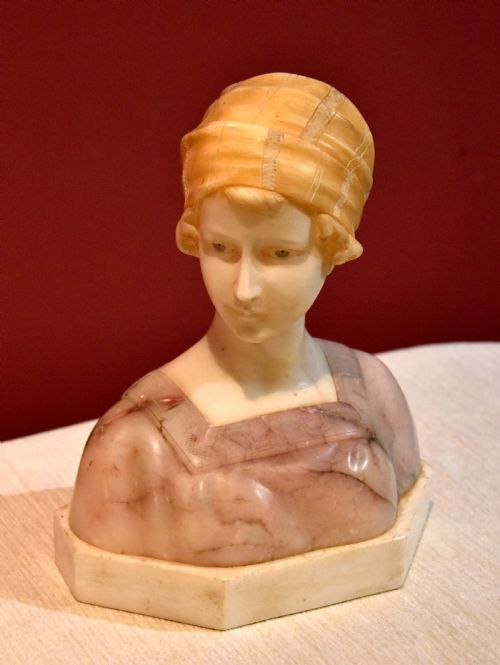
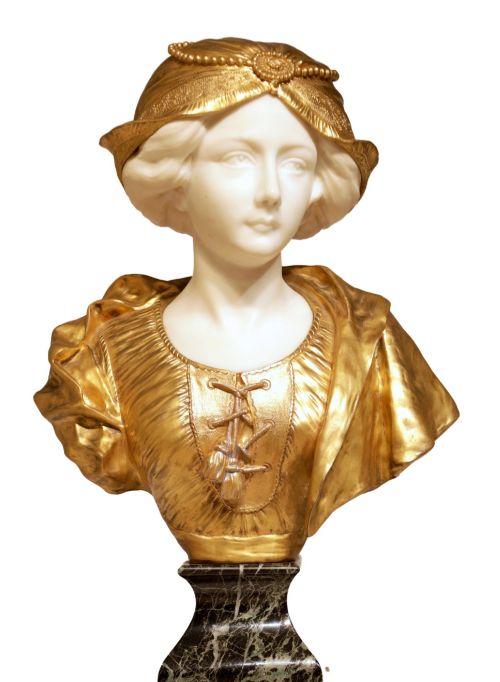
Makers combine alabaster with marble, gilt bronze, and ormolu mounts to create sculptural portraits. Scale ranges from library-sized studies to larger decorative figures.
Materials and carving methods
Carvers work with soft alabaster and denser marble, shaping the stone by hand to achieve smooth flesh tones and intricate hair texture. Sculptors often mount these stone figures on contrasting bases of granite, brass, or gilt bronze.
Artists sign their finished work directly into the stone or incorporate cast ormolu details to accent the carved drapery. Workshops in France and Italy utilise these combined materials to produce both intimate portrait studies and larger allegorical figures.
White Alabaster Bust Figure Retail Price Guide 2026
Typical asking prices for white alabaster bust figure among the pieces listed under this phrase on Sellingantiques today, from the lower quarter to the upper quarter. They describe what is for sale here now, not the wider market.
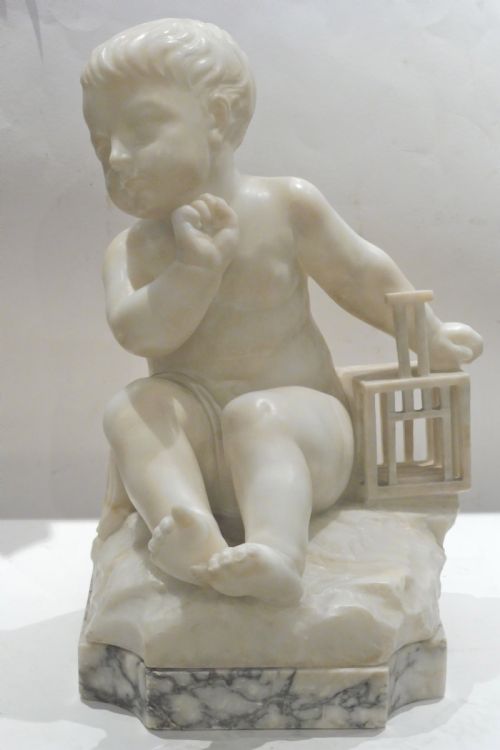
One young boy is caught mid-play with a puppy.
Evaluating sculptural quality
Quality rests in the sensitivity of the carving, particularly where the sculptor renders facial expression, hair, and fabric folds. Finer examples display a crispness in the stone that captures lifelike depth in the eyes and softness in the cheeks.
The integration of secondary materials, such as finely chased gilt bronze ormolu mounts and inscribed signatures by known sculptors, distinguishes superior library busts from standard studio production.
Affortunato Gory·Auguste Henri Carli·G.V. Vaerenbergh·Joseph Gott·R.LUSILI·Pugi
The White Alabaster Bust Figure Glossary
- Alabaster
- A fine-grained, translucent stone favoured for nineteenth-century portrait sculpture. Its softness allows carvers to achieve delicate surface details.
- Ormolu
- Gilt bronze mounted onto or around the stone sculpture. This technique adds metallic contrast to the pale alabaster.
- Neoclassical
- A revival style drawing on classical antiquity. Figures in this taste often feature draped garments and restrained facial expressions.
- Orientalist
- A nineteenth-century artistic style depicting Middle Eastern or North African subjects. Busts in this taste use specific regional costume and headwear.
- Portrait Bust
- A three-dimensional sculpture depicting a subject from the chest or shoulders up. These pieces focus on individual likeness and character.
White Alabaster Bust Figure: Frequently Asked Questions
How do I date a bust?
Look to the stylistic cues, such as Art Nouveau curves, Victorian drapery, or Edwardian costume. Inscriptions and signatures also help anchor the piece to a specific working period.
Material combinations, including gilt bronze or ormolu mounts, often correspond to nineteenth-century and early twentieth-century French and Italian studio practices.
Where should I place a bust?
Position these stone sculptures on sturdy mantels, library shelves, or dedicated pedestals where adequate light crosses the carved surfaces. Stable furniture prevents accidental tipping.
Keep pieces away from direct heat sources and strong sunlight to protect the stone and any applied patination on the mounts.
How do I clean alabaster?
Dust the stone gently with a dry, soft brush or a microfiber cloth to remove surface particles. Avoid water, harsh chemicals, or abrasive cleaners.
Alabaster is relatively soft and porous, meaning moisture can easily stain or soften the polished surface.
Are these pieces signed?
Many nineteenth-century sculptures carry artist signatures or studio stamps inscribed directly into the stone base or back. Signatures often indicate Italian or French origin.
Unsigned works remain common, reflecting the large output of European sculpture workshops during the Victorian and Edwardian eras.