





Whatnot Cabinet
A whatnot cabinet is a tiered open shelving piece designed for display, most often encountered in Victorian walnut and mahogany.
Whatnot Cabinet
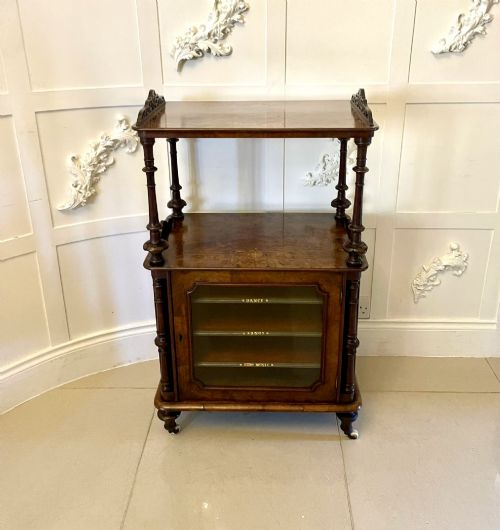
A whatnot cabinet is a multi-tiered shelving unit built for displaying small ornaments, books, and decorative objects. When searching for a whatnot cabinet, you will frequently find Victorian pieces featuring open tiers supported by turned columns or carved uprights. These tier arrangements often sit above a lower cupboard base, drawer, or cellarette compartment.
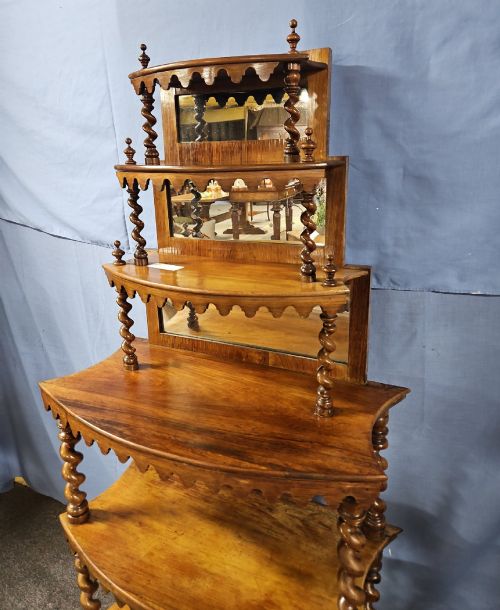
The form evolved through several periods, with examples appearing from the Georgian, Regency, and Edwardian eras alongside the predominant Victorian pieces. Corner whatnot designs and étagères utilise awkward wall junctions to provide vertical display space. Some iterations integrate specialised functions, operating as music cabinets, canterburys, or display chiffoniers.
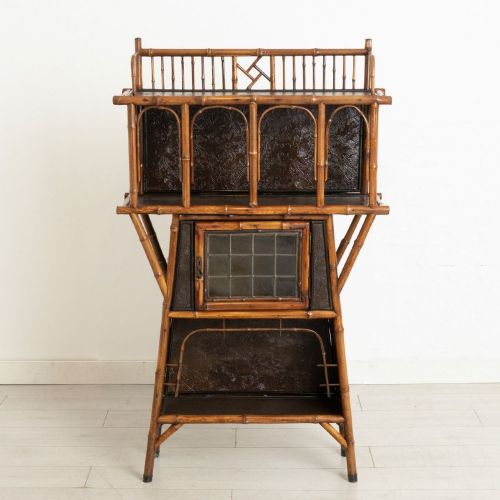
Materials span from rich burr walnut and rosewood to figured mahogany and bamboo. Marquetry inlay, brass mounts, mirrored backs, and pierced fretwork frequently embellish the structure. These decorative additions elevate simple shelving into sophisticated cabinet furniture.
Materials and construction
Cabinetmakers constructed these pieces primarily using solid and veneered timbers such as mahogany, walnut, burr walnut, and rosewood. Decorative veneers were carefully selected for their grain patterns, particularly on drawer fronts and cabinet doors. Brass components, including castors and mounts, provided structural support and refined detailing.
Turned wooden supports, hollow barley twist columns, and pierced fretwork galleries defined the vertical framework holding the shelves. Inlaid marquetry and glass panels were incorporated into doors and side panels. Specialised additions like marble tops and ceramic inserts appeared on specific iterations.
Whatnot Cabinet Retail Price Guide 2026
Typical asking prices for whatnot cabinet among the pieces listed under this phrase on Sellingantiques today, from the lower quarter to the upper quarter. They describe what is for sale here now, not the wider market.
Some nineteenth-century walnut pieces cleverly double as coal purdoniums, hiding household fuel behind ornate display tiers.
Indicators of quality
Quality rests upon the selection of timber veneers and the precision of inlaid marquetry work. Finely figured burr walnut or rosewood displays superior grain matching across the tiers and cabinet doors. The crispness of carved details, turned supports, and pierced fretwork distinguishes finer workshops from mass production.
Integration of multi-functional elements, such as fitted music compartments, cellarettes, and drawers, indicates a higher grade of commission. Robust joinery in the tier uprights and solid backboards ensure stability across tall multi-tiered shelving units.
Leonard Wyburd for Liberty and Co
The Whatnot Cabinet Glossary
- Whatnot
- An open multi-tiered piece of furniture designed for the display of ornaments and curiosities. It originated in the late eighteenth century and gained immense popularity during the Victorian era.
- Canterbury
- A low multi-partitioned stand used originally for holding sheet music or folios, frequently combined with whatnot shelving above. They often feature slatted dividers and a single lower drawer.
- Etagere
- A French term for a display stand with multiple open shelves, synonymous with the whatnot. These pieces prioritize visual lightness and decorative display.
- Marquetry
- The art of applying pieces of veneer to a structure to form decorative patterns and pictures. It appears frequently on Victorian cabinet doors and tabletops.
- Cellarette
- A lockable compartment or drawer built into furniture for the storage of bottles. It occasionally integrates into the lower section of nineteenth-century tiered cabinets.
- Fretwork
- Ornamental design created by cutting patterns through thin wood panels. Pierced fretwork galleries often crown the top shelves of Victorian pieces.
Whatnot Cabinet: Frequently Asked Questions
What is the difference between a whatnot and an etagere?
An etagere is essentially the French term for a whatnot, both referring to multi-tiered shelving units designed for displaying small objects. In British cabinet-making terminology, the two terms were often used interchangeably.
However, etageres occasionally emphasise lighter, more decorative frames with mirrored backs or glass panels, while traditional whatnots frequently incorporate enclosed cupboard bases or drawer units.
How were whatnot cabinets used historically?
These cabinets served as prominent display furniture in nineteenth-century drawing rooms and parlours. Homeowners placed ceramic figurines, small clocks, silver, and treasured ornaments upon the open tiers.
Lower enclosed cupboards or drawers provided concealed storage for letters, stationery, or sheet music, keeping the room tidy while maintaining an impressive vertical display.
How do I identify a Victorian whatnot?
Victorian examples frequently utilise dark rich timbers like walnut, burr walnut, and rosewood. They often feature turned supports, barley twist columns, and elaborate marquetry inlay.
The inclusion of pierced fretwork galleries and lower enclosed cupboard bases or canterbury sections strongly points toward the Victorian period of manufacture.
Can a whatnot cabinet fit in a small room?
Many whatnot cabinets possess a compact footprint due to their vertical orientation. Corner whatnot designs specifically utilise dead space in small rooms by fitting snugly into 90-degree angles.
Their open tiered shelving prevents the furniture from feeling visually heavy or blocking light within restricted living spaces.