



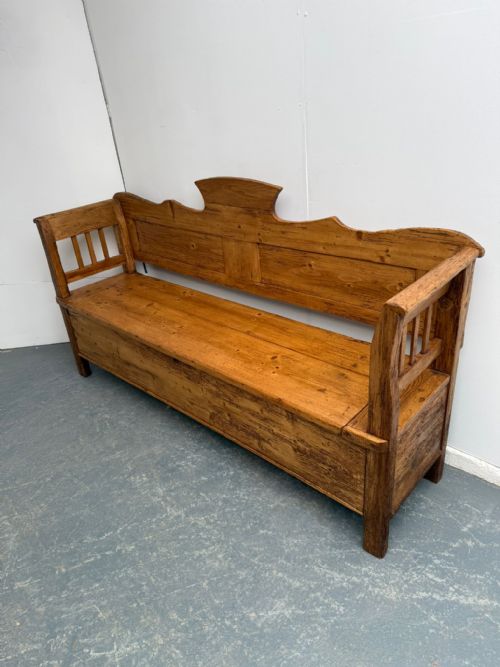

Waxed Pine Seat
These waxed pine seat pieces bring rustic warmth to hallways and kitchens, offering sturdy seating built from honest wood.
Waxed Pine Seat
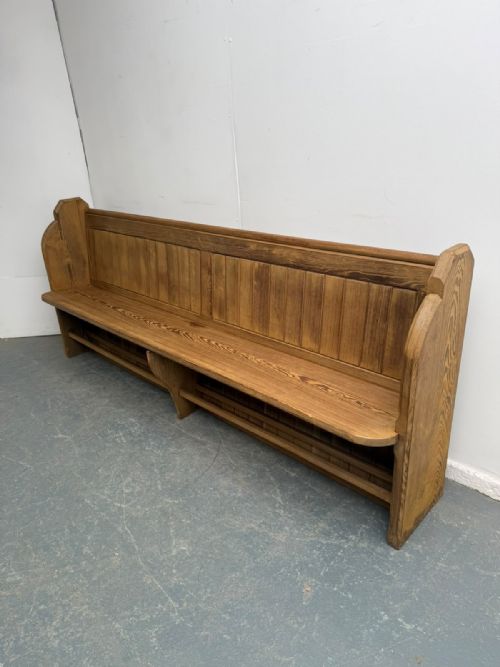
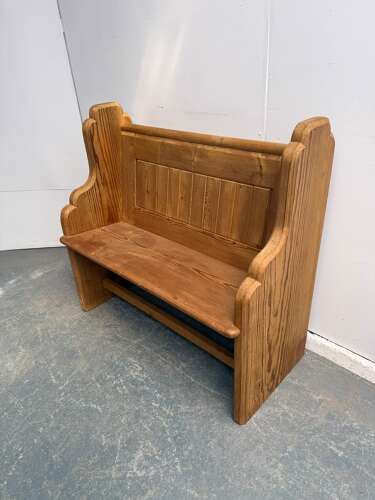
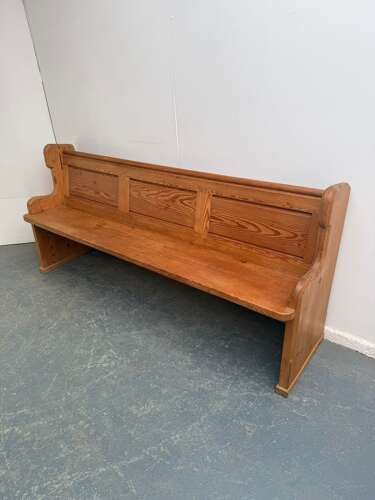
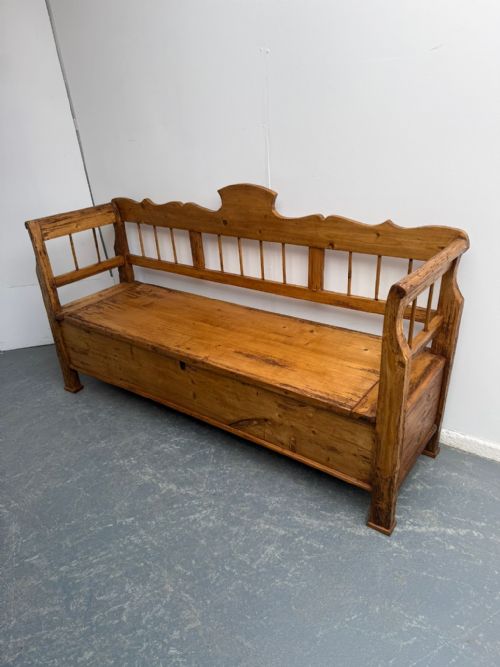
When you search for a waxed pine seat, you encounter substantial utilitarian furniture designed for daily use rather than formal display. The selection spans distinct forms, from single church pews and multi-seater benches to enclosed box settles and kitchen dining chairs.
The most common examples you are likely to meet on this page are Victorian church pews and Georgian or Victorian box settles. These items originate from English and European country traditions, bringing robust construction and simple lines into domestic spaces.
How they were made
Construction relies heavily on solid pine timbers, joined with traditional carpentry methods to withstand heavy daily use. Iron fixings occasionally appear for reinforcement, securing hinges on box settles or bracing joints on longer benches.
Surfaces are finished with wax treatments that nourish the wood and impart a soft, tactile sheen over the grain. This protective layer deepens the colour of the timber over decades of handling and care.
Waxed Pine Seat Retail Price Guide 2026
Typical asking prices for waxed pine seat among the pieces listed under this phrase on Sellingantiques today, from the lower quarter to the upper quarter. They describe what is for sale here now, not the wider market.
Listings feature pieces spanning the Georgian and Victorian periods, alongside items from the 1930s and general 19th century.
What varies in quality
Quality in these pieces depends on the integrity of the original timber and the proportion of unaltered structural components. Retaining the original box construction, back panels, and seat boards separates a superior example from one heavily restored.
The depth and warmth of the waxed surface finish also distinguish better pieces. A well-maintained patina developed through long usage reveals the natural grain and knots of the pine far more clearly than a flat, modern coat.
The Waxed Pine Seat Glossary
- Box settle
- A high-backed wooden bench featuring a storage compartment beneath the seat. This form protected sitters from draughts in older domestic interiors.
- Church pew
- A long wooden bench traditionally used for seating congregations. Examples found in domestic settings usually feature simple ends and open backs.
- Pine
- A softwood commonly utilised for utilitarian furniture due to its availability and workability. It accepts wax finishes readily, developing a rich character over time.
- Settle
- A wooden bench with high arms and a high back designed to block cold air. Many incorporate hinged seats to provide concealed storage below.
- Wax finish
- A protective coating applied to timber to seal the surface and enhance the natural grain. Regular application maintains a soft, tactile sheen.
Waxed Pine Seat: Frequently Asked Questions
How do I clean a waxed pine seat?
Dust the wood regularly with a soft, dry cloth to prevent grit accumulation on the surface. Avoid using harsh chemical sprays or excess water, which can strip the protective wax layer.
Apply a traditional beeswax polish occasionally when the timber appears dry. Buff the surface gently after application to restore the soft sheen characteristic of older pine.
Are these seats suitable for everyday dining?
Many of the chairs and benches function well around a kitchen table, provided the seat height matches your dining setup. Benches and pews offer generous seating capacity for families and gatherings.
Consider adding loose cushions for comfort during long meals, as original wooden seats can feel firm. Ensure the piece sits level on your floor before placing it into daily service.
How do I tell a Georgian settle from a Victorian one?
Georgian settles often display simpler, more rustic country primitive construction characteristics with hand-tooled joinery. The proportions tend to reflect earlier vernacular furniture traditions.
Victorian pieces, such as church pews and Hungarian box settles, frequently show more standardised workshop production methods. Examine the joinery and overall form to determine the likely period of origin.
What is the best placement for a settle in a home?
Place a high-backed settle in a hallway to create a practical seating area for putting on shoes. The enclosed back helps deflect draughts near doorways.
Alternatively, position a bench or pew against a dining room wall to maximise seating space. Ensure adequate clearance around the piece so that any storage lids or hinged compartments operate freely.